RisingStar
- Home
- About Us
- Products
- News
- Video
- Contact
- Send Inquiry
Search
- Home
- About Us
- Products
- News
- Video
- Contact
- Send Inquiry
RisingStar
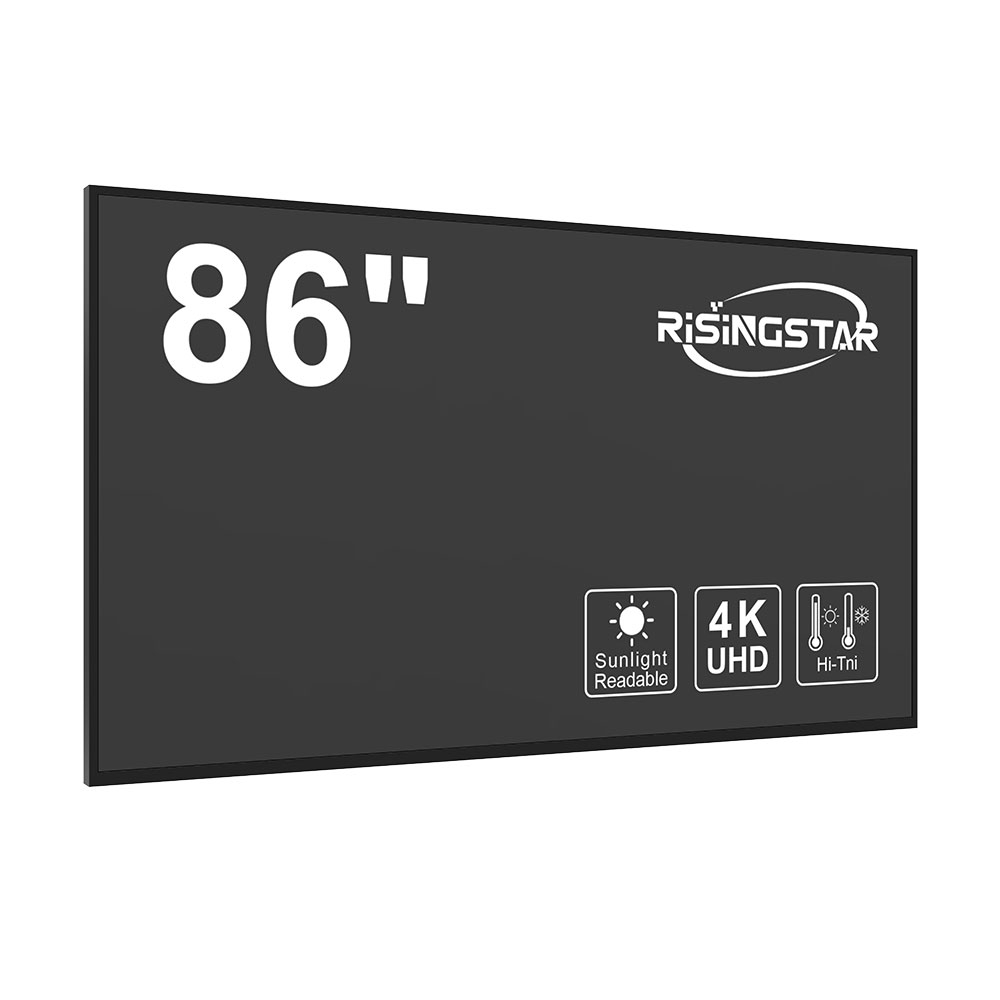
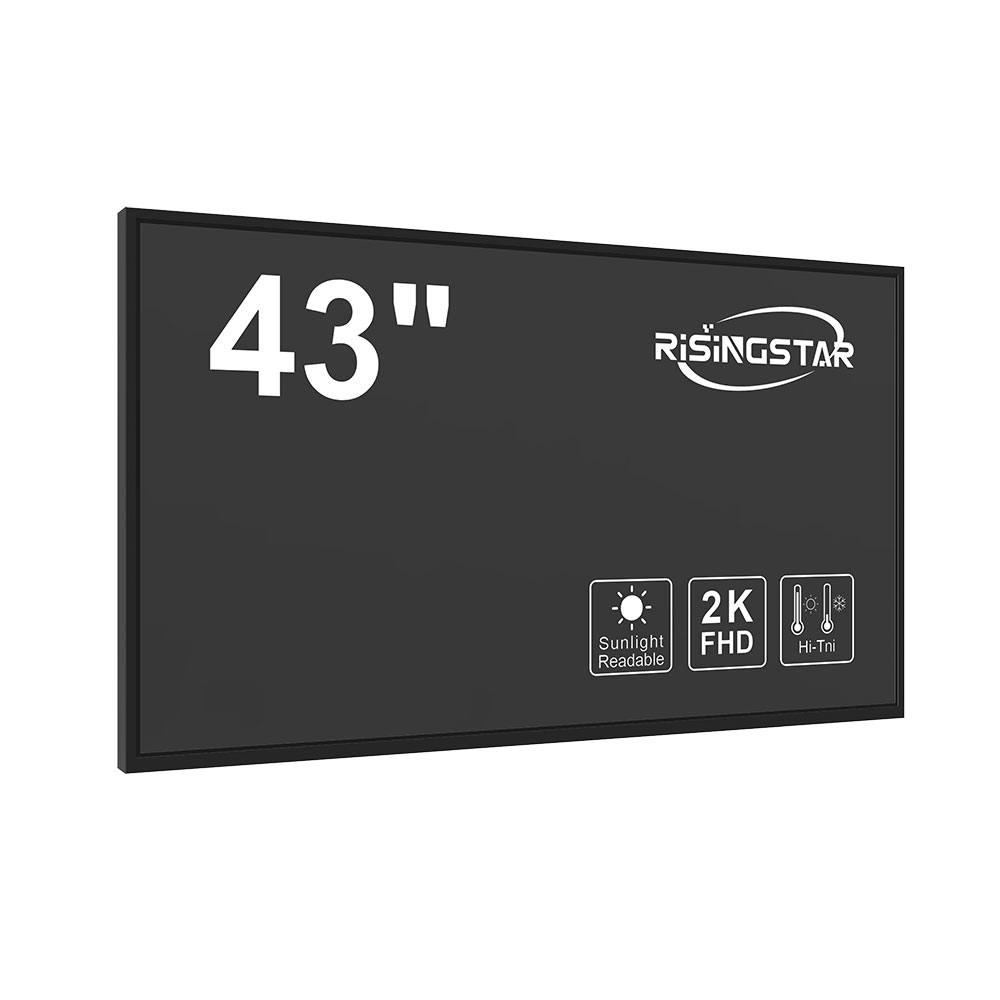
High-brightness sunlight-readable LCD screens have become essential in modern outdoor applications where visibility under direct sunlight is critical. These displays are engineered to maintain clarity, contrast, and responsiveness even in extreme lighting conditions—such as those found on construction sites, military vehicles, agricultural machinery, public transportation systems, and digital signage in urban environments. The core challenge lies in overcoming ambient light interference, which can render standard LCDs unusable in bright daylight.
To address this, manufacturers use a combination of advanced optical technologies, high-luminance LED backlighting, and specialized surface treatments. For instance, the luminance of a typical sunlight-readable LCD must exceed 5,000 nits—far beyond the 300–500 nits of consumer-grade displays. Some industrial models now achieve up to 10,000 nits or more, ensuring readability in full sun at noon. This performance is measured according to MIL-STD-810G standards, particularly for ruggedized military and aerospace equipment.
One key innovation is the use of anti-reflection (AR) coatings and polarized films that reduce glare while maintaining color accuracy. Additionally, some displays incorporate automatic brightness control (ABC), which dynamically adjusts luminance based on ambient light sensors. This not only enhances usability but also improves energy efficiency—a vital consideration for battery-powered field devices like handheld tablets used in logistics or utility inspections.
Case studies from companies such as Crystalfontz, Eizo, and Sharp demonstrate how these screens are deployed in real-world scenarios. In one example, a U.S. Department of Defense project required solar-readable displays for drone control units operating in desert environments. By integrating a 7,000-nit LCD with an adaptive dimming algorithm, operators maintained mission-critical visual data access despite exposure to over 10,000 lux of sunlight. Similarly, in the agricultural sector, John Deere has adopted 5,000-nit displays in their tractors, enabling farmers to monitor GPS navigation and machine diagnostics without squinting in midday sun.
The evolution of these screens is also driven by advancements in materials science and manufacturing precision. For example, the adoption of OLED-on-Silicon (OLED-on-Si) technology allows for higher contrast ratios and faster response times compared to traditional LCDs. However, due to cost and power constraints, LCD-based solutions remain dominant in high-brightness applications.
Industry standards like IEC 60068-2-1 and ISO 16750 ensure that these displays meet environmental resilience criteria—ranging from temperature extremes (-40°C to +70°C) to shock, vibration, and humidity resistance. This makes them suitable for harsh outdoor settings across multiple industries.
In summary, high-brightness sunlight-readable LCD screens represent a convergence of optics, electronics, and materials engineering tailored for practical, reliable outdoor operation. As demand grows for smart infrastructure, autonomous vehicles, and IoT-enabled devices, the need for robust, visible, and energy-efficient display solutions will continue to drive innovation in this space.