RisingStar
- Home
- About Us
- Products
- News
- Video
- Contact
- Send Inquiry
Search
- Home
- About Us
- Products
- News
- Video
- Contact
- Send Inquiry
RisingStar
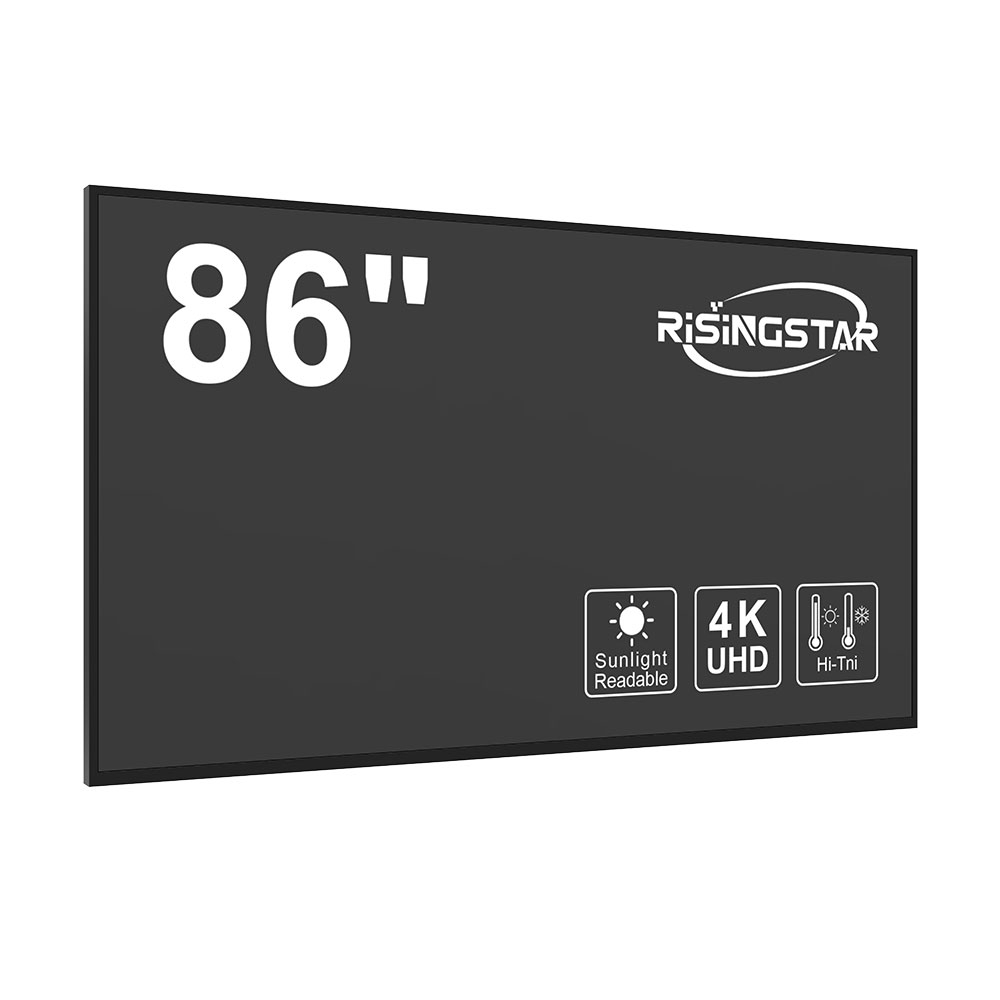
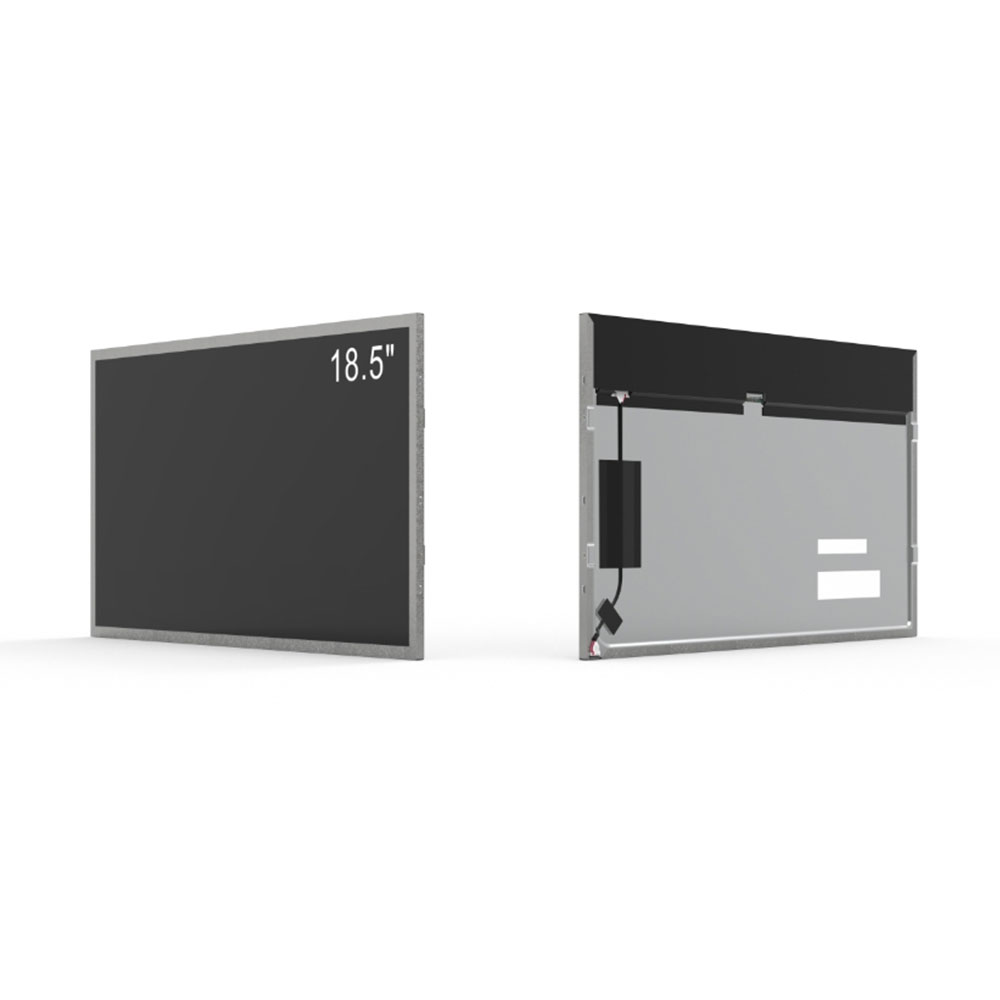
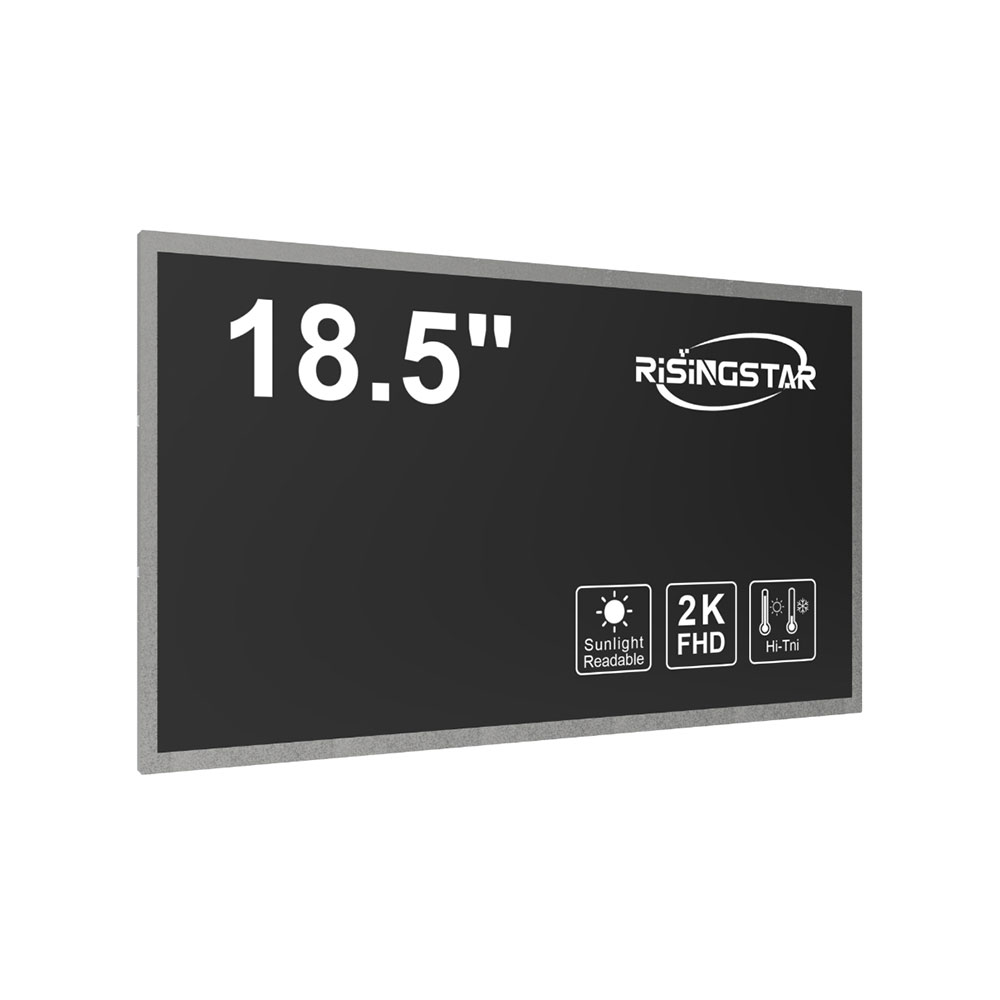
High-brightness sunlight-readable LCD displays have become indispensable in outdoor, industrial, military, and transportation environments where ambient light levels can exceed 100,000 lux. These screens are engineered to maintain visibility under direct sunlight—often surpassing 5,000 nits of brightness—which far exceeds standard indoor displays (typically 300–500 nits). Common display sizes include 10.1", 13.3", 15.6", 18.5", 21.5", 23.8", 27", 32", 43", 46", 49", 55", 65", 75", 86", 98", and 110" — all with a 16:9 aspect ratio to ensure compatibility with modern HD, Full HD, and UHD content.
These displays integrate advanced technologies such as anti-glare coatings, polarized films, high-efficiency LED backlights, and dynamic contrast enhancement algorithms. For example, the 10.1" model is widely used in portable medical devices and rugged tablets, while larger 55"–110" units serve as digital signage in airports, construction sites, and military command centers. The 16:9 format ensures optimal use of screen real estate for video, dashboards, and information kiosks without sacrificing readability.
Industry standards like MIL-STD-810G and IP65/IP67 ratings validate durability against shock, vibration, dust, and water ingress—critical for deployment in extreme conditions. Case studies from the U.S. Department of Defense show that 43" and 55" sunlight-readable displays in tactical vehicles reduced operator errors by up to 40% due to improved visual clarity in daylight. Similarly, a 2023 report by MarketsandMarkets estimates the global sunlight-readable display market will reach $3.8 billion by 2028, driven by demand in smart cities, autonomous vehicles, and industrial IoT.
Manufacturers like Innolux, LG Display, and BOE employ proprietary techniques such as “dual-layer diffuser systems” and “local dimming zones” to optimize brightness uniformity and reduce power consumption—a key factor for battery-powered applications. Additionally, support for wide temperature ranges (-20°C to +70°C) ensures reliable operation in arctic or desert environments. With advancements in OLED-based solutions now emerging, future models may offer even better contrast ratios and faster response times.
In summary, high-brightness 16:9 LCDs in these standardized sizes represent the gold standard for mission-critical outdoor interfaces—combining brightness, ruggedness, and versatility across diverse sectors including defense, logistics, healthcare, and infrastructure monitoring.