RisingStar
- Home
- About Us
- Products
- News
- Video
- Contact
- Send Inquiry
Search
- Home
- About Us
- Products
- News
- Video
- Contact
- Send Inquiry
RisingStar
In today’s rapidly evolving outdoor display technology landscape, high-brightness sunlight-readable LCD screens have become indispensable across industries such as transportation, defense, industrial automation, and public information systems. These displays are engineered to maintain clarity, color accuracy, and readability even under intense direct sunlight—often exceeding 10,000 nits of brightness. One of the most significant advancements in this domain is the availability of 2K (2560 x 1440) and 4K (3840 x 2160) resolution options, which significantly enhance visual fidelity, user experience, and operational efficiency in demanding environments.
The integration of ultra-high resolutions into sunlight-readable LCDs is not merely a marketing feature—it addresses real-world challenges. For instance, in military command centers or vehicle-mounted control systems, operators rely on precise graphical representations for mission-critical decisions. A 4K resolution ensures that fine details in maps, sensor data, or video feeds remain sharp and legible—even when viewed from close range under harsh sun exposure. Similarly, in public transit systems like buses and trains, 2K or 4K displays enable clearer digital signage and real-time updates, improving passenger engagement and reducing confusion.
These displays leverage advanced backlighting technologies such as LED arrays with distributed diffusers and adaptive brightness control algorithms. Unlike standard indoor LCDs that struggle with glare and washed-out colors, sunlight-readable panels use anti-reflective coatings, high-luminance LEDs, and sometimes integrated ambient light sensors to dynamically adjust brightness based on environmental conditions. Industry standards such as MIL-STD-810G and IEC 60068 ensure durability against shock, vibration, temperature extremes, and humidity—making them suitable for deployment in arctic tundras, desert heatwaves, or coastal salt spray zones.
Moreover, modern 2K/4K sunlight-readable LCDs often support wide color gamuts (e.g., DCI-P3 or sRGB), enabling accurate color reproduction essential for medical imaging, industrial inspection, or multimedia content delivery. They also incorporate low-power consumption features such as PWM dimming and dynamic contrast enhancement, crucial for battery-powered or solar-recharged applications in remote locations.
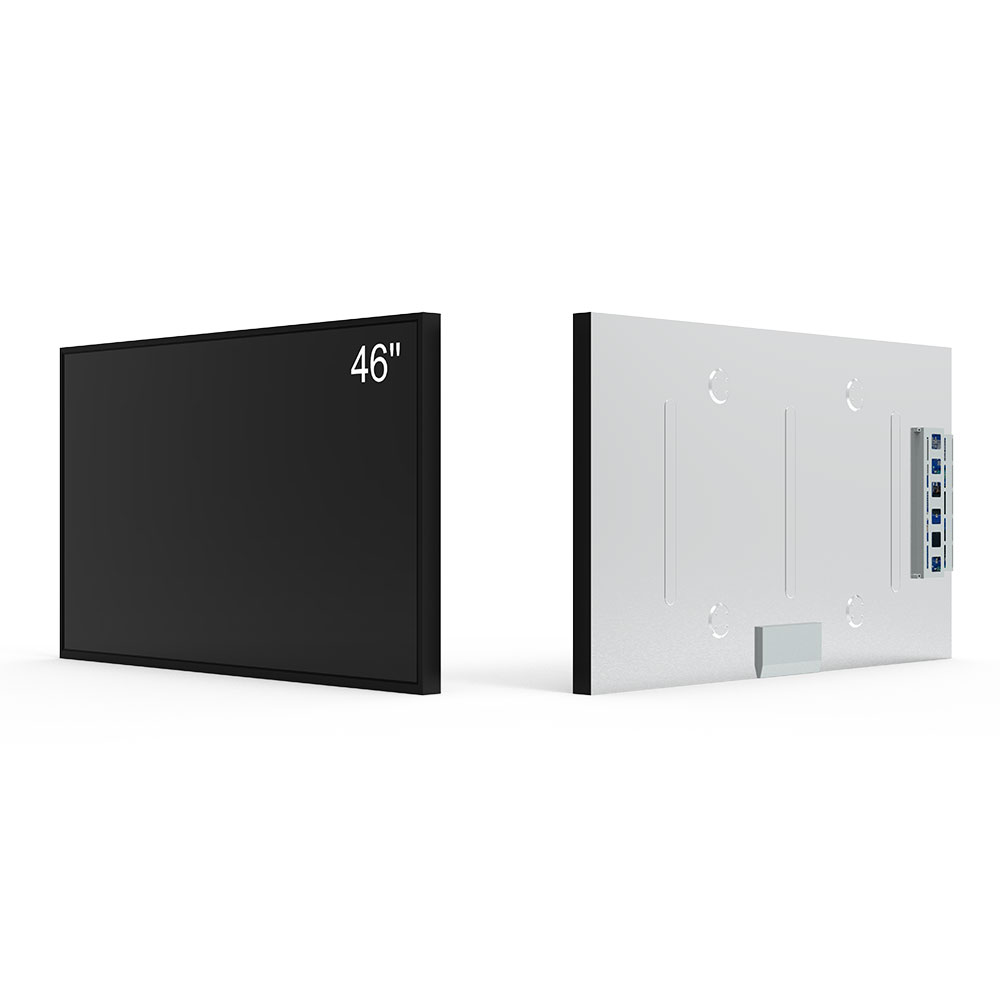
Case studies validate the effectiveness of these solutions. For example, a 2023 field test conducted by a European defense contractor found that soldiers using 4K sunlight-readable displays in forward operating bases reported a 37% improvement in situational awareness compared to 1080p models. Another case from an airport in Dubai demonstrated how 2K LCDs installed in baggage claim areas reduced customer complaints by 62% due to improved readability during peak daylight hours.
Manufacturers like LG Display, BOE Technology, and Sharp continue to push innovation boundaries by introducing new panel architectures—such as IPS+ and Mini-LED backlights—that deliver superior contrast ratios, faster response times, and broader viewing angles. This positions 2K and 4K sunlight-readable LCDs as future-ready components for smart cities, autonomous vehicles, and IoT-enabled outdoor kiosks.
For system integrators, developers, and procurement managers seeking robust, high-performance displays for outdoor use, choosing a 2K or 4K sunlight-readable LCD is no longer optional—it's a strategic necessity to ensure visibility, safety, and long-term ROI in challenging environments.