RisingStar
- Home
- About Us
- Products
- News
- Video
- Contact
- Send Inquiry
Search
- Home
- About Us
- Products
- News
- Video
- Contact
- Send Inquiry
RisingStar
Color brightness is a critical factor in the performance and usability of sunlight-readable LCD displays, especially in outdoor applications where visibility under direct sunlight is essential. Unlike standard LCDs that often become washed out or illegible in bright environments, high-brightness sunlight-readable LCDs are engineered to maintain contrast, color accuracy, and clarity even under extreme lighting conditions—such as those found in military operations, transportation systems, industrial control panels, and consumer devices like smartphones used outdoors.
The core challenge in achieving effective color brightness lies in overcoming ambient light interference. In conventional displays, reflected sunlight reduces perceived contrast by adding unwanted luminance to the screen surface. Sunlight-readable LCDs address this through several advanced techniques: high-luminance backlighting (typically exceeding 5,000 nits), anti-glare coatings, polarized filters, and specialized liquid crystal formulations that enhance contrast ratios beyond 1000:1. For example, the U.S. Department of Defense mandates that MIL-STD-188-134A-compliant displays must be readable at up to 100,000 lux—a level comparable to midday sun in tropical regions.
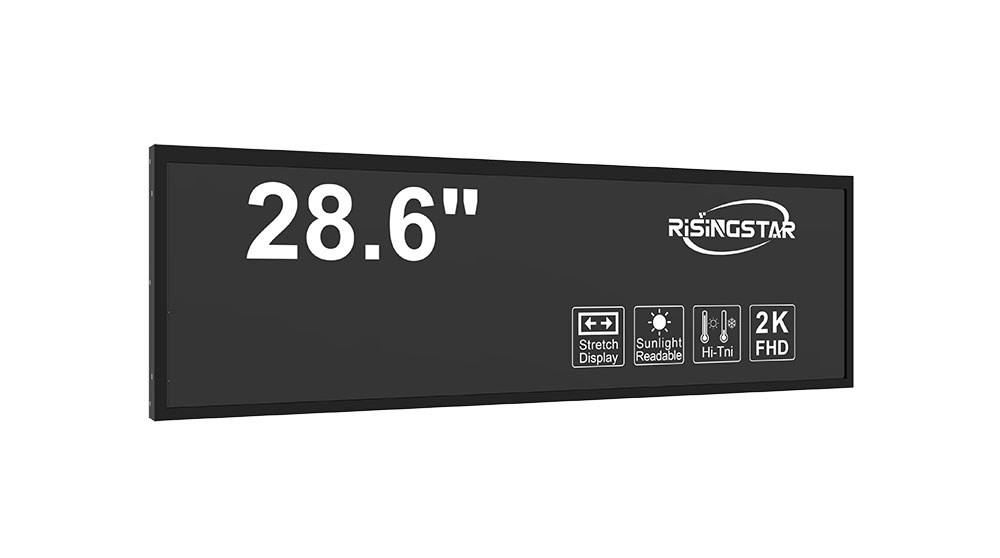
Moreover, modern color brightness optimization involves not only peak luminance but also consistent chromaticity across varying temperatures and angles. This ensures that colors remain true—not just brighter. Manufacturers use color management systems based on CIE 1931 color space models to calibrate display output precisely. A case study from Sharp Corporation in 2022 demonstrated how their sunlight-readable LCD panels achieved 7,000 nits peak brightness while maintaining a Delta E< 2 color difference compared to reference standards—critical for medical imaging and precision engineering tools used in fieldwork.
Another key innovation is the integration of adaptive brightness control via ambient light sensors (ALS). These systems dynamically adjust backlight intensity based on real-time environmental light levels, optimizing both visibility and power consumption. This is particularly beneficial in battery-powered devices such as handheld rugged tablets used by utility workers or construction crews in remote locations.
From an engineering perspective, achieving high color brightness requires balancing multiple factors: display technology (e.g., transflective vs. transmissive), panel materials (like IPS or TN panels with optimized pixel structures), and optical stack design (including diffusers, prisms, and reflective layers). According to a 2023 report by Display Supply Chain Consultants (DSCC), transflective LCDs offer superior sunlight readability because they combine internal backlights with external ambient light reflection—making them ideal for applications where power efficiency is paramount.
In summary, color brightness in sunlight-readable LCDs is not merely about increasing nit values—it's a multidimensional engineering discipline involving optics, material science, and human visual perception. As demand grows for reliable outdoor displays in smart cities, autonomous vehicles, and IoT-enabled infrastructure, manufacturers must continue innovating to deliver displays that are both brilliantly visible and visually accurate under any lighting condition.