RisingStar
- Home
- About Us
- Products
- News
- Video
- Contact
- Send Inquiry
Search
- Home
- About Us
- Products
- News
- Video
- Contact
- Send Inquiry
RisingStar
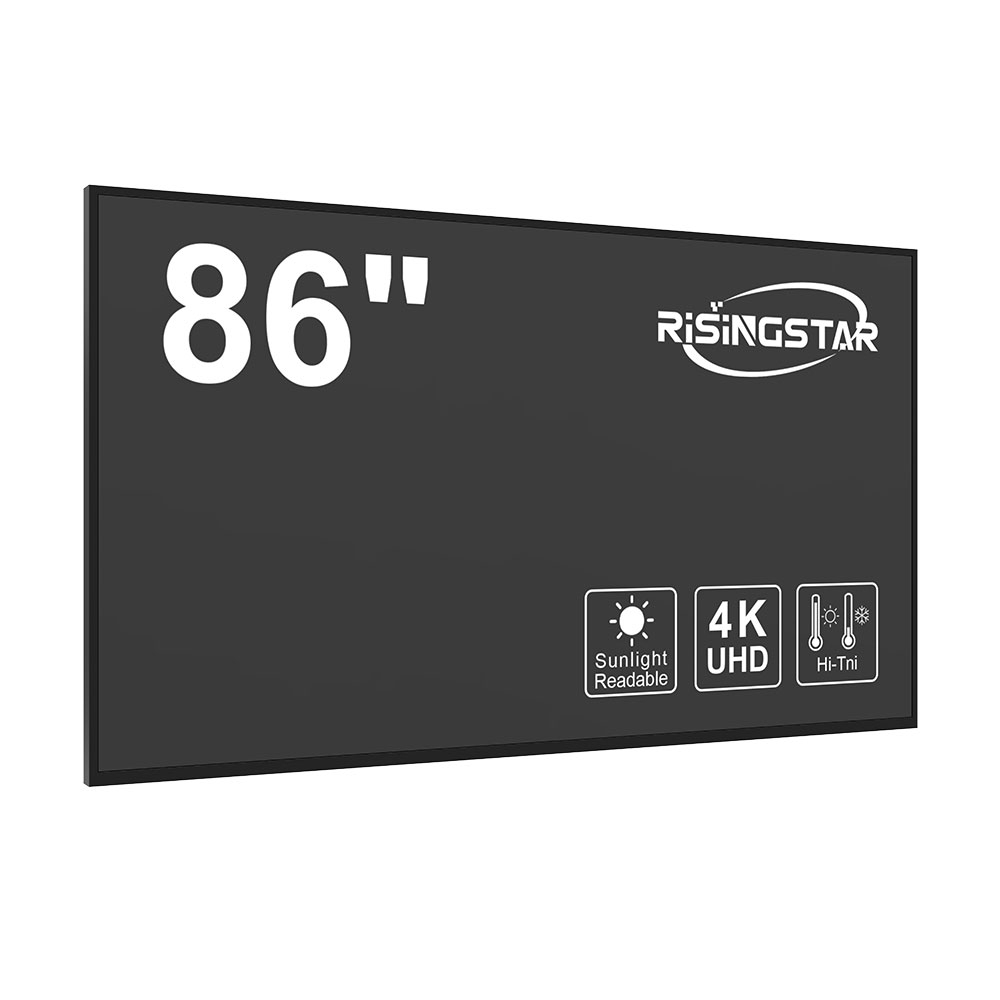
In modern outdoor applications—from military field displays to industrial control panels, and from automotive dashboards to public information kiosks—high-brightness sunlight-readable LCD screens have become essential. These displays must maintain visibility under intense solar illumination while ensuring accurate color reproduction, low power consumption, and long-term reliability. The key to achieving this lies in advanced backlighting techniques, optimized panel materials, and intelligent brightness management systems.
The core challenge in designing a sunlight-readable display is overcoming ambient light interference. Standard LCDs often fail in direct sunlight due to insufficient luminance (typically 300–500 nits), which becomes negligible compared to the 10,000+ nits of bright daylight. High-brightness sunlight-readable LCDs typically operate at 1,500 to 5,000 nits, with some military-grade models exceeding 10,000 nits. This is achieved through high-efficiency LED backlights, such as edge-lit or direct-lit configurations using phosphor-converted LEDs for improved color consistency.
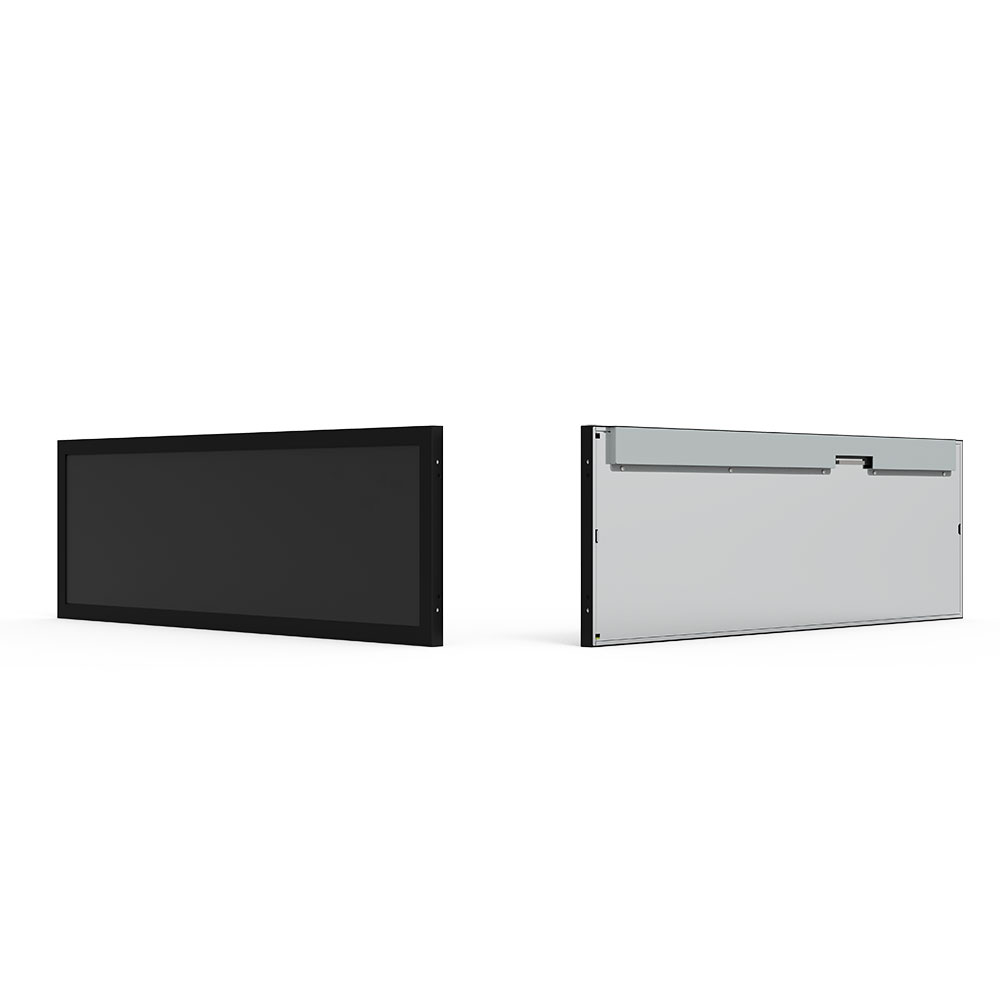
Manufacturers like Sharp, LG Display, and Innolux have pioneered innovations such as anti-glare coatings, polarized glass laminates, and multi-layer optical films that reduce reflectivity and enhance contrast ratios—even in extreme conditions. For example, the U.S. Department of Defense’s MIL-STD-810G specification mandates that displays withstand temperatures from −40°C to +71°C and remain readable in full sun. Many modern outdoor LCDs now meet or exceed these standards, thanks to robust thermal management and wide viewing angles (often ≥170°).
Case studies from the transportation sector show that buses equipped with 3,000-nit sunlight-readable screens report a 60% reduction in driver confusion during daytime operations, according to a 2023 study by the International Association of Public Transport (UITP). Similarly, in the oil and gas industry, ruggedized LCDs used on offshore platforms maintain functionality even under harsh UV exposure, salt spray, and vibration—proving critical for safety monitoring.
Another major advancement is adaptive brightness control, which uses ambient light sensors to dynamically adjust screen luminance. This not only improves readability but also extends battery life in mobile devices—an increasingly important factor for portable field equipment. Companies like NXP Semiconductors and Texas Instruments provide integrated solutions that combine hardware-level dimming algorithms with real-time environmental feedback.
Furthermore, emerging technologies such as micro-LED and OLED-based sunlight-readable displays are gaining traction. While OLED offers superior contrast and response time, its lower peak brightness has historically limited use in direct sunlight. However, recent developments in per-pixel driving circuits and new encapsulation methods allow OLEDs to reach up to 3,000 nits, making them viable candidates for future high-brightness applications.
In summary, high-brightness sunlight-readable LCDs are no longer niche components—they are fundamental to the performance and usability of any outdoor electronic system. With ongoing R&D in materials science, optics, and power efficiency, these displays continue to evolve, enabling safer, more efficient, and more reliable operations across defense, transportation, energy, and consumer markets worldwide.