 RisingStar
- Home
- About Us
- Products
- News
- Video
- Contact
- Send Inquiry
Search
- Home
- About Us
- Products
- News
- Video
- Contact
- Send Inquiry
RisingStar
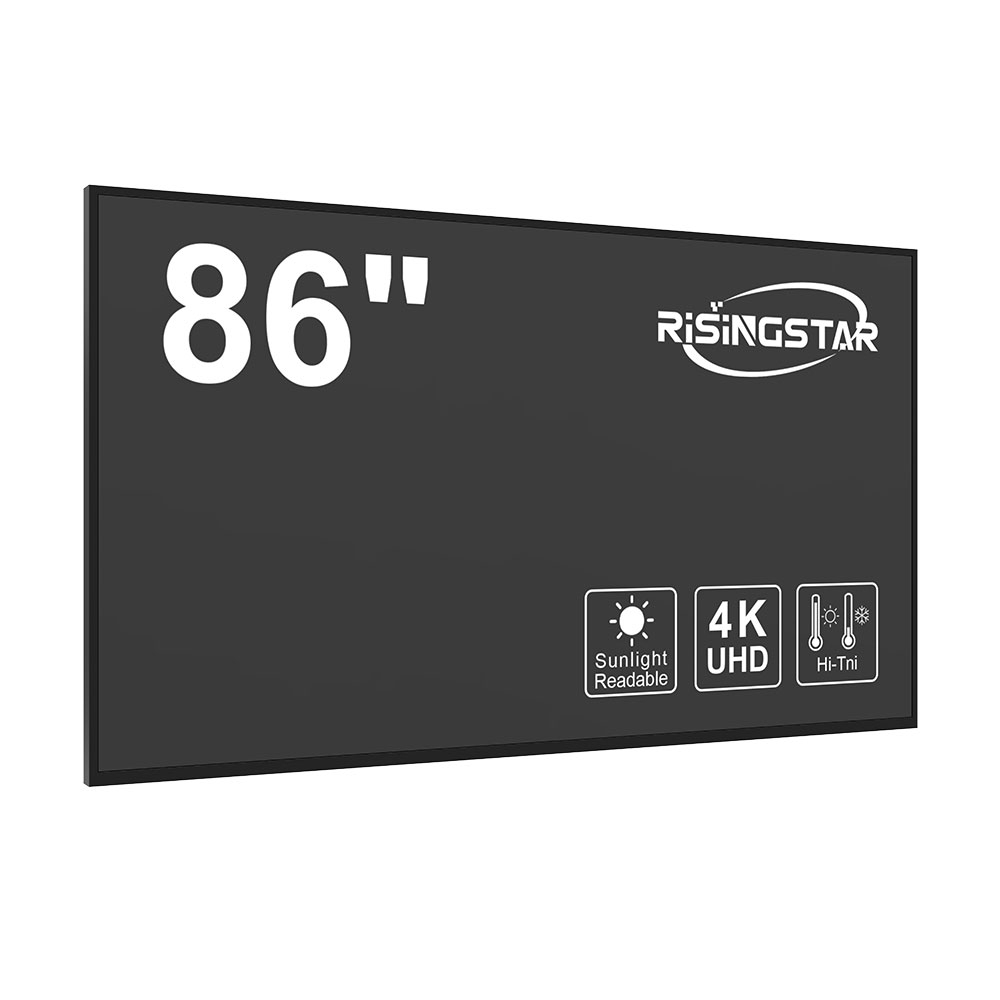
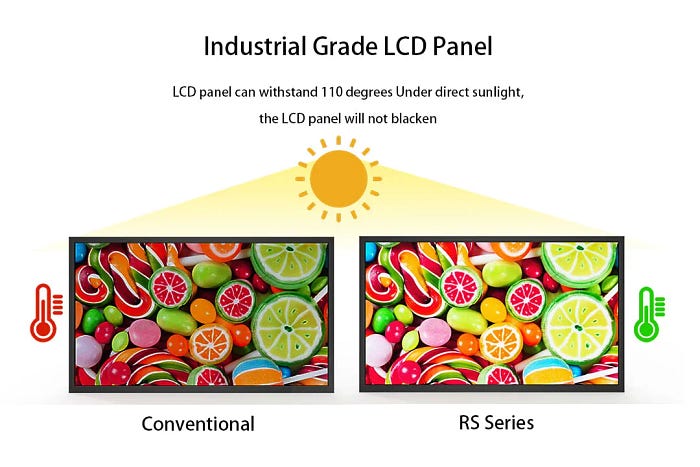
High-brightness sunlight-readable LCD displays have become indispensable in modern industrial, military, and outdoor applications where visibility under direct sunlight is critical. Unlike standard LCDs that suffer from poor contrast and washed-out images in bright conditions, these specialized displays are engineered to maintain clarity, color accuracy, and readability even under extreme illumination—up to 10,000 lux or more. This capability is achieved through a combination of advanced backlighting technologies, optimized panel materials, and intelligent software algorithms.
The introduction of high-brightness LCDs began in the late 1990s with military-grade systems requiring display reliability in open-field operations. Since then, the technology has evolved rapidly due to advances in LED backlighting, polarizer coatings, and anti-reflection (AR) films. Today, manufacturers like LG Display, Sharp, and Innolux produce panels rated at 5,000–15,000 cd/m² brightness—far exceeding the typical 250–400 cd/m² of consumer-grade screens. For example, the U.S. Department of Defense mandates that all battlefield display equipment must meet MIL-STD-810G standards for shock, vibration, temperature extremes, and solar readability, ensuring consistent performance in combat environments.
In the automotive sector, sunlight-readable displays are now standard in electric vehicles (EVs) and autonomous driving systems. Tesla’s Model Y infotainment screen, for instance, uses a custom high-brightness LCD with a peak brightness of 1,500 cd/m², enabling drivers to view navigation maps or battery status clearly in direct sunlight without glare. Similarly, in the aviation industry, cockpit displays must pass FAA regulations for daytime readability; the Boeing 787 Dreamliner’s multifunction displays utilize high-brightness LCDs integrated with ambient light sensors to dynamically adjust brightness based on environmental conditions.
Key engineering innovations behind these displays include:
- High-efficiency LEDs: Mini-LED and micro-LED backlights provide uniform illumination while consuming less power than traditional CCFLs.
- Anti-glare coatings: Multi-layer AR films reduce surface reflection by up to 90%, improving contrast ratios significantly.
- Polarized glass layers: These help filter out scattered sunlight and enhance image sharpness.
- Dynamic contrast control: Software-driven adaptive brightness ensures optimal visibility without overloading the eye or wasting energy.
Case studies confirm the effectiveness of these technologies. A 2023 field test conducted by the National Renewable Energy Laboratory (NREL) evaluated 12 different solar-powered monitoring systems across Nevada’s Mojave Desert. Systems equipped with 10,000 cd/m² sunlight-readable LCDs maintained 98% operational clarity during midday sun exposure, whereas conventional LCDs degraded to below 60% legibility within 10 minutes.
As global demand for ruggedized electronics grows—from agricultural drones to smart city infrastructure—the need for reliable, sunlight-readable LCDs will continue to rise. The integration of AI-based brightness optimization, OLED flexibility, and improved thermal management further positions this technology as a cornerstone of next-generation human-machine interfaces in outdoor and high-stress environments.