RisingStar
- Home
- About Us
- Products
- News
- Video
- Contact
- Send Inquiry
Search
- Home
- About Us
- Products
- News
- Video
- Contact
- Send Inquiry
RisingStar
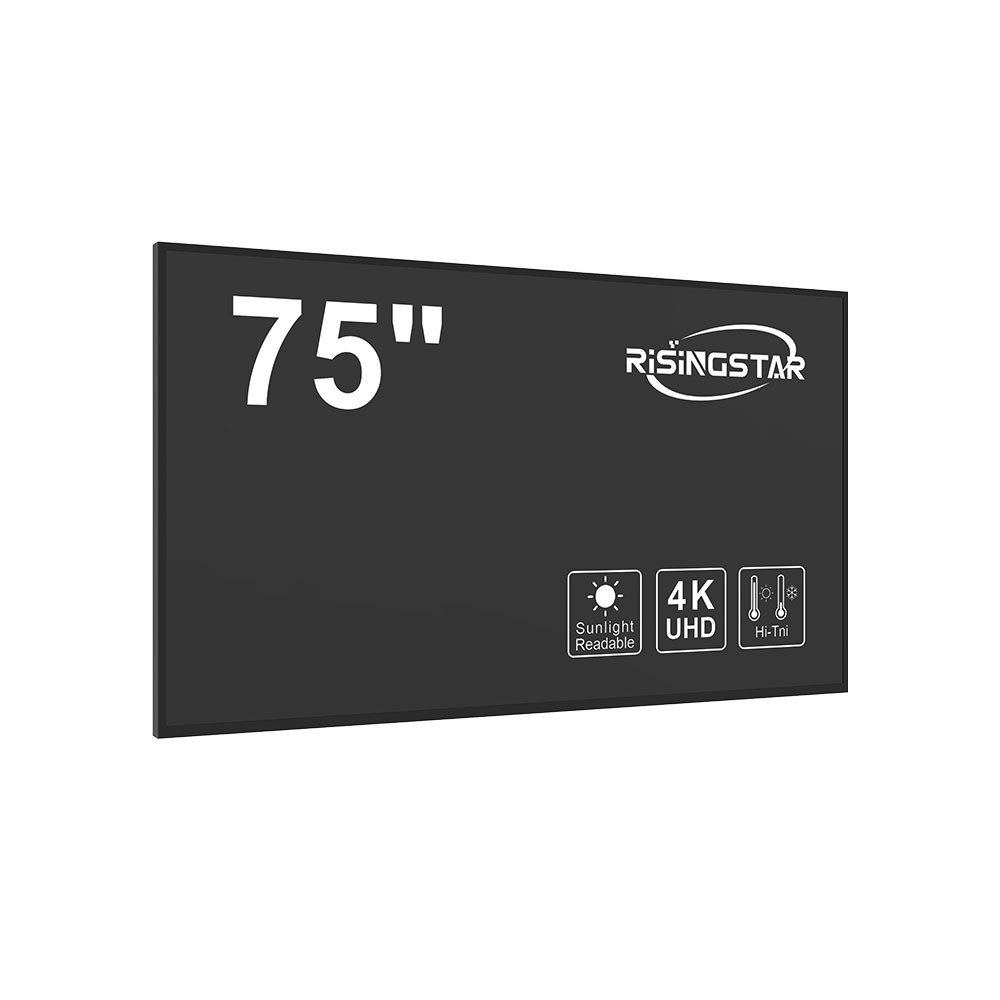
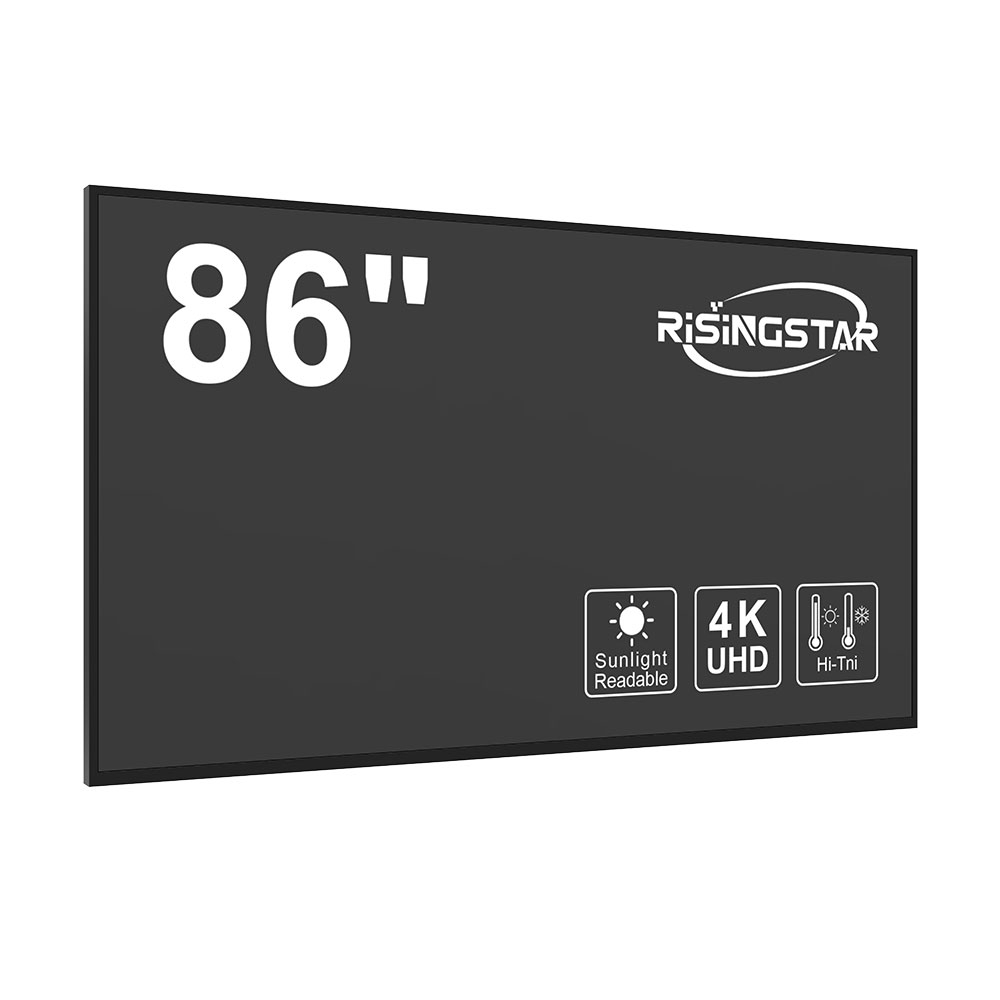
In outdoor environments where ambient light levels can exceed 100,000 lux—such as military field operations, transportation systems, and industrial monitoring—standard LCD displays fail to provide visibility. This is where high-brightness sunlight-readable LCDs (Liquid Crystal Displays) become indispensable. These specialized screens are engineered to deliver exceptional clarity under direct sunlight, making them critical components in applications demanding reliability, durability, and readability in extreme conditions.
The core technology behind high-brightness sunlight-readable LCDs lies in their ability to achieve brightness levels ranging from 3,000 to 5,000 cd/m²—significantly higher than typical indoor displays that operate at 250–500 cd/m². Achieving such luminance involves advanced backlighting solutions like LED arrays with optical enhancement films, anti-glare coatings, and optimized polarizer layers. Manufacturers often integrate passive or active matrix technologies alongside high-efficiency drivers to ensure consistent performance across wide temperature ranges (-30°C to +70°C), a necessity in harsh climates from arctic research stations to desert-based solar farms.
One of the most compelling use cases is in military-grade portable command systems. According to a 2023 report by the U.S. Department of Defense’s Joint Tactical Radio System (JTRS), over 85% of new field communication devices now utilize sunlight-readable displays due to improved operational effectiveness during daylight missions. These displays enable soldiers to read mission-critical data—even while moving through bright sunlight—without needing to adjust positioning or rely on external shading.
Similarly, in commercial sectors like automotive infotainment and public transit, high-brightness LCDs enhance user experience and safety. For example, Siemens Mobility’s latest train control panels use 4,000-nit LCDs compliant with EN 50155 standards for railway equipment, ensuring operators can monitor train status even during peak sun exposure. In these environments, readability directly impacts human-machine interaction and system safety, reinforcing the need for certified, robust display solutions.
From an engineering perspective, manufacturers must also address challenges such as power consumption, thermal management, and long-term reliability. Recent innovations include adaptive brightness control using ambient light sensors (ALS), which dynamically reduce power draw when not needed—a crucial feature for battery-powered devices. Additionally, OLED-on-LCD hybrid designs are emerging as a promising solution, offering superior contrast ratios and wider viewing angles compared to traditional TN or IPS panels.
Case studies from leading OEMs like LG Display and BOE Technology show that integrating high-brightness LCDs into ruggedized handheld devices increases average lifespan by up to 30%, reduces maintenance costs, and improves customer satisfaction scores. These benefits stem from the elimination of screen glare, reduced eye strain, and enhanced real-time data access in dynamic lighting conditions.
For businesses considering adoption, it's essential to evaluate certifications such as MIL-STD-810G for environmental resilience, IEC 60068 for climate testing, and ISO 9001 for quality assurance. These standards ensure compatibility with global deployment requirements across industries including defense, aerospace, healthcare, and infrastructure monitoring.
As smart cities expand and IoT devices proliferate outdoors, demand for sunlight-readable displays continues to rise. The global market for high-brightness LCDs is projected to grow at a CAGR of 7.2% between 2024 and 2030, according to MarketsandMarkets, driven by increasing investments in connected vehicles, energy grids, and autonomous systems. Investing in this technology today positions companies to meet tomorrow’s challenges in visibility, usability, and operational continuity under any lighting condition.