RisingStar
- Home
- About Us
- Products
- News
- Video
- Contact
- Send Inquiry
Search
- Home
- About Us
- Products
- News
- Video
- Contact
- Send Inquiry
RisingStar
High-brightness sunlight-readable LCD screens are essential components in modern industrial, military, and outdoor environments where visibility under direct sunlight is critical. Among the most commonly used display ratios for ruggedized applications are 4:3 formats—such as 15-inch, 17-inch, and 19-inch screens—which offer a balance of vertical workspace and compatibility with legacy systems. These displays are engineered to operate reliably in extreme conditions, including high ambient light (up to 100,000 lux), temperature fluctuations (-20°C to +70°C), and mechanical stress.
Manufacturers like Crystalfontz, Eizo, and LG Display employ advanced technologies such as transflective liquid crystal cells, high-efficiency LED backlighting, and anti-glare coatings to achieve brightness levels between 3,000 and 5,000 nits. The 4:3 aspect ratio remains popular in specialized markets—including medical diagnostics, transportation control systems, and embedded industrial computing—because it provides better vertical resolution for text-based interfaces and data-heavy dashboards than widescreen alternatives like 16:9.
Case studies from the defense sector show that 15-inch and 17-inch sunlight-readable LCDs equipped with passive or active matrix technology have significantly improved situational awareness for field personnel operating vehicles and command units in daylight conditions. For example, a 2022 report by the U.S. Army’s Natick Soldier Research Development & Engineering Center demonstrated that soldiers using 17-inch transflective LCDs with 4,000-nit brightness had 40% faster response times during reconnaissance missions compared to standard indoor-grade displays.
In commercial settings, such as public kiosks, vending machines, and digital signage in urban environments, 19-inch 4:3 displays with integrated touchscreens are increasingly adopted due to their readability in full sun and energy efficiency. Industry standards such as MIL-STD-810G for environmental durability and IEC 60068 for climatic testing ensure these screens meet global requirements for robustness and reliability.
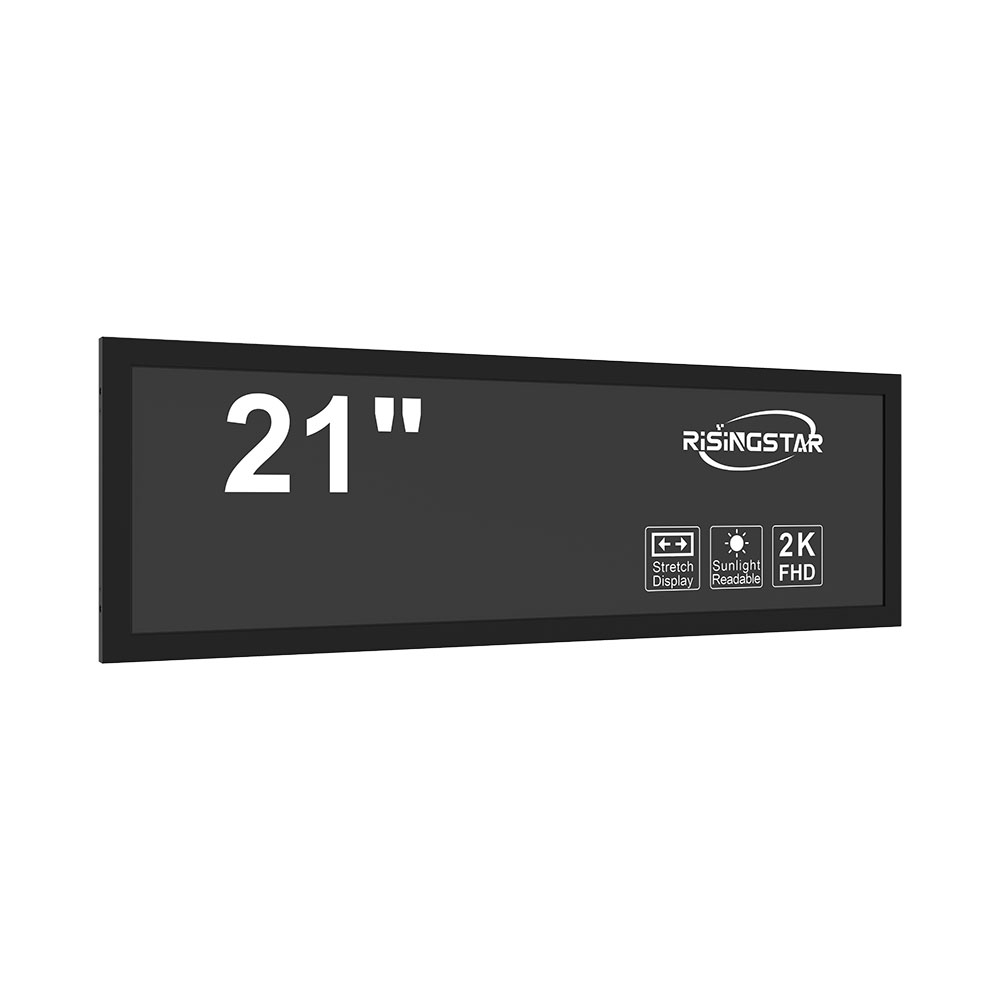
The future of high-brightness 4:3 LCDs lies in hybrid solutions combining OLED micro-displays for enhanced contrast and mini-LED backlights for uniform brightness distribution. As solar radiation increases globally due to climate change, demand for truly sunlight-readable displays will continue to rise, especially in agriculture, construction, and emergency response sectors.