RisingStar
- Home
- About Us
- Products
- News
- Video
- Contact
- Send Inquiry
Search
- Home
- About Us
- Products
- News
- Video
- Contact
- Send Inquiry
RisingStar
In today’s increasingly connected world, industrial, military, and outdoor applications demand electronic displays that can withstand extreme environmental conditions—including dust, moisture, and mechanical stress. Among the most critical certifications for such environments is the IP66 rating—a standard defined by the International Electrotechnical Commission (IEC) under IEC 60529. An IP66-rated display offers complete protection against dust ingress (the “6” in IP66) and powerful water jets from any direction (the “6” for water resistance), making it an essential component for high-brightness sunlight-readable LCDs used in ruggedized systems.
High-brightness sunlight-readable LCDs are commonly deployed in outdoor kiosks, transportation control panels, military vehicles, agricultural machinery, and energy infrastructure monitoring. These environments expose displays to direct sunlight, rain, wind-blown debris, and temperature fluctuations. To meet these challenges, manufacturers must integrate robust sealing techniques, specialized coatings, and advanced backlighting solutions—such as LED arrays with wide viewing angles and high lumen output—to ensure visibility even under full sun (typically >10,000 nits brightness).
The IP66 waterproof certification involves rigorous testing procedures conducted in accredited laboratories. For dust resistance, a continuous airflow of fine powder (like talcum) is directed at the display housing for 8 hours; no dust should enter the enclosure. For water resistance, a jet of water (at least 12.5 liters per minute, pressure up to 100 kPa) is sprayed from a nozzle at various angles—including horizontal, vertical, and oblique—for 3 minutes per angle. Only displays that pass both tests earn the IP66 rating.
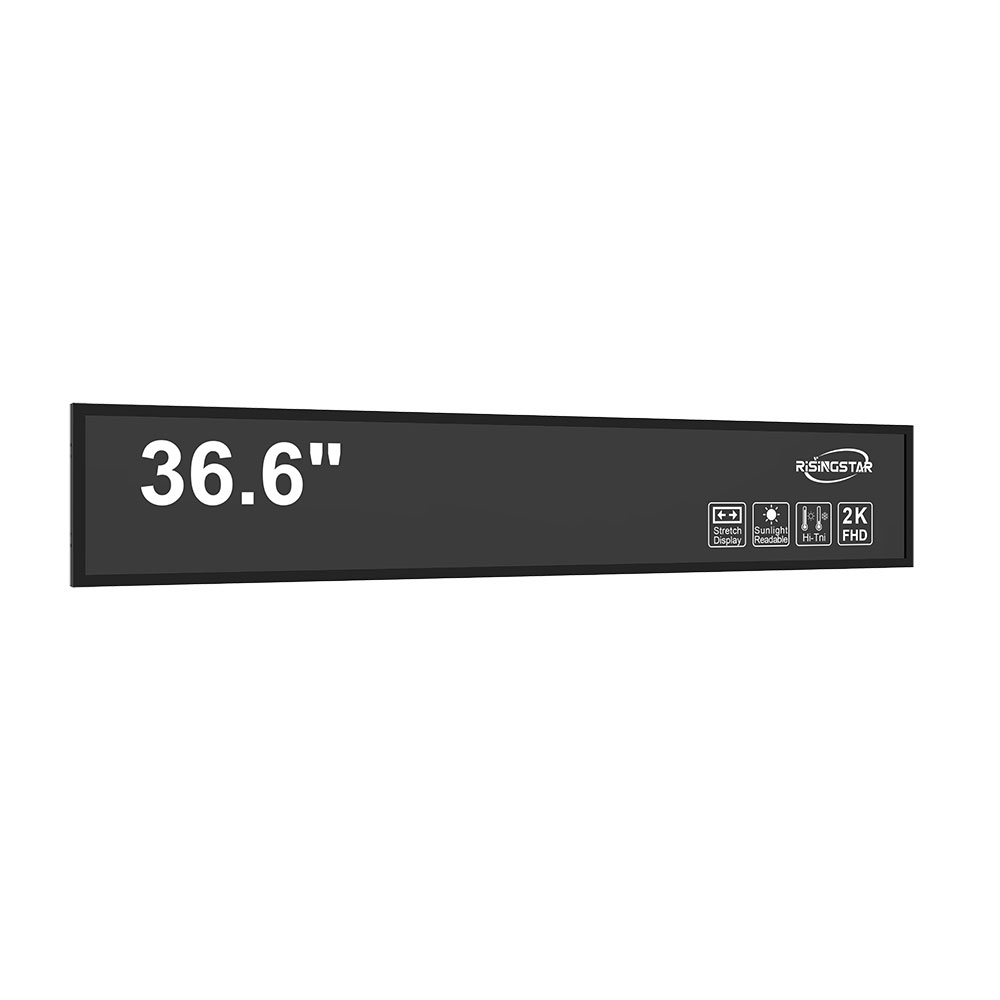
Case studies validate the importance of this certification. For instance, a major European railway operator installed IP66-rated LCDs in onboard information systems. Despite exposure to heavy rainfall, snow, and trackside dust, the displays remained operational without failure over five years. Similarly, a U.S. defense contractor integrated IP66 waterproof screens into unmanned ground vehicles (UGVs), where sandstorms and sudden downpours were common. The displays maintained functionality across all tested scenarios, proving their reliability in mission-critical settings.
Manufacturers like LG Display, Sharp, and Novatron have developed proprietary IP66-compliant LCD modules using reinforced glass laminates, silicone gasket seals, and conformal coatings on internal electronics. These components work synergistically to prevent moisture penetration while maintaining optical clarity and touch responsiveness. Additionally, some models incorporate thermal management systems—such as heat pipes or passive cooling fins—to handle elevated temperatures in enclosed vehicle cabins or solar-exposed locations.
From a design standpoint, engineers must balance waterproof integrity with user interface usability. This includes ensuring that touchscreens remain responsive under wet conditions (via capacitive or resistive touch layers with hydrophobic coatings) and that bezel designs avoid trapping moisture. Compliance with IP66 also influences packaging and shipping standards—displays must be shipped in sealed containers with desiccants to prevent condensation during transit.
For global deployment, IP66 compliance often aligns with other industry standards such as MIL-STD-810G (for shock and vibration resistance), RoHS (for environmentally safe materials), and EN 60068 (for environmental testing). These complementary certifications ensure comprehensive resilience—not just against water and dust but also against mechanical shock, humidity, and extreme temperatures (-30°C to +70°C).
In conclusion, IP66 waterproofing is not merely a marketing label—it is a validated engineering achievement that ensures long-term performance in demanding environments. As industries continue to digitize operations outdoors and in hazardous conditions, IP66-rated high-brightness sunlight-readable LCDs will remain indispensable tools for reliable human-machine interaction under the harshest real-world conditions.