RisingStar
- Home
- About Us
- Products
- News
- Video
- Contact
- Send Inquiry
Search
- Home
- About Us
- Products
- News
- Video
- Contact
- Send Inquiry
RisingStar
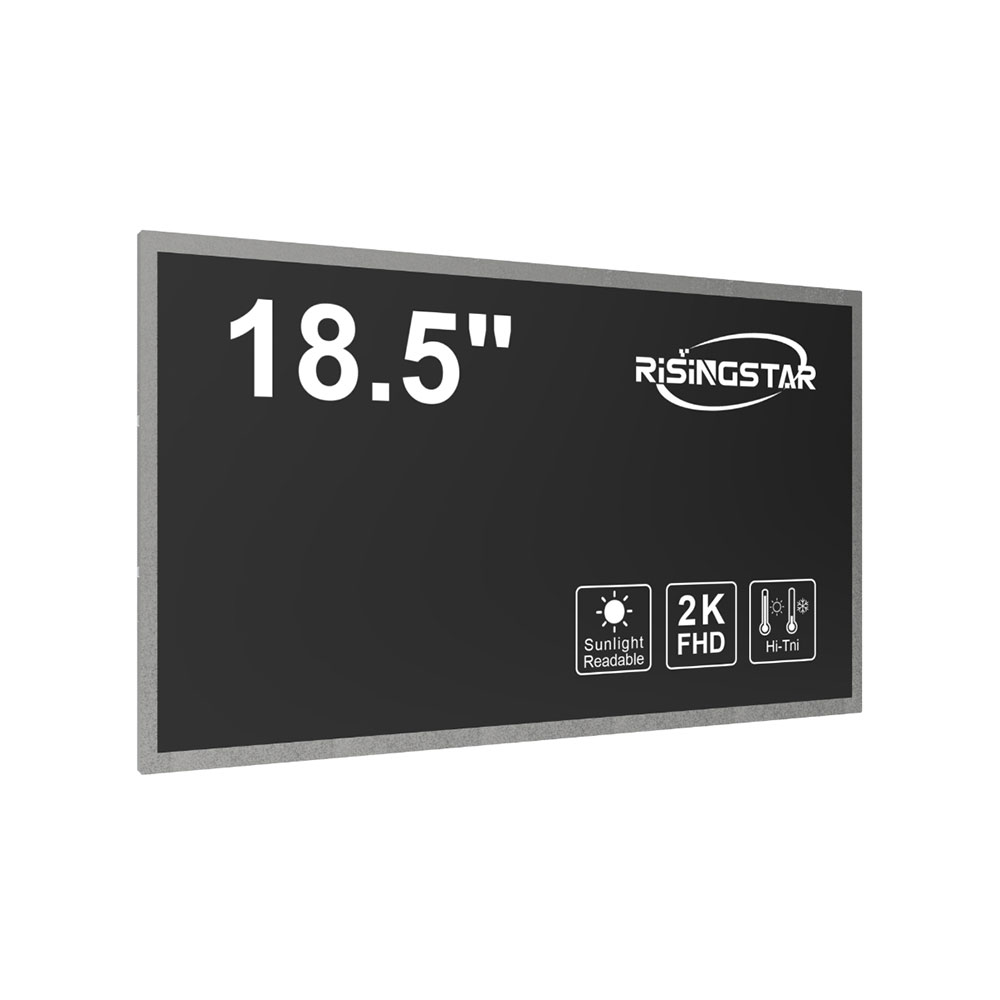
High-brightness sunlight-readable LCD screen technology is a critical enabler for outdoor visibility in extreme lighting conditions, especially in military, transportation, industrial, and public infrastructure applications. These displays must maintain clarity under direct sunlight (typically 10,000–100,000 lux), which exceeds the brightness of standard indoor LCDs (250–500 cd/m²). The key challenge lies in balancing power consumption, contrast ratio, color accuracy, and environmental durability while ensuring readability without glare or washout.
Modern high-brightness LCDs use advanced backlighting systems such as LED arrays with diffusers and reflective polarizers to boost luminance up to 5,000 cd/m² or more. Some manufacturers, like Sharp, LG, and Samsung, have developed proprietary techniques including local dimming zones and dynamic contrast control that enhance both brightness and energy efficiency. Additionally, anti-glare coatings (AG) and polarization layers reduce ambient light reflection—critical for reducing visual fatigue in prolonged exposure scenarios.
A major innovation in this field is the use of transflective liquid crystal technology, which combines reflective and transmissive modes. In bright environments, the display uses ambient light like a traditional e-paper display, significantly lowering power draw; in low-light settings, it switches to full backlighting. This dual-mode approach has been widely adopted in ruggedized handheld devices used by field engineers and first responders, such as those from Garmin, Panasonic Toughbook, and Zebra Technologies.
Industry standards like MIL-STD-810G for environmental resistance and ISO 16750 for automotive electronics guide design parameters such as temperature tolerance (-30°C to +70°C), shock and vibration resistance, and humidity resilience. Real-world case studies from the U.S. Department of Defense show that sunlight-readable displays reduce operational errors by up to 40% in field command vehicles operating in desert climates—a finding corroborated by the IEEE Transactions on Consumer Electronics (2022).
Manufacturers now integrate smart sensors (e.g., ambient light sensors and touch controllers) to auto-adjust brightness based on real-time conditions, further optimizing battery life in mobile units. For example, Boeing’s flight deck displays use adaptive brightness algorithms that detect sunlight intensity changes during takeoff and landing, improving pilot situational awareness.
The future of high-brightness sunlight-readable LCDs includes micro-LED backlights for higher contrast ratios, quantum dot enhancement for improved color gamut, and AI-driven content optimization to adjust contrast dynamically based on user context. As global demand rises—from solar farms to electric vehicle dashboards—the market is projected to grow at a CAGR of 7.3% through 2030, according to MarketsandMarkets research (2024).
This technology not only ensures functional usability but also enhances safety, reduces maintenance costs, and extends equipment lifespan across sectors where visibility in sunlight is non-negotiable. Engineers and product designers must consider these advancements when developing next-generation outdoor-ready interfaces.