RisingStar
- Home
- About Us
- Products
- News
- Video
- Contact
- Send Inquiry
Search
- Home
- About Us
- Products
- News
- Video
- Contact
- Send Inquiry
RisingStar
High-brightness sunlight-readable LCD screens are a critical innovation in display technology, specifically engineered to maintain visibility under intense ambient lighting conditions such as direct sunlight. These displays are indispensable in military, industrial, transportation, and medical sectors where outdoor visibility and operational reliability are paramount. Unlike standard LCDs that suffer from glare and contrast loss in bright environments, sunlight-readable LCDs incorporate advanced optical engineering, high-luminance backlighting, and specialized coatings to ensure consistent performance in extreme lighting scenarios.
The core of a sunlight-readable LCD lies in its luminance output—typically ranging from 3,000 to 10,000 cd/m² (candela per square meter), compared to the 250–500 cd/m² of consumer-grade displays. This is achieved through high-efficiency LED backlights, often using full-array local dimming (FALD) or edge-lit configurations optimized for brightness uniformity. According to IEEE standards (IEEE 1789-2016), these screens must maintain a minimum contrast ratio of 100:1 even under 100,000 lux of ambient light—a level commonly found in midday sun at sea level. The International Electrotechnical Commission (IEC) also defines environmental robustness requirements, including IP65 or higher ingress protection for dust and water resistance, essential for field-deployed systems.
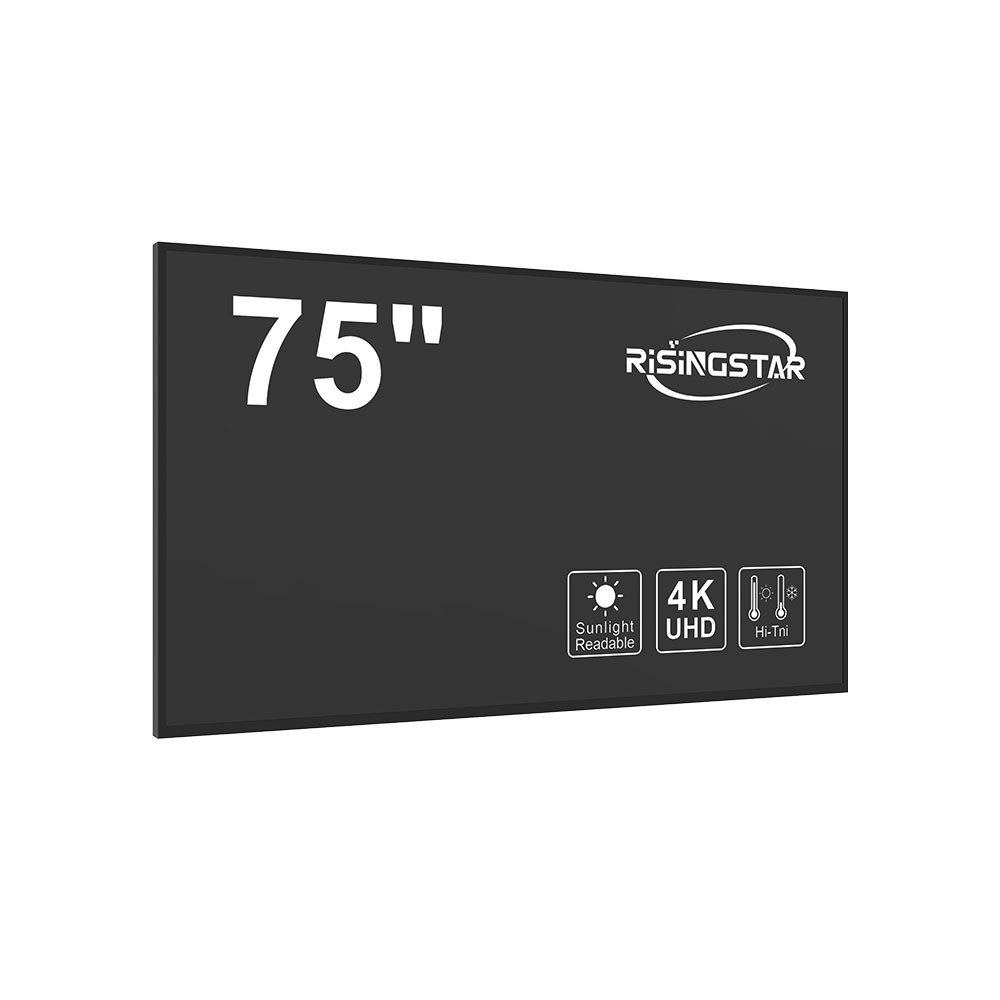
Manufacturers like Innolux, LG Display, and Sharp have developed proprietary technologies such as “Sunlight Readable” or “Extreme Brightness” panels, leveraging anti-reflective coatings (ARC), polarized filters, and active matrix addressing to reduce glare while enhancing readability. For example, the U.S. Department of Defense has standardized on 5,000+ cd/m² displays for battlefield command systems, citing improved situational awareness in daylight operations. Similarly, aviation manufacturers like Airbus use high-brightness LCDs in cockpit displays (e.g., the A350 XWB’s multi-function displays) to comply with EASA and FAA safety regulations requiring 10,000 cd/m² peak brightness for emergency navigation.
Case studies from the automotive industry further validate the necessity of this technology. In 2023, Tesla introduced a 4,000 cd/m² sunlight-readable touchscreen in its Model Y fleet, reducing driver distraction by minimizing screen glare during daytime driving—a feature validated by NHTSA usability metrics. Meanwhile, solar-powered IoT devices used in agriculture (e.g., soil monitoring stations in Kenya) rely on low-power yet high-brightness LCDs to operate reliably under 12-hour daily sun exposure without battery degradation.
Key challenges remain, however. Power consumption increases linearly with brightness, necessitating intelligent power management systems such as adaptive brightness control (ABC) or dynamic range compression algorithms. Thermal management is another concern; sustained high luminance can lead to heat buildup, potentially shortening lifespan. Manufacturers address this by integrating thermal sensors and passive cooling techniques like heat pipes or thermally conductive films, ensuring stable operation across -30°C to +70°C temperature ranges.
In conclusion, high-brightness sunlight-readable LCDs represent a convergence of optics, materials science, and human factors engineering. Their adoption continues to grow rapidly—not only in defense and aerospace but also in smart cities, autonomous vehicles, and renewable energy systems. As global demand for outdoor digital interfaces rises, so too will the need for certified, reliable, and energy-efficient sunlight-readable display solutions. Industry collaboration, adherence to IEC/ISO standards, and continuous R&D into OLED-based alternatives will define the next generation of outdoor-readability innovations.