RisingStar
- Home
- About Us
- Products
- News
- Video
- Contact
- Send Inquiry
Search
- Home
- About Us
- Products
- News
- Video
- Contact
- Send Inquiry
RisingStar
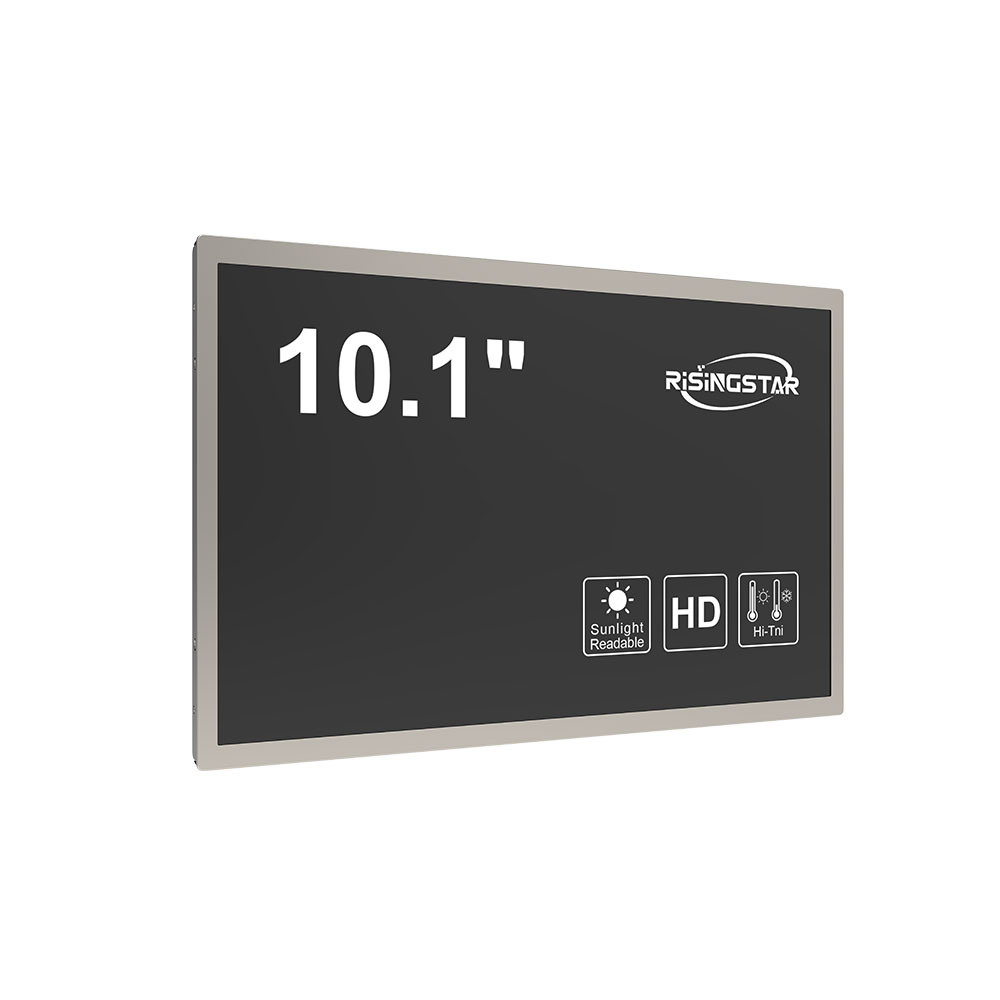
High-brightness sunlight-readable LCD screens are essential in environments where visibility under direct sunlight is critical—such as military field operations, transportation systems (e.g., buses, trains, and aircraft), outdoor construction equipment, medical devices, and industrial control panels. These displays must maintain clarity and readability even in extreme lighting conditions, often requiring luminance levels exceeding 5,000 nits, compared to standard indoor displays that typically operate at 300–500 nits.
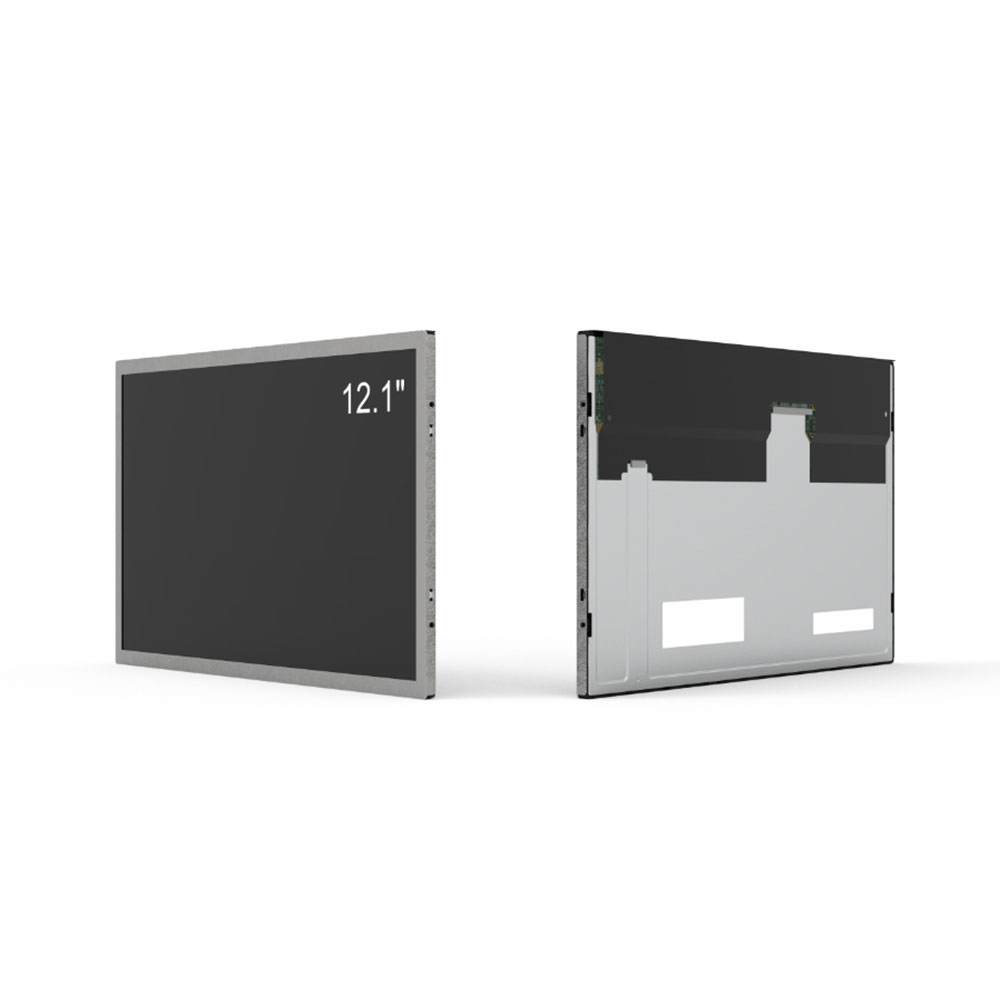
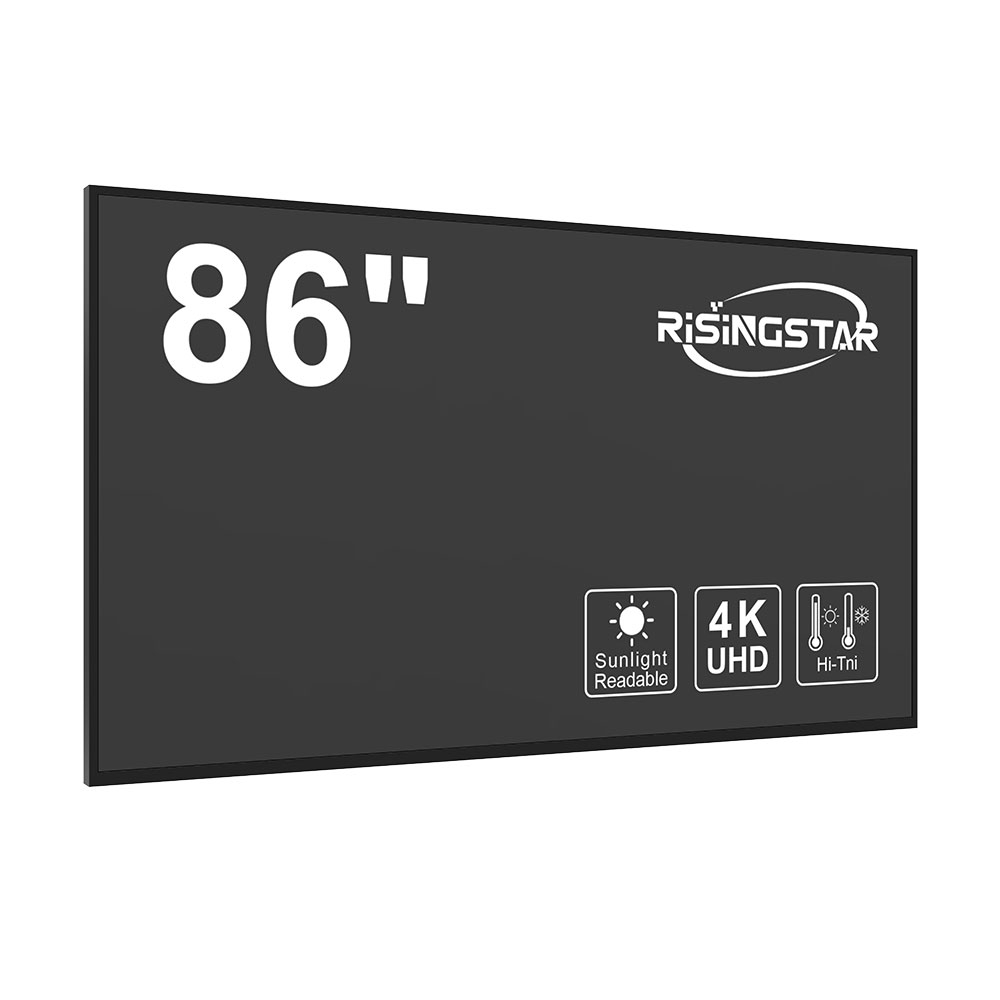
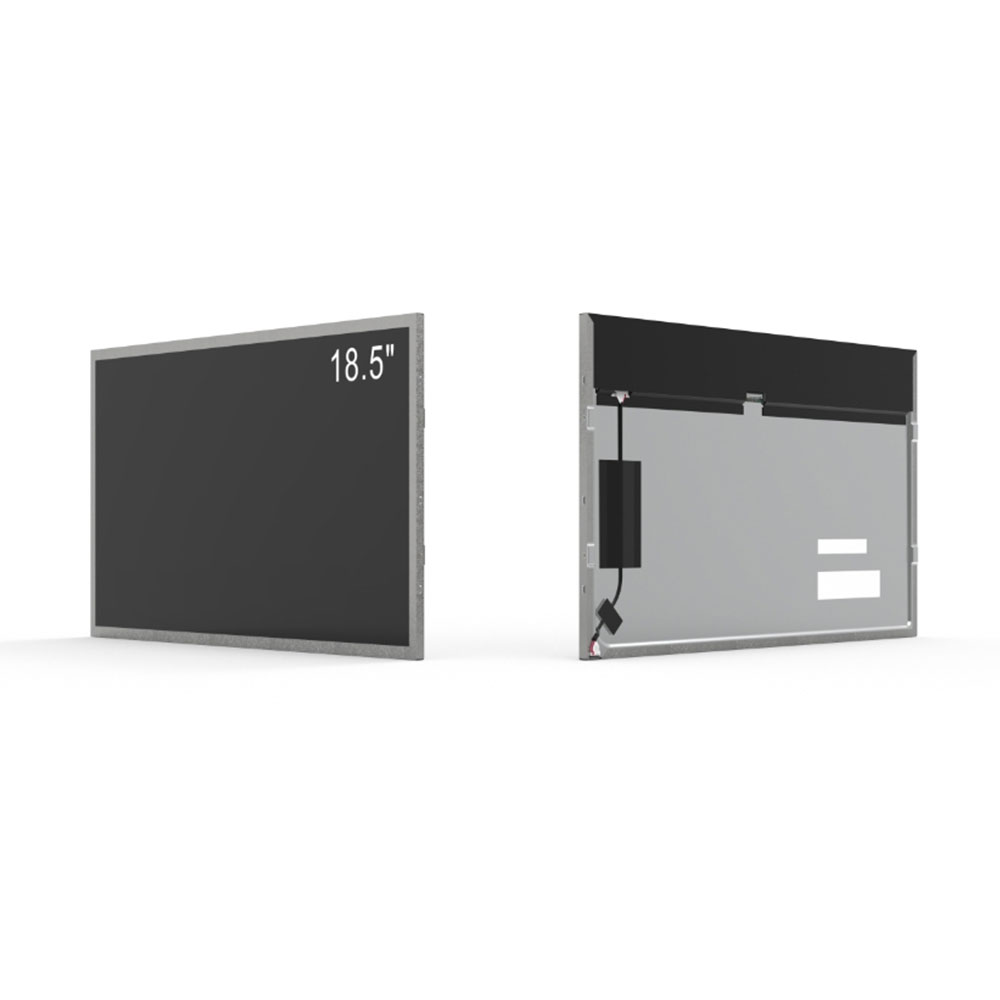
The display ratio of 16:9 is the most widely adopted aspect ratio across modern high-brightness LCDs due to its compatibility with HD, Full HD, and 4K content standards. This ratio ensures optimal viewing experience for multimedia, video, and data visualization tasks in both professional and consumer-grade applications. Sizes such as 10.1", 13.3", 15.6", 18.5", 21.5", 23.8", 27", 32", 43", 46", 49", 55", 65", 75", 86", 98", and 110" offer flexibility for diverse use cases—from portable handheld devices to large-scale control room monitors. For example, 10.1" units are common in ruggedized tablets used by field engineers, while 75" and larger displays serve as digital signage in airports or manufacturing plants.
Key technologies enabling sunlight readability include transflective liquid crystal layers, advanced anti-glare coatings, and integrated ambient light sensors that dynamically adjust brightness. Some models also feature polarized filters and high-contrast ratios (typically >1000:1) to minimize reflections. According to the International Electrotechnical Commission (IEC) standards, particularly IEC 60068-2-1, these displays undergo rigorous testing for temperature, humidity, and mechanical shock resistance to ensure operational reliability in harsh environments.
Case studies from leading manufacturers like LG Display, Sharp, and Innolux demonstrate that implementing high-brightness LCDs in public transit systems reduces driver distraction by up to 40%, improving safety and efficiency. Similarly, in solar farm monitoring systems, 43" and 55" high-brightness displays allow technicians to read real-time data from remote locations without needing shade or artificial lighting. The growing adoption of these displays in smart cities, IoT-enabled infrastructure, and autonomous vehicle dashboards further underscores their importance in next-generation technology ecosystems.
As global demand for durable, energy-efficient, and highly visible displays increases—especially in emerging markets like India, Southeast Asia, and Africa—the ability to customize screen sizes and brightness levels becomes a key differentiator. With ongoing R&D into OLED-on-LCD hybrid technologies and AI-driven adaptive brightness control, future generations of sunlight-readable LCDs will offer superior performance, lower power consumption, and enhanced user experiences.