RisingStar
- Home
- About Us
- Products
- News
- Video
- Contact
- Send Inquiry
Search
- Home
- About Us
- Products
- News
- Video
- Contact
- Send Inquiry
RisingStar
In EV charging infrastructure, display reliability is a mission-critical factor that directly impacts system uptime and user experience. Whether deployed in high-power DC fast chargers or destination charging pedestals, these modules face extreme solar radiation and thermal stress that can compromise standard LCD components, leading to interface failure or permanent panel degradation during peak sunlight hours.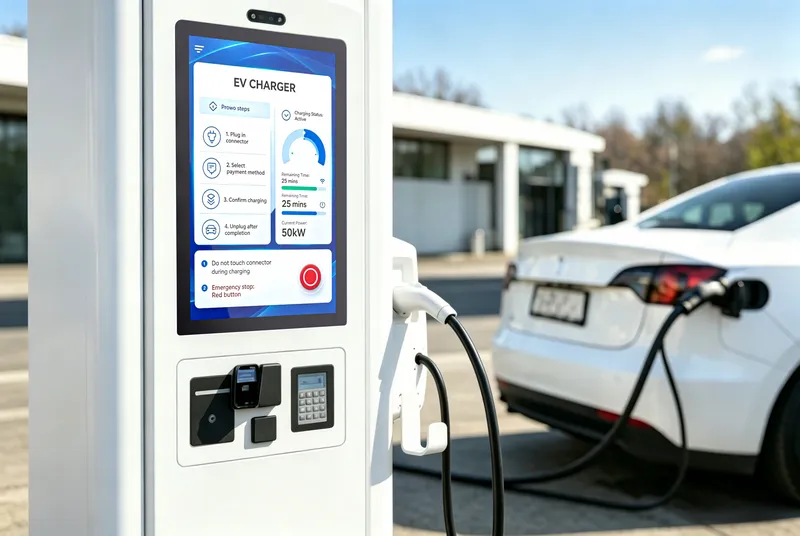
The 13.3-inch form factor has emerged as the strategic standard for EV charging stations, providing the necessary screen real estate for payment UIs and diagnostics while fitting within compact pedestal footprints. However, the survival of a 13.3-inch panel in these unshaded outdoor environments depends on specific engineering optimizations—such as high-temperature liquid crystals and thermal-chemical stability—that extend far beyond the peak luminance values found on a standard datasheet.
A 13.3 Inch Sunlight Readable Display needs 1,000–2,000 nits depending on deployment — not "as bright as possible." The right brightness for a shaded drive-thru is wrong for an unshaded desert charger.
The 13.3" open frame display format gives OEMs control over enclosure design, IP sealing, and brand identity — the module mounts directly into the customer's housing rather than sitting inside a pre-built monitor shell.
Optical bonding, Hi-Tni liquid crystal chemistry, and LVDS interface stability across -20°C to 70°C matter more than peak brightness for field reliability.
RisingStar's 13.3-inch product line spans 800 to 2,000 nits on a single mechanical footprint — same outline dimensions, same 30-pin LVDS interface, zero redesign cost when scaling brightness across deployment sites.
Most manufacturers push one message: buy the brightest panel we sell. That's lazy engineering. The right brightness depends on where the display lives.
| Brightness | Deployment | Example |
|---|---|---|
| 800–1,000 nits | Half-shaded, urban | Drive-thru kiosk under canopy, shaded EV charger in parking structure |
| 1,000–1,200 nits | Partial sun, temperate | Open-air kiosk with afternoon shade, highway toll booth |
| 1,500 nits | Full sun, direct exposure | Unshaded EV charger, outdoor ticketing machine, agricultural equipment |
| 2,000 nits | Extreme sun, high-reflectance | Desert installation, snow-reflected glare, high-altitude surveying |
The 13.3 Inch Sunlight Readable Display range from RisingStar covers this entire spectrum — 800 to 2,000 nits — all on an identical mechanical footprint and the same 30-pin LVDS interface.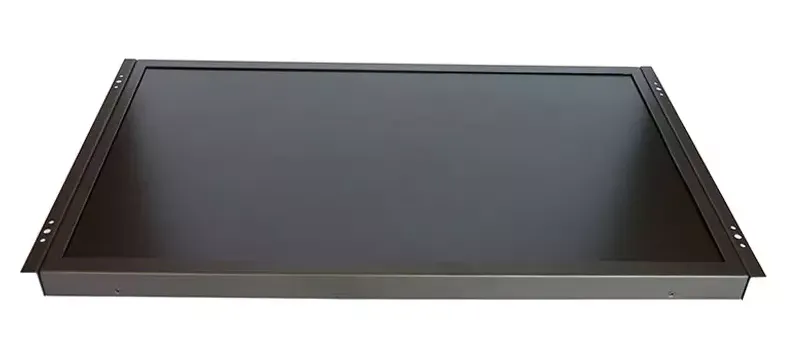
A number competitors don't advertise: when you jump from their 1,000-nit panel to their 2,000-nit panel, the interface changes. The mounting pattern changes. The power input changes. The thermal design changes. An integrator scaling brightness across a deployment essentially starts from scratch.
RisingStar's design philosophy preserves the 30-pin LVDS interface and power envelope across the entire brightness range. This means:
One integration pathway for OEMs — design the enclosure once, use it for every brightness tier.
Drop-in field upgrades — swap a 1,000-nit module for a 1,500-nit module without mechanical or electrical changes.
Supply chain simplicity — source an entire product line from one manufacturer, one interface standard, one mounting footprint.
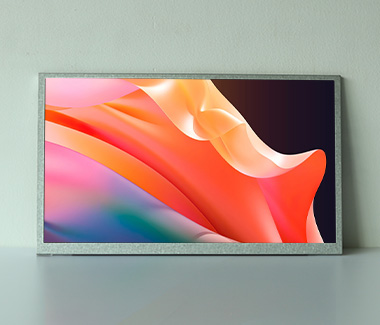
For the entry-level 1,000-nit configuration, the RS133ENT-GE10 provides the baseline IP65-ready open-frame module.
[
The 13.3-inch format is the dominant size for DC fast charger displays — large enough for payment UIs and operator diagnostics, compact enough to fit the standard charger enclosure. But charging networks span climates: a covered garage in Seattle and an unshaded highway stop in Arizona are different thermal environments.
The solution isn't buying 2,000-nit panels for every site and burning power (and budget) on shaded installations. The solution is a single product line — the RS133HAN-GE10 EV Charging Station Touch Panel at 1,000 nits for sheltered stations, stepping up to the RS13.3ETN-GE15 at 1,500 nits for exposed highway chargers — same footprint, same LVDS interface, same sourcing relationship.
Retail kiosks, parcel lockers, outdoor ticketing — these deployments face varying shade patterns and high daily touch volume. An open frame 13.3-inch module slots directly into the kiosk manufacturer's custom enclosure, with a continuous gasket providing IP65 front-face sealing. No plastic housing to design around. No consumer-branded bezel competing with the kiosk's visual identity.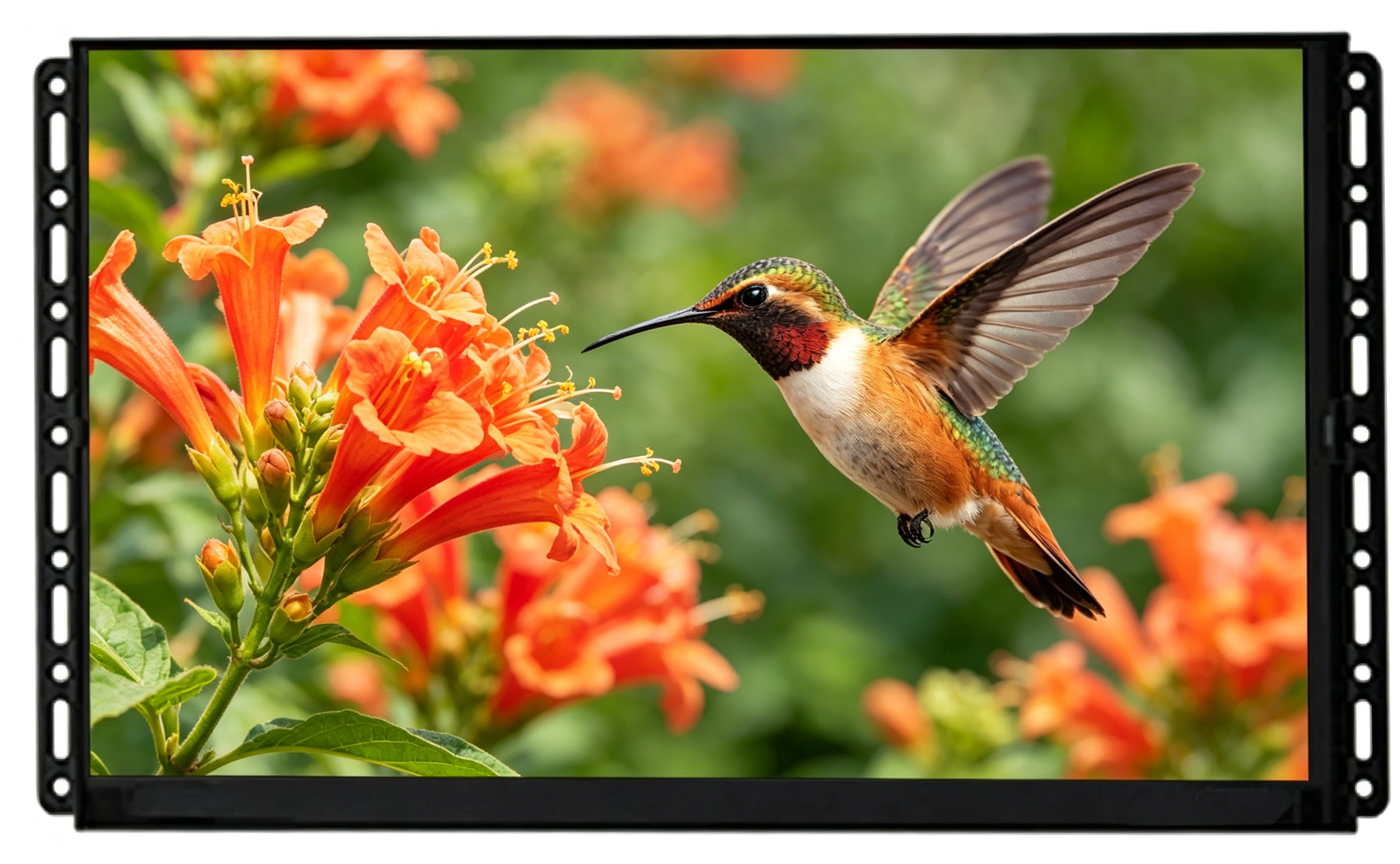
Field crews inspecting infrastructure, surveying terrain, or operating agricultural equipment need screens that adapt — 1,500+ nits under midday sun, but dim enough at dusk to avoid eye strain and preserve battery life. A 13.3-inch panel with an intelligent ambient-light-driven brightness controller handles both extremes without two separate SKUs.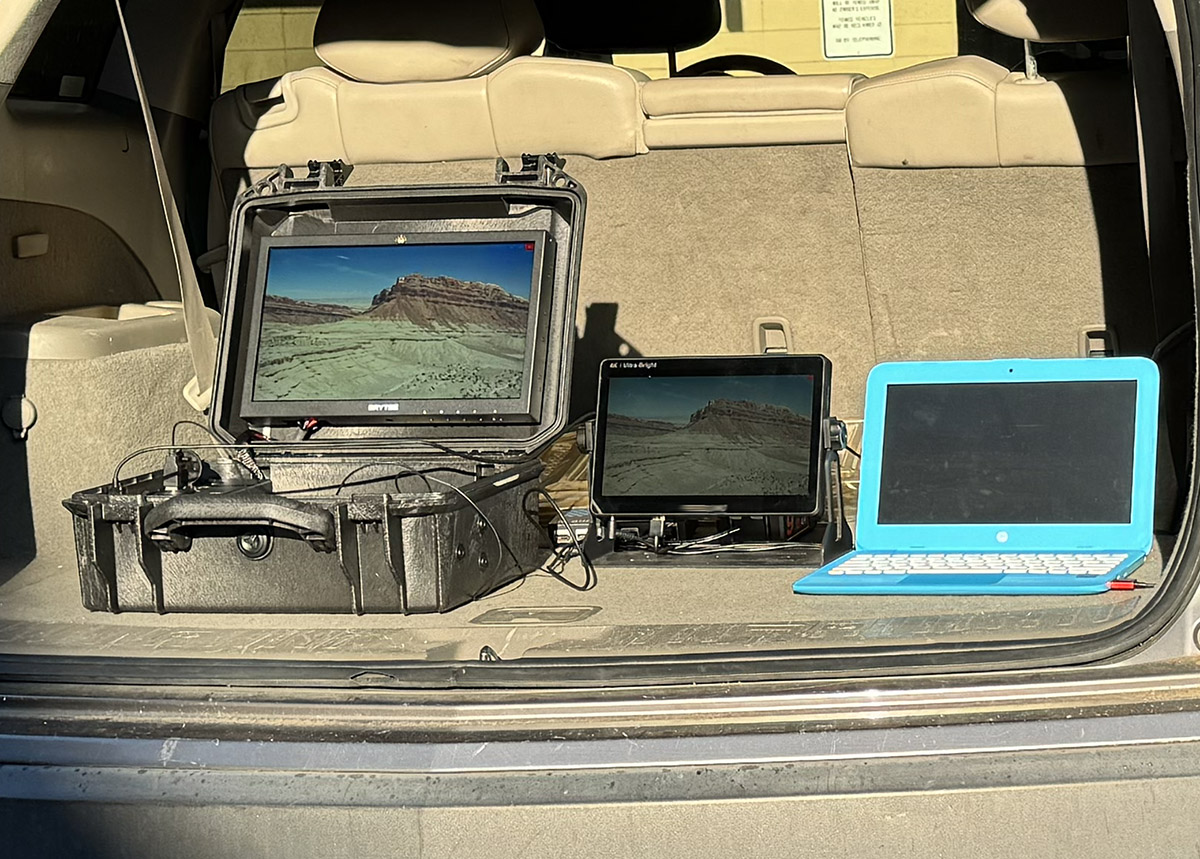
Outdoor displays don't fail from brightness inadequacy. They fail from heat.
Standard LCD panels have a clearing point around 70–85°C — the temperature where the liquid crystal layer loses its structure and the screen develops permanent black patches. In a sealed outdoor enclosure under direct sun, internal panel temperatures push past this threshold fast.
RisingStar's 13.3-inch series uses Hi-Tni liquid crystal chemistry — formulated to hold structure past 100°C — and a -20°C to 70°C operating range. That temperature spec isn't a theoretical limit. It's what the panel actually tolerates in the field: ambient +50°C plus 20°C of solar absorption headroom. Competitors rating their panels at 0°C to 50°C are effectively specifying them for indoor use.
Equally critical: LVDS differential signaling. Outdoor installations sit next to motor drives, inverters, and high-voltage lines — electromagnetic noise everywhere. LVDS's common-mode rejection keeps the image stable without requiring the integrator to add EMI shielding and filtered connectors. eDP, by contrast, uses single-ended signaling that's far more vulnerable. This is an invisible cost that doesn't appear on a spec sheet but shows up in integration time and field reliability.
Before finalizing a 13.3-inch open-frame display specification, verify:
Brightness matches the worst-case solar condition — not the average, not the best-case. A display that's readable 90% of the time is unreadable 10% of the time.
LVDS interface compatibility with your host board — 30-pin, 3.3V signaling. An LVDS-to-eDP converter adds cost and a failure point.
Thermal path from panel to enclosure — metal-on-metal conduction, not trapped air. Light-colored enclosures reduce internal temperature by 10–20°C vs. dark ones.
Optical bonding if the display faces temperature swings — bonded assemblies eliminate the internal air gap where condensation forms during overnight cooling.
PCAP touch firmware — outdoor controllers must ship with wet-surface rejection and glove-detection pre-loaded. Consumer controllers cannot distinguish rain from fingers.
RisingStar manufactures every 13.3-inch module in a 4,000 m² ISO 9001-certified facility in Shenzhen with Class 10,000 cleanroom assembly. Grade A/A+ panels are sourced directly from LG Display, AUO, BOE, Innolux, and Tianma — no intermediaries, no gray market, 3–5 year supply commitments.
Every unit goes through 100% factory inspection and a 72-hour burn-in test. OEM/ODM services include custom backlight tuning, integrated PCAP touch with glove/wet-hand firmware, optical bonding, and enclosure design in stainless steel or aluminum.
For technical inquiries, datasheets, or custom configuration requests: ai@risinglcd.com. Engineering response within 8 hours. Samples ship in 10 working days.