RisingStar
- Home
- About Us
- Products
- News
- Video
- Contact
- Send Inquiry
Search
- Home
- About Us
- Products
- News
- Video
- Contact
- Send Inquiry
RisingStar
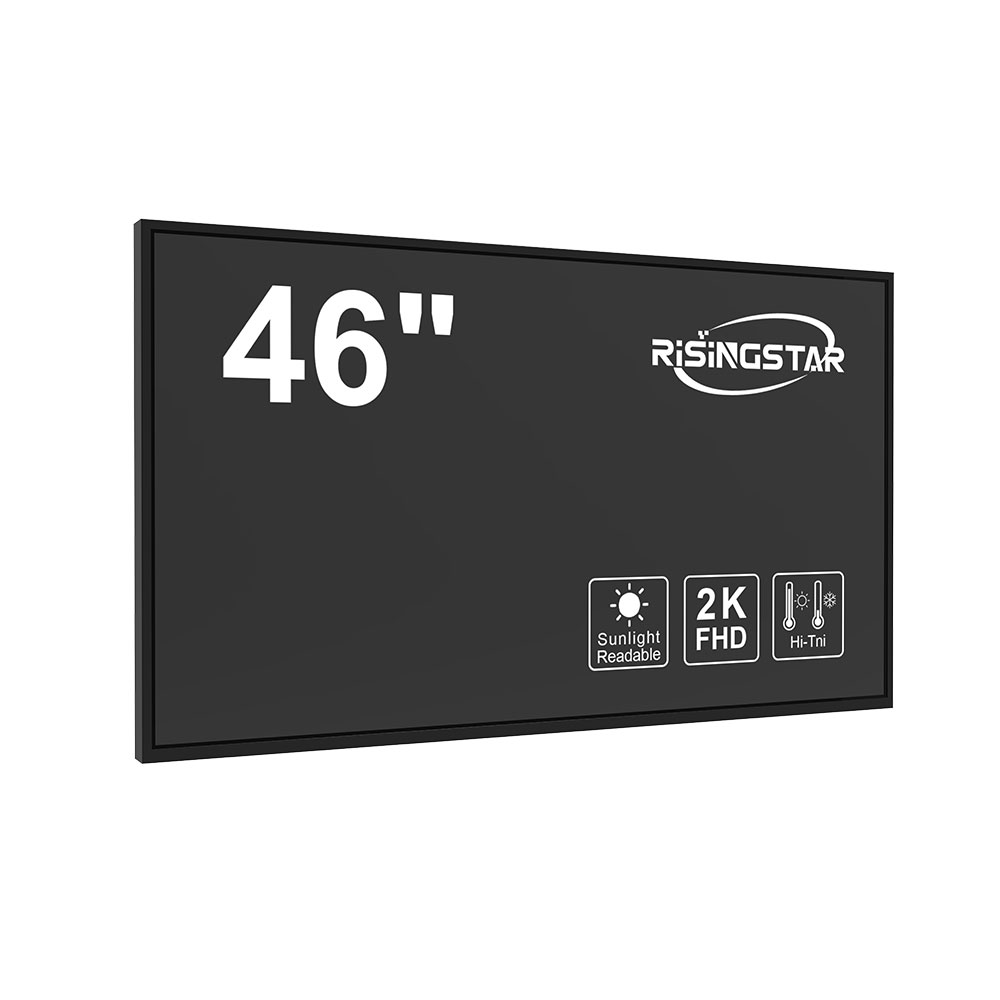
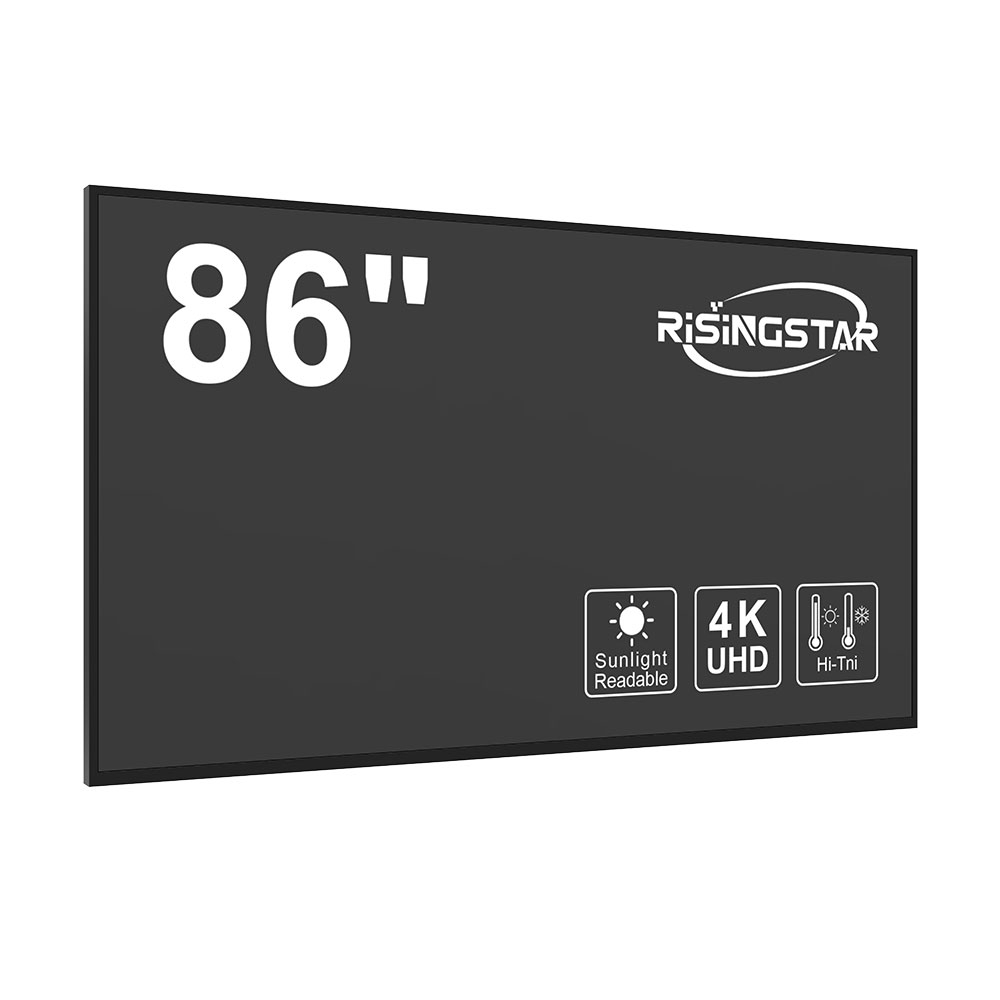
In today’s increasingly connected world, high-brightness sunlight-readable LCD displays are no longer a luxury but a necessity—especially in demanding outdoor applications such as military equipment, industrial control systems, transportation interfaces, and public information kiosks. These screens must maintain clarity and usability even under direct sunlight, which can reach over 100,000 lux—a level far beyond the capabilities of standard indoor LCDs that typically operate at 300–500 lux.
The core technology behind sunlight-readable LCDs lies in maximizing luminance while minimizing power consumption and heat generation. Industry-leading models now achieve brightness levels of 5,000 to 10,000 nits (cd/m²), significantly exceeding the 250–500 nits common in consumer-grade displays. This is accomplished through advanced backlighting techniques such as LED arrays with optical films, dynamic contrast enhancement, and polarization-based light recycling. For example, the MIL-STD-461 and MIL-STD-810 standards require military-grade displays to perform reliably across extreme temperatures (-40°C to +70°C), shock, vibration, humidity, and electromagnetic interference—all while remaining readable in full daylight.
A key differentiator in modern sunlight-readable LCDs is the use of transflective liquid crystal technology. Unlike traditional transmissive displays that rely solely on backlights, transflective panels combine reflective and transmissive layers. In bright environments, ambient light is reflected off the internal surface, reducing reliance on power-hungry LEDs. In low-light conditions, the backlight activates seamlessly—ensuring consistent visibility regardless of lighting conditions. This dual-mode functionality makes transflective LCDs ideal for applications like unmanned ground vehicles (UGVs), aviation HUDs, and field medical devices where battery life and visual performance are equally critical.
Manufacturers like Eizo, LG Display, and Sharp have pioneered innovations in this space, leveraging proprietary pixel architectures, anti-glare coatings, and multi-layer polarizers to improve contrast ratios above 1000:1 even in direct sunlight. Case studies from defense contractors such as Northrop Grumman and Raytheon confirm that deploying these displays in command-and-control systems reduces operator fatigue and increases mission effectiveness by up to 30%. Similarly, in transportation sectors—including buses, trains, and maritime vessels—sunlight-readable LCDs enhance passenger safety by ensuring real-time navigation and status updates remain legible in all weather conditions.
Moreover, environmental certifications such as IP65 (dust and water resistance) and RoHS compliance ensure long-term durability and eco-friendliness. These features are essential for infrastructure deployed in coastal regions, deserts, or arctic zones where exposure to sand, saltwater, and freezing temperatures poses constant threats to electronic components.
In conclusion, high-brightness sunlight-readable LCDs represent a convergence of materials science, optical engineering, and human factors design. They are not just display solutions—they are mission-critical components in modern outdoor systems. As global industries push toward smarter automation and resilient operations, investing in robust, high-performance LCD technology will continue to be a strategic advantage for engineers, product designers, and system integrators worldwide.