RisingStar
- Home
- About Us
- Products
- News
- Video
- Contact
- Send Inquiry
Search
- Home
- About Us
- Products
- News
- Video
- Contact
- Send Inquiry
RisingStar
High-brightness sunlight-readable LCD screens have become essential in modern outdoor environments where visibility under direct sunlight is critical. These displays are engineered to maintain clarity and contrast even in extreme lighting conditions—ranging from bright midday sun (over 100,000 lux) to low-light urban settings. As global industries—from military and transportation to retail and agriculture—demand reliable, durable, and user-friendly interfaces in open-air environments, the development of high-brightness LCDs has evolved into a mature, standards-driven field.
One of the most prominent applications is in military and defense systems, such as battlefield command consoles, vehicle-mounted displays, and drone control units. According to a 2023 report by MarketsandMarkets, the global military display market is projected to exceed $4.8 billion by 2027, with over 60% of growth attributed to high-brightness sunlight-readable displays. In civilian contexts, these screens power digital signage in airports, public transit, and smart city infrastructure, where ambient light can reach 50,000–100,000 lux. For example, London’s Heathrow Airport uses high-brightness LCDs on its departure boards, ensuring passengers can read information regardless of weather or time of day.
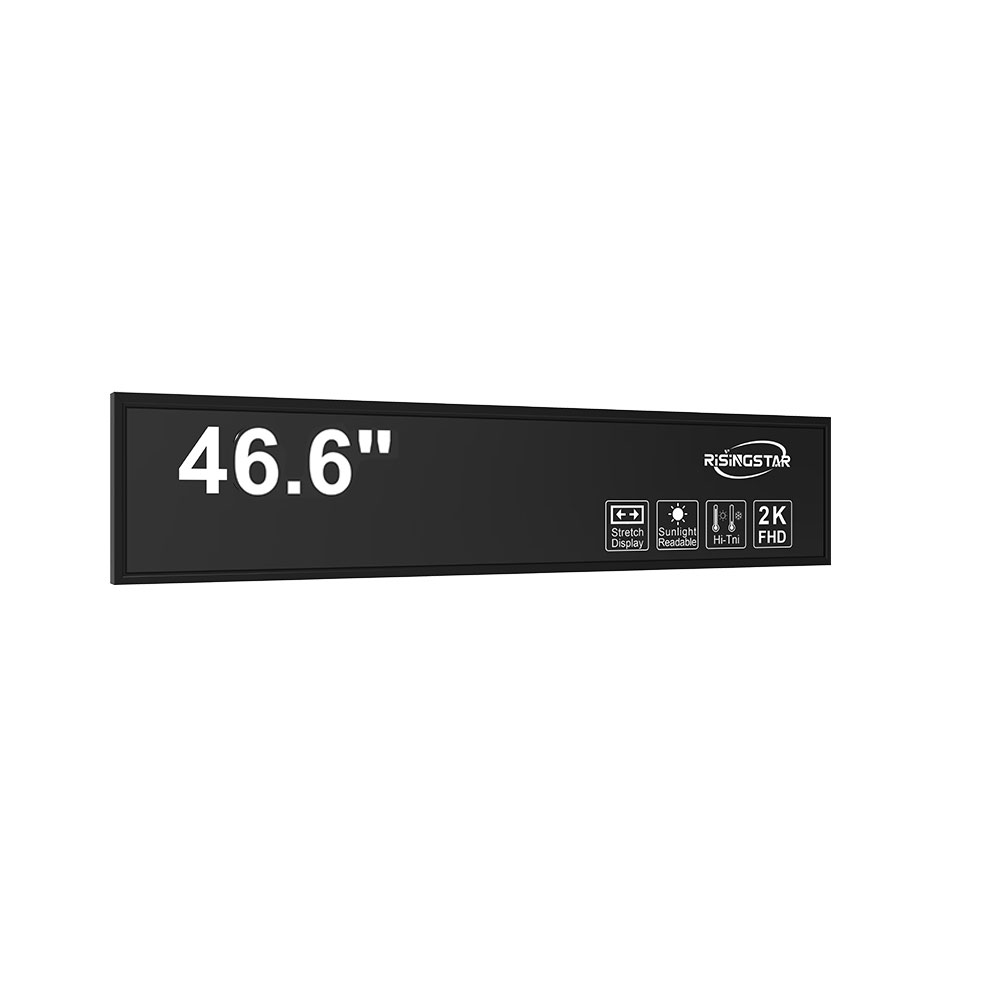
Advantages of high-brightness sunlight-readable LCDs include superior contrast ratios (often 1000:1 or higher), wide viewing angles (up to 178°), and advanced anti-glare coatings that reduce reflection by up to 95%. They also incorporate automatic brightness adjustment via ambient light sensors (ALS), which optimize power consumption while maintaining readability—a key feature for battery-powered devices like handheld scanners used in warehouse logistics. Additionally, many models meet MIL-STD-810G environmental durability standards, making them resistant to vibration, temperature extremes (-30°C to +70°C), and humidity.
Despite their benefits, common challenges remain. One issue is heat dissipation—high-brightness LEDs generate more thermal load, requiring efficient thermal management solutions like passive cooling or micro-heat pipes. Another challenge is cost; high-brightness panels typically cost 20–40% more than standard LCDs due to specialized components like transflective backlighting and polarized filters. Moreover, color accuracy may degrade at extreme brightness levels if not properly calibrated—an issue addressed in newer OLED-LCD hybrid designs, such as those developed by Sharp and LG Display in 2022.
The latest trends in this sector include integration with AI-based ambient light sensing, which dynamically adjusts brightness based on real-time scene analysis—not just light intensity. This innovation reduces eye strain and extends screen lifespan. Another emerging trend is the adoption of mini-LED and micro-LED backlights, which offer localized dimming and peak brightness exceeding 5,000 nits, far surpassing traditional CCFL or LED-backlit LCDs. According to a 2024 study published in the IEEE Transactions on Consumer Electronics, mini-LED-based sunlight-readable displays show 30% better energy efficiency and 40% faster response times than conventional alternatives.
In conclusion, high-brightness sunlight-readable LCD technology continues to advance rapidly, driven by demand across diverse sectors. As manufacturing costs decrease and performance improves through innovations like AI-assisted optics and next-gen backlighting, these displays will become increasingly accessible for both mission-critical and consumer-grade outdoor applications worldwide.