RisingStar
- Home
- About Us
- Products
- News
- Video
- Contact
- Send Inquiry
Search
- Home
- About Us
- Products
- News
- Video
- Contact
- Send Inquiry
RisingStar
High-brightness sunlight-readable LCD screens have become essential in environments where ambient light levels exceed typical indoor conditions—such as outdoor kiosks, military equipment, transportation systems, medical devices, and industrial control panels. These displays are engineered to maintain visibility under direct sunlight, often exceeding 5,000 nits of brightness, far surpassing standard indoor LCDs that typically peak at 300–500 nits. The display ratio of 16:9 is widely adopted across various screen sizes—from compact 10.1-inch units to massive 110-inch panels—to ensure compatibility with modern video formats, including HD (1280x720), Full HD (1920x1080), and even 4K resolution when supported.
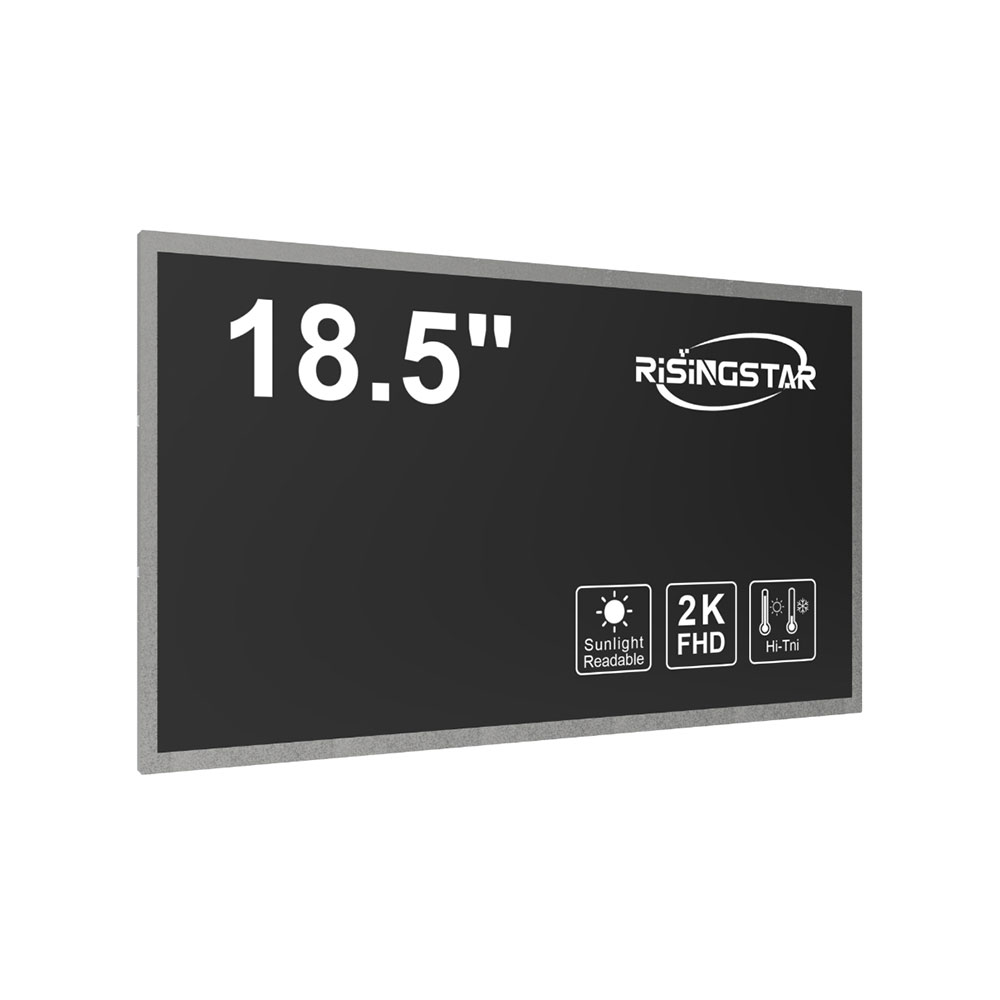
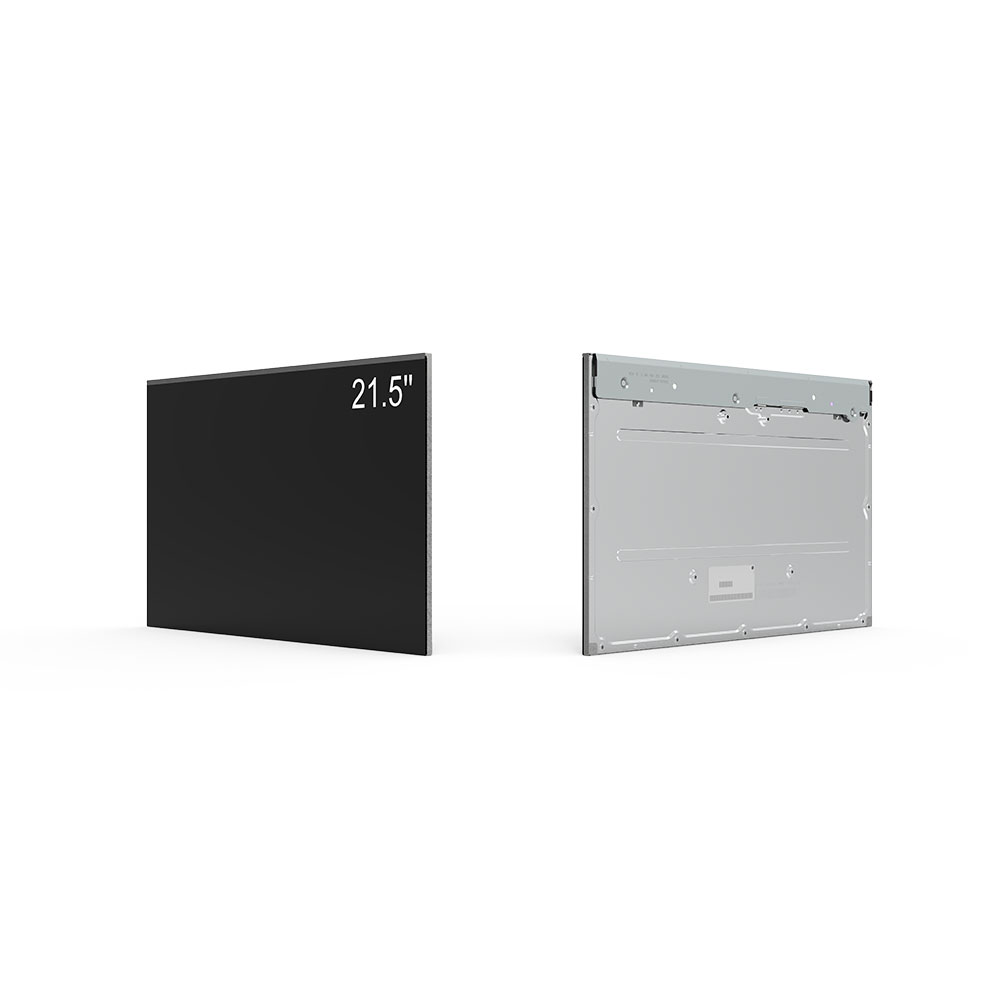
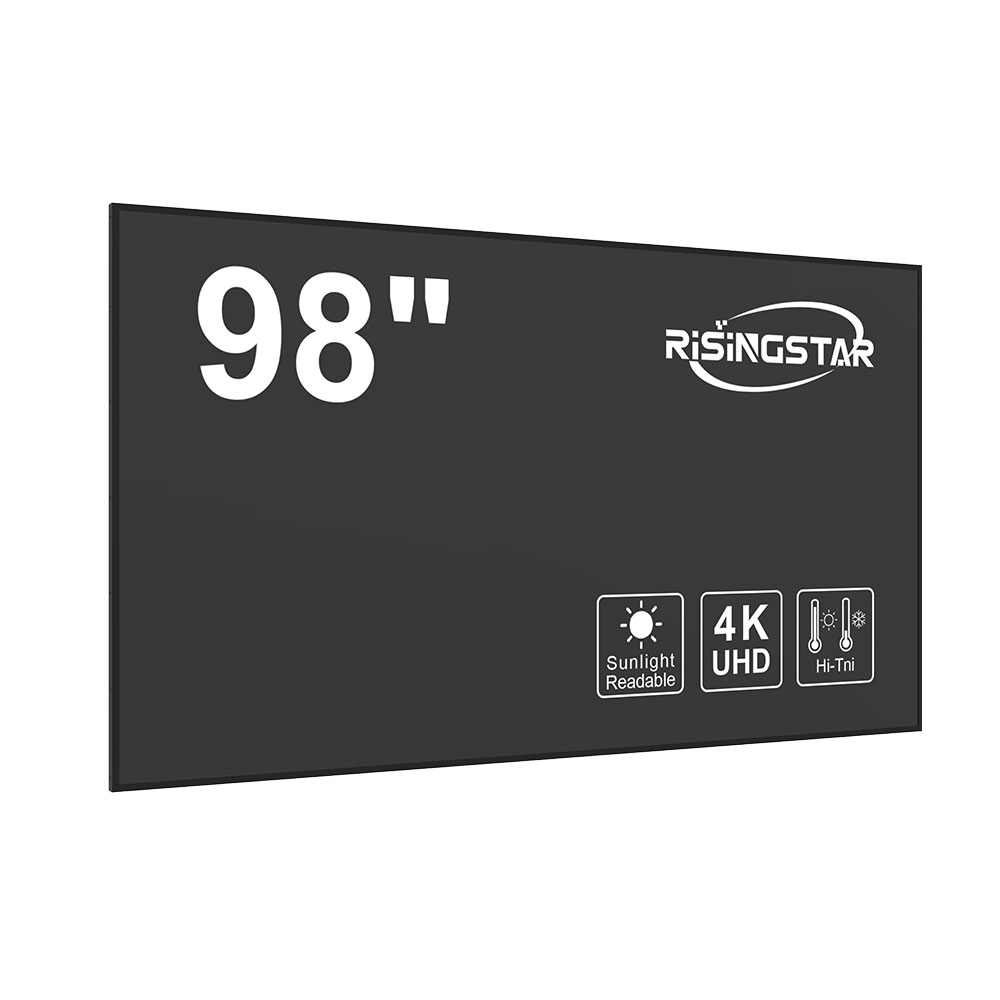
Common screen sizes in this category include 10.1", 13.3", 15.6", 18.5", 21.5", 23.8", 27", 32", 43", 46", 49", 55", 65", 75", 86", 98", and 110". Each size caters to distinct applications: small displays like 10.1" and 13.3" are used in handheld ruggedized devices; mid-sized 21.5"–27" units dominate industrial automation and digital signage; while large formats from 43" up to 110" serve public information systems, command centers, and outdoor advertising. For example, a 55" sunlight-readable LCD in a solar-powered traffic management system must withstand extreme temperature fluctuations (-30°C to +70°C) and deliver reliable performance in full daylight without glare or color distortion.
Manufacturers such as ELO Touch Solutions, LG Display, and Sharp use advanced technologies like transflective liquid crystal cells, high-efficiency LED backlighting, and anti-reflective coatings to enhance visibility. Transflective technology allows the panel to switch between reflective mode (in bright environments) and transmissive mode (in low light), optimizing power consumption while maximizing contrast. In addition, some models integrate automatic brightness adjustment (ABA) based on ambient light sensors, ensuring energy efficiency and consistent readability across varying lighting conditions.
Industry standards such as MIL-STD-810G (for military-grade durability) and IP65/IP67 (for dust and water resistance) further validate these displays’ suitability for demanding environments. Case studies from defense applications—like those deployed by NATO forces in desert zones—show that sunlight-readable LCDs reduce operational errors and improve situational awareness. Similarly, automotive manufacturers use 15.6" and 17.3" displays in vehicle dashboards exposed to direct sun, demonstrating that proper design can overcome thermal and optical challenges.
These displays are not just about brightness—they require precise calibration of gamma curves, color accuracy (typically within ΔE< 3), and fast response times (< 8ms) to prevent motion blur in dynamic content. As demand grows for edge computing, IoT integration, and AI-enabled visualization tools, sunlight-readable LCDs are evolving beyond passive screens into intelligent, interactive interfaces capable of operating reliably in any environment—from construction sites to offshore oil rigs.