RisingStar
- Home
- About Us
- Products
- News
- Video
- Contact
- Send Inquiry
Search
- Home
- About Us
- Products
- News
- Video
- Contact
- Send Inquiry
RisingStar
In today’s increasingly connected and mobile-driven world, high-brightness sunlight-readable LCD screens have become indispensable in outdoor environments where visibility under direct sunlight is critical. From military field operations to public transportation displays and industrial control panels, these screens are engineered to maintain clarity and functionality even under extreme lighting conditions—often exceeding 10,000 lux of ambient light. Unlike standard LCDs that suffer from poor contrast and washed-out images in bright daylight, high-brightness sunlight-readable displays employ a combination of advanced backlighting, anti-glare coatings, and optimized panel technologies to ensure legibility in any environment.
The main body of this technology revolves around three key innovations: brightness enhancement, contrast optimization, and ambient light compensation. First, brightness levels in modern sunlight-readable LCDs often reach 5,000 to 10,000 nits—far surpassing the typical 300–500 nits found in consumer-grade displays. This is achieved through high-efficiency LED backlights with precise optical diffusers and reflective layers that maximize luminance while minimizing power consumption. For example, the U.S. Department of Defense has mandated that all portable military displays must achieve at least 5,000 nits of brightness for battlefield readability—a standard now widely adopted across global defense systems.
Second, contrast ratios are significantly improved using advanced polarizer films and liquid crystal cell designs. These include transflective or reflective modes that supplement transmitted light with internal reflection, especially useful during low-light conditions like dusk or nighttime operations. Case studies from companies like LG Display and Sharp show that their transflective LCDs can maintain readable contrast ratios above 1000:1 even under 10,000 lux of sunlight, a critical metric for safety-critical applications such as aviation dashboards and construction equipment interfaces.
Third, adaptive brightness control powered by ambient light sensors ensures energy efficiency without compromising visibility. Smart algorithms dynamically adjust screen brightness based on real-time environmental conditions, extending battery life in portable devices while preventing over-illumination in shaded areas. This feature is particularly beneficial in public transit systems (e.g., London Underground’s digital signage) and agricultural IoT terminals deployed in rural settings where consistent lighting is not guaranteed.
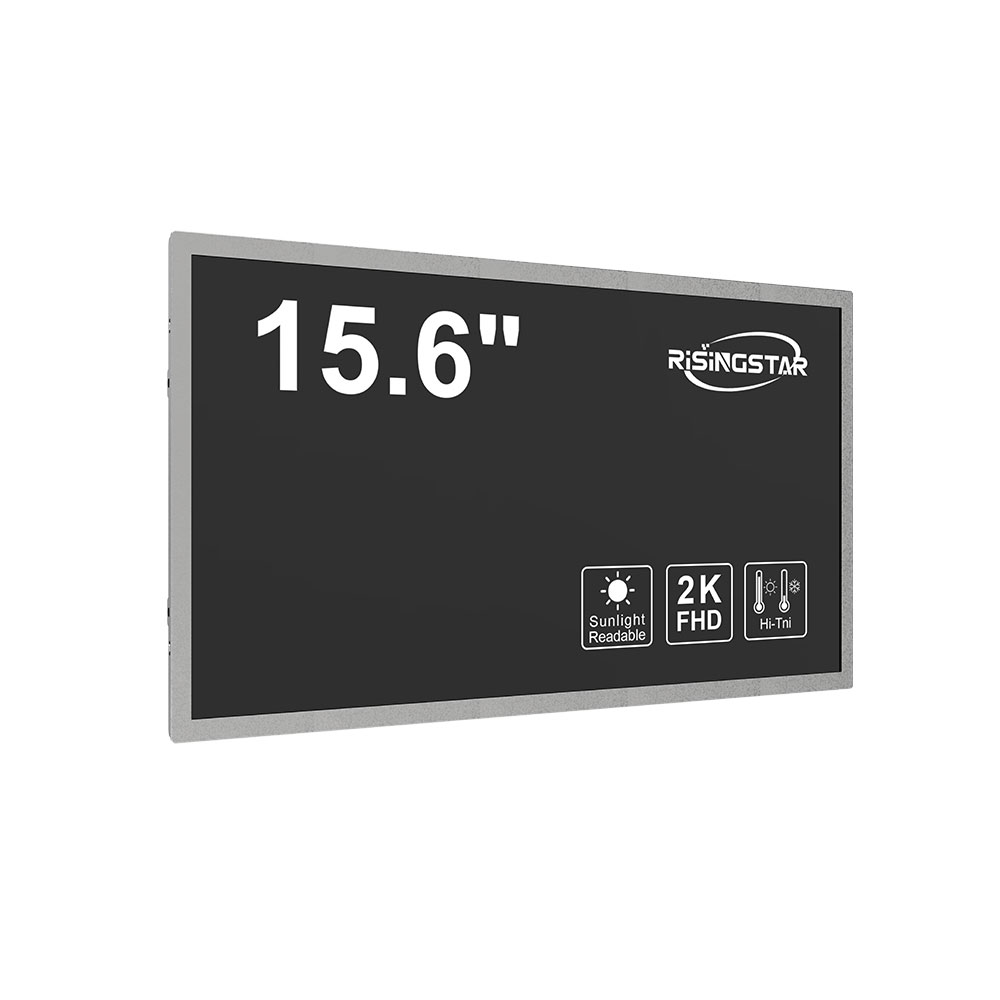
The conclusion is clear: high-brightness sunlight-readable LCD technology is no longer just an option—it’s a necessity in outdoor and harsh-environment applications. As global industries—from logistics and mining to smart city infrastructure—continue to digitize, the demand for reliable, durable, and highly visible displays will only grow. Industry standards such as MIL-STD-810G (for ruggedization) and ISO 9241-307 (for human factors in outdoor display design) further validate the importance of these solutions. With ongoing R&D in micro-LED integration and quantum dot-enhanced color gamut, the future of sunlight-readable displays promises even greater performance, longevity, and cost-effectiveness across both commercial and mission-critical sectors.