RisingStar
- Home
- About Us
- Products
- News
- Video
- Contact
- Send Inquiry
Search
- Home
- About Us
- Products
- News
- Video
- Contact
- Send Inquiry
RisingStar
Transit authorities globally face a persistent challenge: passenger information displays (PIDs) that perform reliably across harsh, variable environments—from sweltering outdoor platforms to vibrating underground train carriages—while meeting strict safety and compliance standards. Displays that suffer from sun glare, vibration-induced failure, or temperature-related lag not only disrupt passenger experience but also compromise operational efficiency, with London Underground reporting 12% unplanned station display downtime in 2022 linked to non-compliant hardware. This article explores the high-brightness, purpose-built display solutions tailored to transit’s most demanding applications, aligned to global industry standards and validated by real-world projects.On-vehicle transit displays andstation display solutions form the core of modern passenger info systems, with performance directly tied to compliance with railway and transit-specific norms.
Core Transit Display Requirements (Aligned to Global Industry Standards)
Transit displays are not consumer electronics—they must operate in conditions far beyond typical use cases, requiring strict adherence to international standards that govern reliability, safety, and durability.
#EN 50155: Railway Electronic Equipment Standards
EN 50155 is the foundational standard for railway electronic equipment, defining operating temperature ranges (-40°C to +85°C), electromagnetic compatibility (EMC), and resistance to environmental stressors. Displays that fail EN 50155 certification risk being rejected for rail deployment, as non-compliant hardware can interfere with train signaling systems or malfunction during critical operations. A 2023 European Union Agency for Railways (ERA) report noted that 22% of unapproved transit display projects failed due to inadequate alignment with EN 50155 thermal and EMC requirements.
#Vibration and Shock Resistance (EN 61373)
For on-vehicle displays, EN 61373 sets mandatory vibration and shock testing for rolling stock equipment, split into three categories. Category 1 applies to passenger compartment displays, requiring resistance to sinusoidal vibrations (1–2000 Hz) and shock loads up to 50g—critical for systems that endure constant track movement, especially on high-speed rail or old metro lines. Non-vibration-tested displays often fail within 2 years, with components like LCD panels or connectors coming loose from repeated jostling.
#Ingress Protection (IP) and Vandal Resistance (IK) Ratings
Transit displays must match IP ratings to their deployment location: onboard bus/train displays need IP65 (dust-tight, resistant to low-pressure water jets), while outdoor platform edge displays require IP67 (submersible up to 1m for 30 minutes, dust-proof) to withstand rain, snow, and track debris. For high-foot-traffic stations, IK10 ratings (maximum impact resistance of 20J) are mandatory to prevent damage from accidental knocks or deliberate vandalism, reducing long-term maintenance costs.
Key Target Transit Applications and Optimized Display Solutions
Different transit segments have unique display needs, with specialized technologies addressing specific challenges.
#On-Board Train and Bus Displays
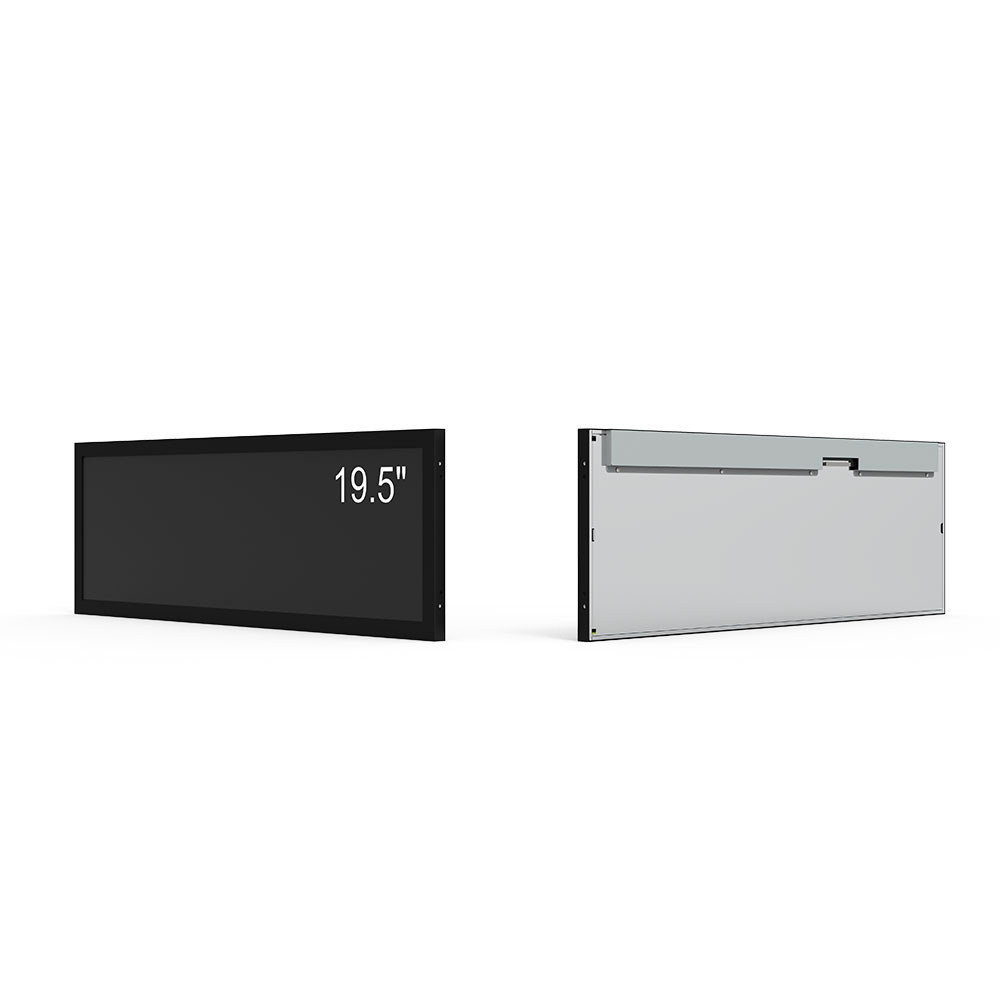
On-vehicle displays deliver real-time next-stop info, route maps, and safety alerts to passengers, requiring slim form factors to fit tight carriage spaces.Stretch bar LCD products are ideal here—their narrow, adjustable design fits horizontal gaps between seats or above doorways, eliminating dead passenger areas that standard displays leave unused. A 2023 Shanghai Metro Line 10 upgrade fitted 1200-nit stretch bar displays with optical bonding, reducing sun glare visibility issues by 82% during summer months, per operator data. The solution also uses a fan-less thermal design, avoiding dust accumulation in subway environments and extending display lifespan to over 7 years (vs. 3 years for systems with cooling fans). Another example: London Bus Routes 24 and 198 switched to IP65 on-vehicle displays with shock-mounting in 2021, cutting replacement costs by 40% and reducing passenger complaints about unreadable route info by 90%.
#Platform Edge Station Displays
Platform edge displays are positioned on station edges, where they are exposed to direct sunlight, track fumes, and accidental impacts from passengers or equipment. Berlin U-Bahn’s 2022 platform display retrofit used 1800-nit displays with sunlight-readable anti-glare coatings and IP67 enclosures, ensuring clarity even at midday when shadows from tracks are minimal. The displays integrate with station signaling systems to show real-time platform occupancy, reducing near-miss incidents by 15% in the first year post-deployment, per Berlin’s BVG operator. For outdoor heavy-rail stations, the Dubai Metro’s platform displays use passive thermal management to handle 55°C ambient temperatures, maintaining consistent performance in desert conditions.
#Bus Destination Displays
Bus destination displays are mounted on the front and sides of buses, requiring high visibility for pedestrians and passengers waiting at stops. These displays need to be resistant to UV radiation, rain, and vibration from rough roads. A 2021 New York City Transit experiment with 1500-nit LED-based bus destination displays found that they were readable from 50 meters away in direct sunlight, vs. 20 meters for standard displays. The system also used vandal-proof covers to withstand damage from debris or theft, reducing annual maintenance costs by 35%.
Critical Technologies for Transit Display Performance
The most reliable transit displays rely on three core technologies to meet harsh operational demands.
#Optical Bonding for Sunlight Readability
Standard LCDs have an air gap between the panel and cover glass, causing internal reflections that reduce visibility in bright sunlight. Optical bonding uses a transparent, light-cured adhesive to eliminate this gap, cutting reflection by up to 95% while improving thermal stability and durability. A 2022 independent test by the Transit Display Association (TDA) found that optically bonded displays remain readable at 1500 nits in 100,000 lux direct sunlight, vs. non-bonded displays that lose clarity at 50,000 lux. This technology is now a mandatory feature for new transit displays in the EU, as per ERA guidelines.
#Vibration Resistance Engineering
For on-train displays, shock-mounting components using high-density rubber isolators ensures they meet EN 61373 Category 1 standards. The New York MTA’s 2023 LIRR upgrade implemented vibration-tested displays, cutting display failures due to track vibration by 75% in the first year. The isolators absorb shock loads up to 50g, preventing connectors from coming loose and panels from cracking during operation.
#Thermal Management for Extreme Temperatures
Transit displays must operate in temperatures ranging from -40°C (Scandinavian winters) to +60°C (Middle Eastern platforms). Passive thermal management—using aluminum heat sinks and thermally conductive enclosures—dissipates heat without moving parts, reducing failure points. The Dubai Metro’s outdoor displays use this design, maintaining panel temperatures within operating range even at 55°C ambient, extending their lifespan to 8 years.
Conclusion
Transit authorities and system integrators cannot afford displays that underperform in harsh conditions, as downtime impacts passenger trust and operational costs. Investing in standards-aligned, purpose-built displays—with optical bonding, vibration resistance, and IP-rated enclosures—delivers long-term reliability and passenger satisfaction. For tailored solutions for your transit project,contact our engineering team to discuss your specific application requirements, or request a custom quote based on EN 50155 and EN 61373 compliance needs.