RisingStar
- Home
- About Us
- Products
- News
- Video
- Contact
- Send Inquiry
Search
- Home
- About Us
- Products
- News
- Video
- Contact
- Send Inquiry
RisingStar
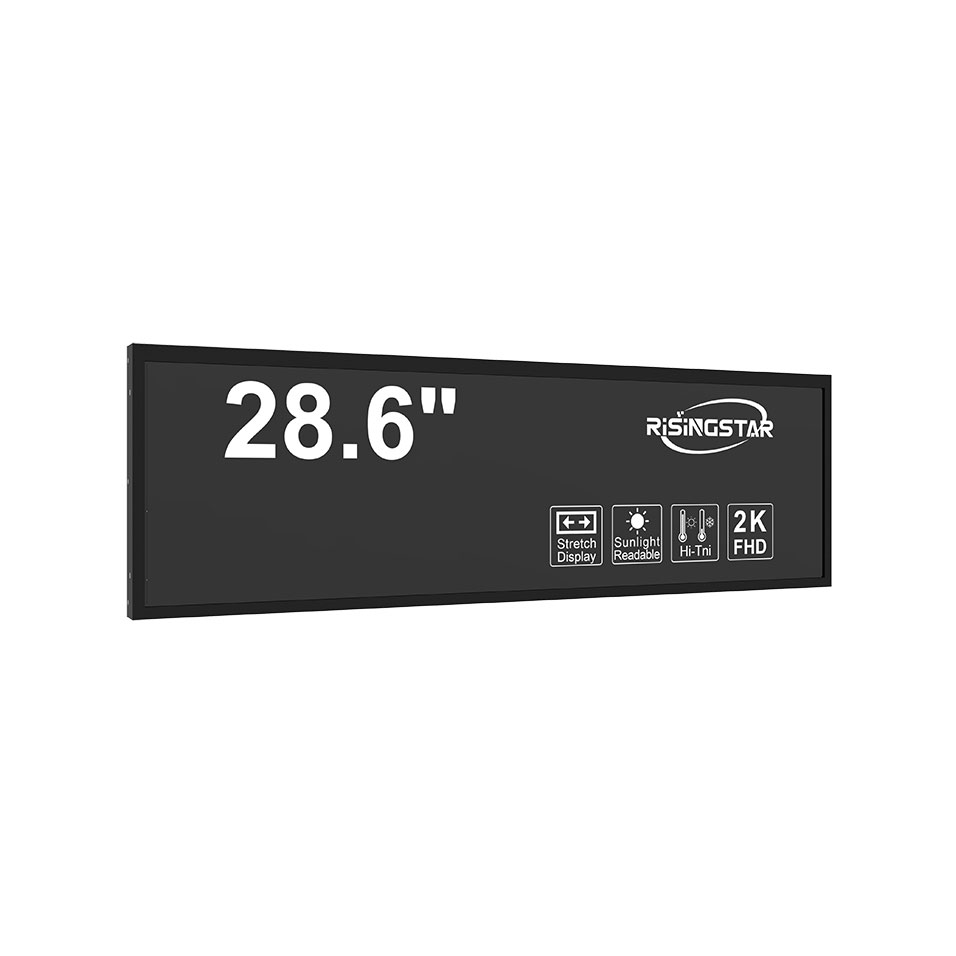
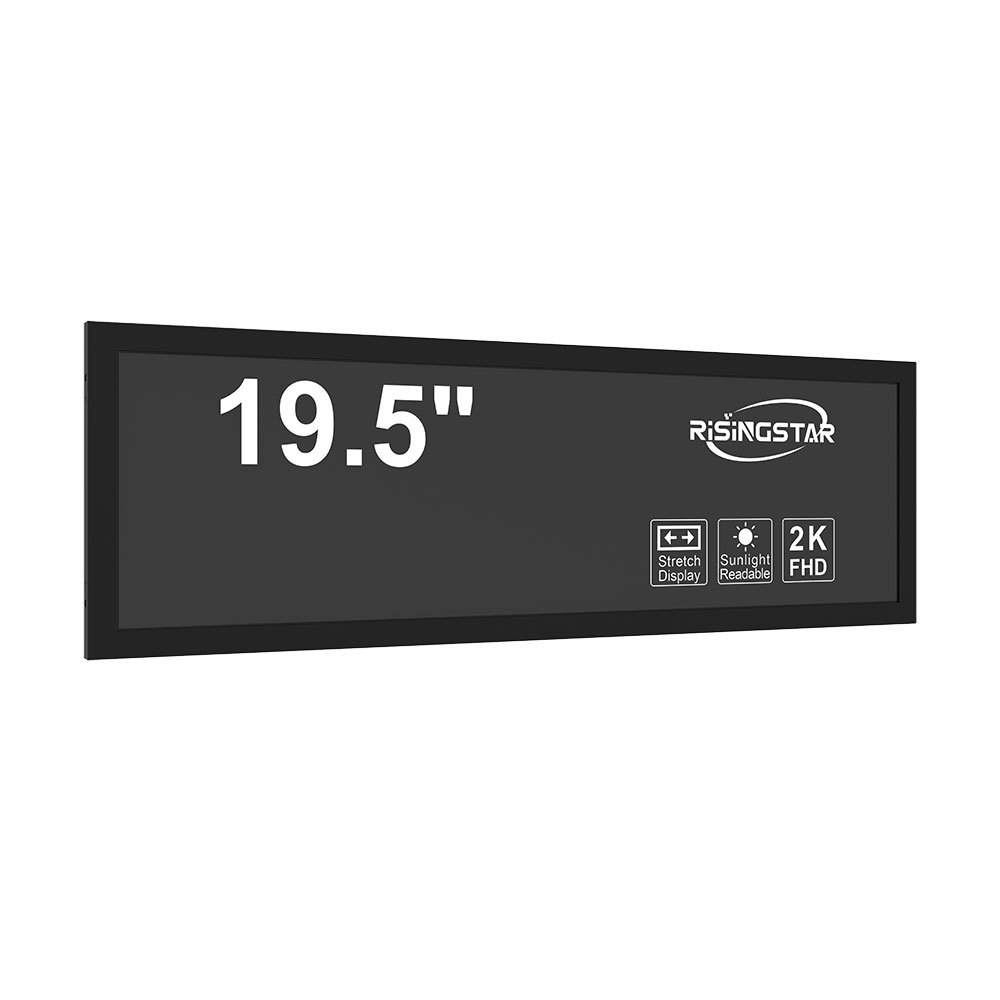
Strip screen series—ranging from 14.1 inches to 86 inches—are increasingly vital in industrial automation, transportation, military systems, and outdoor signage where high visibility under direct sunlight is critical. These specialized liquid crystal displays (LCDs) are engineered with advanced optical bonding, anti-reflective coatings, and ultra-high brightness backlighting (typically 5,000 to 10,000 nits) to ensure readability even in harsh environmental conditions. The most commonly used sizes in this range include 19", 21.2", 24", 28.6", 37", 42", 48.5", and 58.4", each optimized for specific use cases such as control panels, digital billboards, command centers, and vehicle dashboards.
For example, a 28.6-inch strip display is widely adopted in railway signaling systems due to its large format and resistance to vibration and temperature extremes. Similarly, 58.4-inch models are used in airport information displays, where clarity and durability under constant sun exposure are non-negotiable. According to the Society for Information Display (SID), modern strip screens now achieve peak brightness levels exceeding 8,000 nits through the use of high-efficiency LED arrays and vacuum-sealed panel construction—far surpassing standard indoor LCDs that typically max out at 500–1,000 nits.
These displays also integrate smart features like adaptive brightness control, wide viewing angles (up to 178°), and ruggedized housings rated IP65 or higher for dust and water resistance. In defense applications, MIL-STD-810G compliance ensures performance across shock, humidity, and thermal cycling. Case studies from companies like Sharp, LG, and Samsung reveal that strip displays with integrated touch functionality (especially on 24" and 37" models) have reduced maintenance costs by up to 40% in field-deployed monitoring systems due to their low power consumption and long operational life (>100,000 hours).
The growing demand for energy-efficient, high-brightness solutions has driven innovation in backlighting technology—such as mini-LED and micro-LED backplanes—which improve contrast ratios while reducing power draw. Furthermore, industry standards like EN 60950 and IEC 60068 define safety and environmental resilience benchmarks that all reputable manufacturers must meet. For global deployments, compatibility with both analog and digital video interfaces (HDMI, DisplayPort, LVDS) ensures seamless integration into legacy and next-gen systems alike.
In summary, strip screen series offer a scalable solution for any application requiring consistent, reliable visual output in bright ambient light. Whether it's a 14.1" embedded unit in a mobile medical device or an 86" wall-mounted display in a solar farm control room, these screens combine engineering excellence with real-world adaptability—making them indispensable tools in today’s connected, outdoor-first world.