RisingStar
- Home
- About Us
- Products
- News
- Video
- Contact
- Send Inquiry
Search
- Home
- About Us
- Products
- News
- Video
- Contact
- Send Inquiry
RisingStar
In today’s increasingly connected world, industrial-grade displays must operate reliably under extreme conditions—including exposure to water, dust, vibration, and temperature fluctuations. Among the most critical certifications for outdoor and ruggedized applications is IP66 waterproof rating—a standard defined by the International Electrotechnical Commission (IEC) in IEC 60529. This rating ensures that a display is completely protected against dust ingress (6) and can withstand powerful water jets from any direction (6), making it ideal for use in agriculture, construction, transportation, military, and public infrastructure sectors.
An IP66-rated LCD screen typically features a sealed enclosure with gaskets, conformal coatings on printed circuit boards (PCBs), and high-quality tempered glass or polycarbonate front panels. These components are rigorously tested using standardized methods such as the IEC 60529 test procedure: a dust chamber test (for the “6” in IP66) simulates continuous dust exposure, while a water jet test (for the “6”) involves spraying water at 12.5 liters per minute from a 6.3 mm nozzle at a pressure of 100 kPa from all angles within a 3-meter distance. The screen must remain fully functional without internal moisture accumulation or performance degradation after these tests.
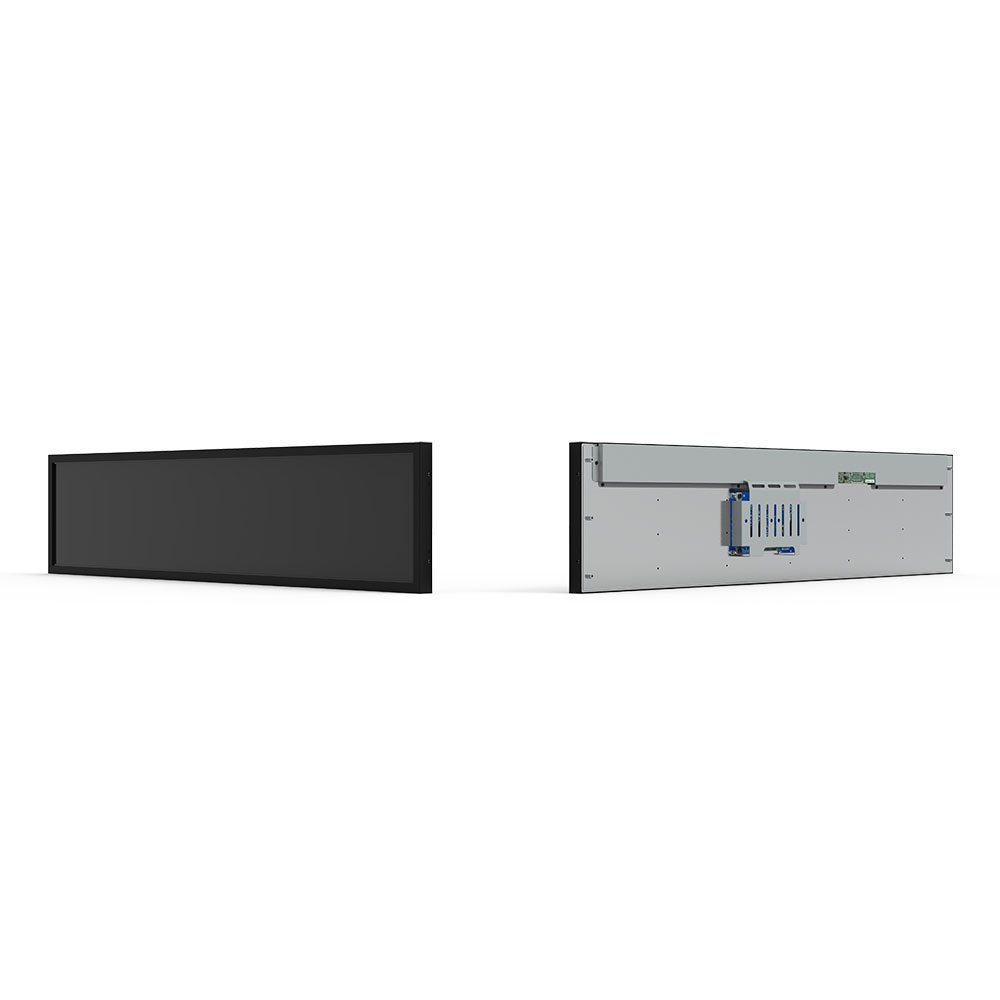
Case studies from manufacturers like Sharp, LG Display, and Innolux highlight real-world success stories. For instance, a solar-powered traffic monitoring system in Dubai deployed an IP66-rated LCD panel in a desert environment where temperatures range from -10°C to +55°C and sandstorms occur frequently. Despite prolonged exposure to wind-driven sand and sudden rain, the display maintained full clarity and touch responsiveness over two years of operation—demonstrating the importance of robust design beyond just the IP rating.
From a technical standpoint, achieving IP66 compliance requires more than just sealing the housing. It demands careful attention to thermal management, since water-resistant enclosures can trap heat. Engineers often integrate passive cooling systems (like heat sinks or vapor chambers) and ensure proper airflow routing through sealed ports. Additionally, backlighting technology must be compatible—LEDs with wide viewing angles and minimal heat output are preferred to avoid thermal stress on seals and adhesives.
For end-users, choosing an IP66 LCD means investing in long-term reliability. According to a 2023 report by MarketsandMarkets, the global market for ruggedized displays is projected to exceed $8.4 billion by 2028, driven largely by demand in smart city infrastructure and autonomous vehicle systems. In this context, IP66 isn’t just a feature—it’s a necessity for mission-critical applications where failure can result in downtime, safety risks, or financial loss.
Manufacturers also collaborate with third-party labs like UL (Underwriters Laboratories) and TÜV Rheinland to validate compliance, ensuring traceability and quality assurance across production batches. As industries push toward greater automation and IoT integration, IP66-rated LCDs will continue to play a pivotal role in enabling resilient human-machine interfaces even in the harshest environments.