RisingStar
- Home
- About Us
- Products
- News
- Video
- Contact
- Send Inquiry
Search
- Home
- About Us
- Products
- News
- Video
- Contact
- Send Inquiry
RisingStar
In today’s increasingly connected and mobile-driven world, the demand for high-brightness, sunlight-readable LCD displays has surged across industries such as transportation, defense, healthcare, agriculture, and outdoor advertising. These displays are engineered to maintain visibility under intense ambient light conditions—ranging from direct sunlight to bright indoor lighting—without compromising image quality or user experience. Among the most widely adopted display formats is the 16:9 aspect ratio, which aligns with modern video standards (like HD and 4K) and offers optimal compatibility with digital content, including streaming platforms, dashboards, and control systems.
The 16:9 ratio is now standard for a broad range of panel sizes, including 10.1", 13.3", 15.6", 18.5", 21.5", 23.8", 27", 32", 43", 46", 49", 55", 65", 75", 86", 98", and even 110" displays. Each size serves a distinct purpose—from compact portable devices like handheld field terminals (10.1"–15.6") to large-format outdoor kiosks, command centers, and industrial workstations (43"–110"). For instance, 21.5" and 23.8" panels are commonly used in ruggedized laptops and medical diagnostic equipment, while 55" and above are typical in public information displays and smart city infrastructure.
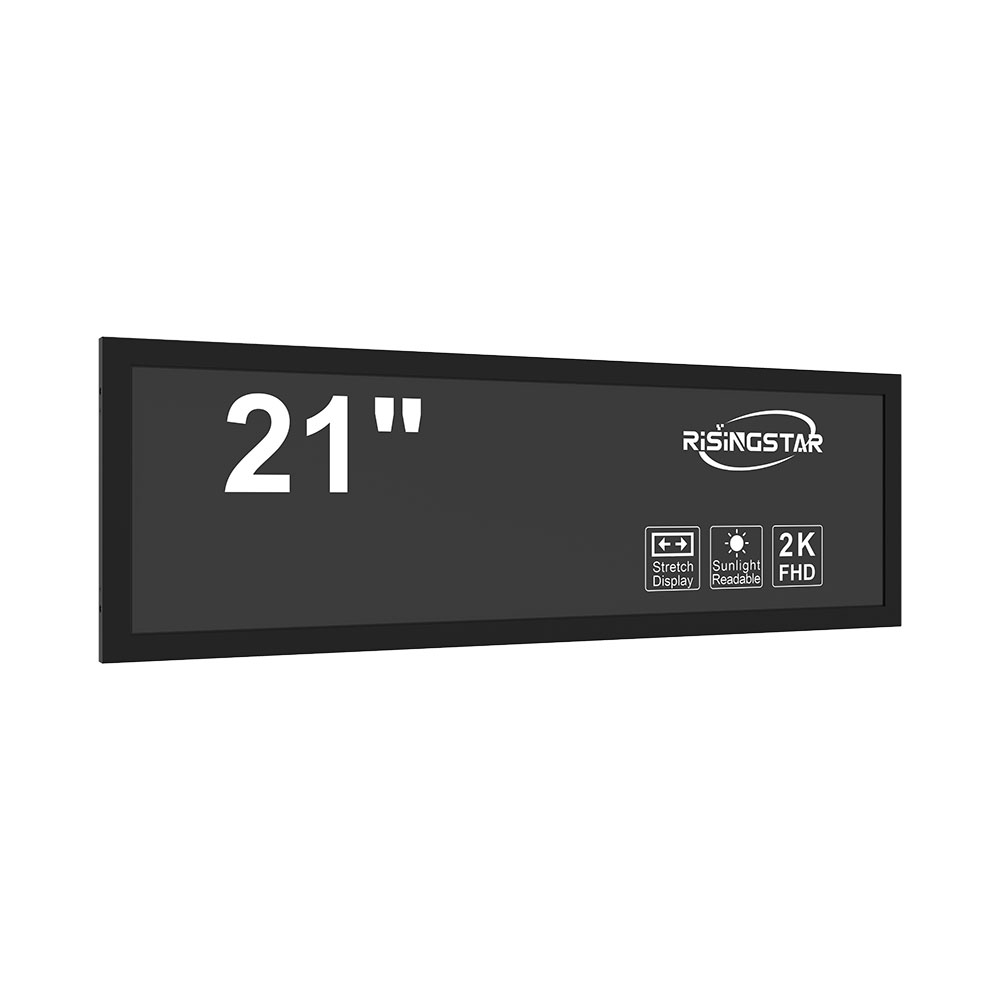
Manufacturers achieve sunlight readability through several key technologies: ultra-high brightness (typically 3,000 to 10,000 nits), anti-glare coatings, polarized films, and advanced LED backlighting systems. A critical factor is the use of transflective or transmissive liquid crystal technology that dynamically adjusts luminance based on ambient light levels—a feature especially valuable in mobile applications like military vehicles or agricultural machinery. According to a 2023 report by MarketsandMarkets, the global market for sunlight-readable displays is projected to exceed $1.8 billion by 2028, growing at a CAGR of 7.4%, driven by increasing demand in smart mobility and IoT-enabled outdoor systems.
Case studies confirm real-world effectiveness: A major European rail operator deployed 27" 16:9 sunlight-readable LCDs in train control cabins, reducing pilot error due to poor visibility during daylight hours. Similarly, a U.S. defense contractor integrated 15.6" 16:9 screens into drone control stations, achieving 100% readability under full sun exposure thanks to adaptive brightness algorithms and robust environmental sealing (IP65 rating).
For engineers and procurement specialists, selecting the right 16:9 LCD involves evaluating not just physical dimensions but also thermal management, viewing angles (ideally >170°), response time (<16ms), and compliance with MIL-STD-810G for shock/vibration resistance. As sustainability becomes a priority, energy-efficient designs with low-power LEDs and recycled materials are gaining traction in both commercial and government sectors.
These displays represent more than just visual clarity—they are mission-critical tools enabling operational safety, efficiency, and usability in demanding environments where traditional LCDs fail. Whether deploying a single unit or scaling across thousands of devices, choosing the correct 16:9 sunlight-readable LCD ensures performance, durability, and long-term value.