RisingStar
- Home
- About Us
- Products
- News
- Video
- Contact
- Send Inquiry
Search
- Home
- About Us
- Products
- News
- Video
- Contact
- Send Inquiry
RisingStar
For transit authorities, railway system integrators, and OEM buyers, reliable passenger information displays (PIDs) are non-negotiable for operational safety, schedule efficiency, and passenger satisfaction. However, deploying displays in high-glare outdoor platform edges, extreme onboard rail temperature swings, or busy bus corridors often leads to readability failures, premature hardware damage, or compliance violations. A 2023 International Association of Public Transport (UITP) report noted that 32% of global transit display-related delays stem from poor sunlight visibility or non-compliant environmental resistance, making specialized high-brightness displays a critical investment. This article explores technical specifications, industry standards, practical use cases, and mitigation strategies for these displays, tailored to professional transit stakeholders.
Compliance with Global Transit Industry Standards
Transit displays must meet rigorous global standards to operate safely and reliably in harsh environments, with three core categories covering environmental, mechanical, and electromagnetic performance.
#Thermal and Ingress Protection Standards: EN 50155, IP Ratings, and IK10
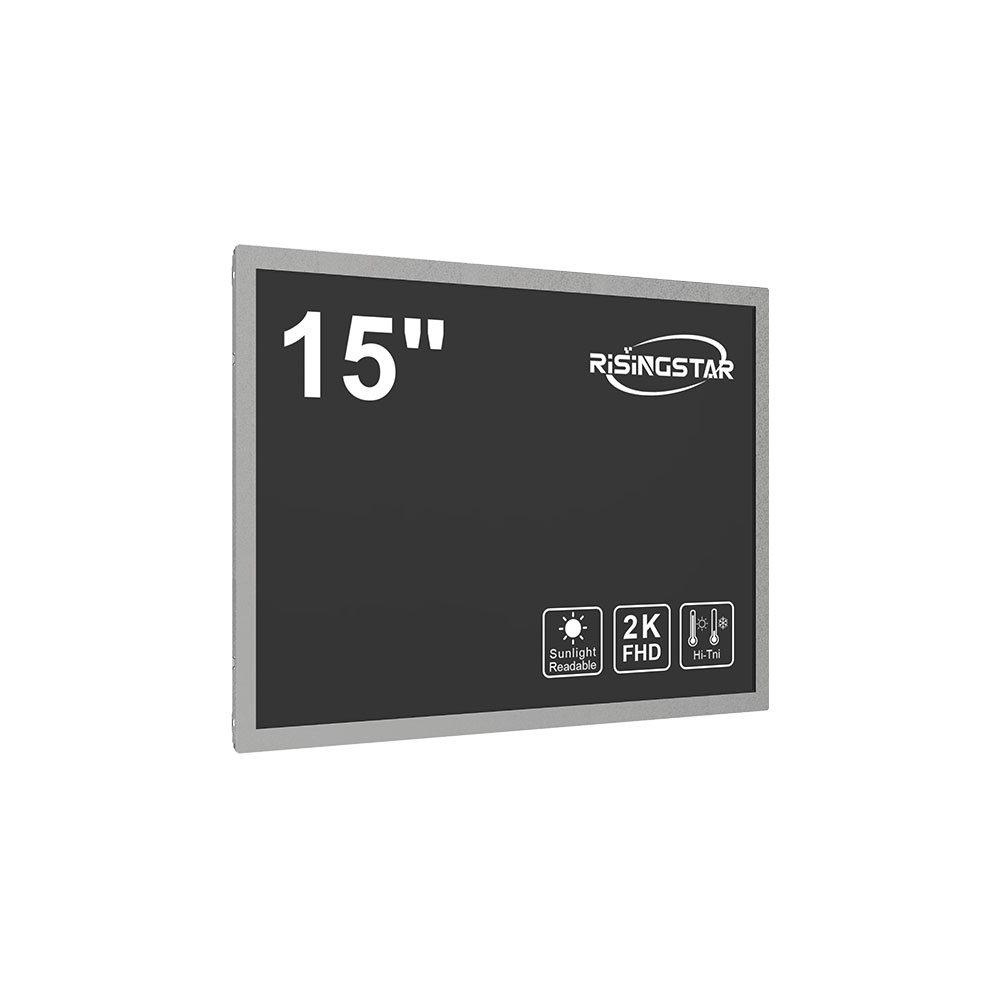
EN 50155 is the definitive standard for railway electronic equipment, mandating operating temperature ranges from -40°C to +85°C for outdoor displays (simulating extreme winter cold and summer heat in regions like Northern Europe or the Middle East) and -25°C to +70°C for onboard units, with repeated temperature cycling tests to validate durability. For outdoor transit hardware, IP65 ingress protection is the minimum requirement, sealing out fine dust and low-pressure water jets to withstand monsoons or subway ventilation runoff. For high-risk areas like platform edges, IK10 impact resistance is mandatory, ensuring displays survive accidental knocks from passenger luggage or maintenance equipment. A 2022 deployment on Singapore’s Thomson-East Coast Line used IP67-rated platform edge displays, which successfully withstood heavy tropical rains and physical impacts without performance degradation, reducing maintenance-related station delays by 18%.
#Electromagnetic Compatibility (EMC) Compliance
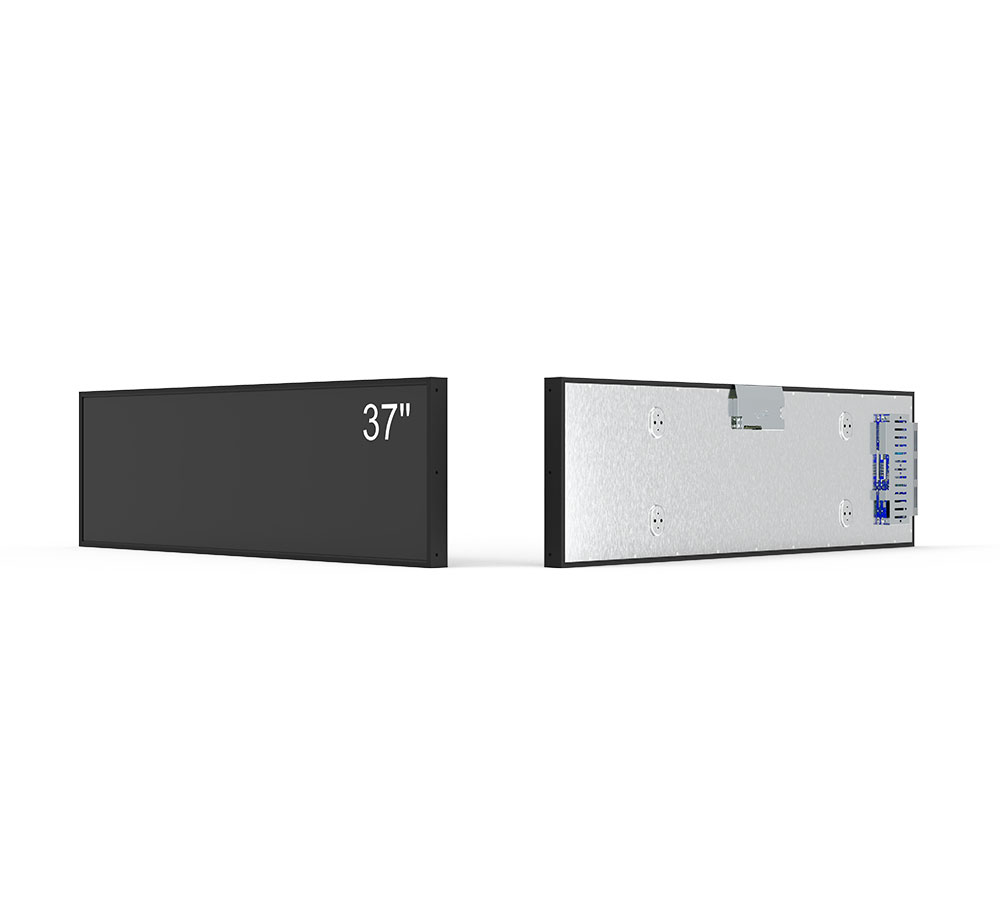
Transit displays must also meet EN 50121-3-2, the railway EMC standard, to avoid interference with critical signaling and communication systems. High-brightness LED backlighting can emit stray electromagnetic radiation if unshielded; modern compliant designs integrate Faraday cages and filtered power circuits, ensuring no disruption to trackside safety infrastructure. This is a non-negotiable requirement for European and North American rail projects, as non-compliant displays risk regulatory rejection.
Core Technologies for Uncompromised Sunlight Readability
Sunlight-readability is the top priority for outdoor and semi-outdoor transit displays, requiring specialized design beyond consumer-grade LCDs.
#Optical Bonding: A Game-Changer for Glare Reduction
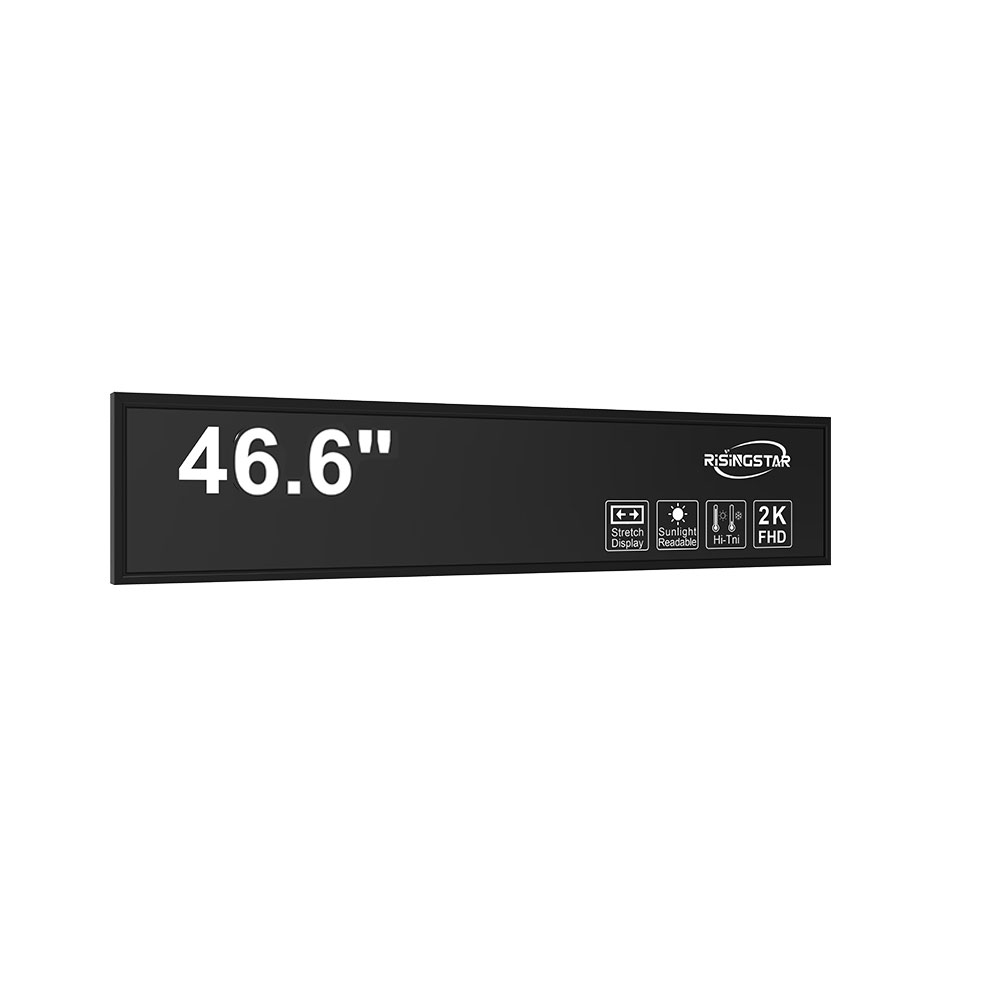
Unlike standard air-gap displays, optical bonding fuses the LCD panel to the cover glass with an optically clear adhesive (OCA), eliminating air gaps that cause light refraction and glare. 2024 data from transit display engineering studies shows that optical bonded displays reduce sunlight glare by up to 70% compared to air-gap alternatives. For narrow transit interior spaces, stretch bar LCD displays (link to /products/stretch-bar/) use flexible optical bonding to maintain readability even at 1,500 nits brightness – well above the UITP’s recommended minimum of 1,000 nits for indirect sunlight and 2,000 nits for direct overhead sun.
#Thermal Management to Avoid Brightness Degradation
High brightness leads to significant heat generation, which degrades LCD pixels and shortens component lifespan. Passive thermal management (integrated aluminum heat sinks, phase-change materials) is the gold standard for transit displays, absorbing peak heat and releasing it during cooler periods without relying on energy-heavy fans. A 2023 UK Rail Research Advisory Group (UKRRAG) study found that passive thermal systems reduce display failure rates by 45% compared to active cooling in rolling stock, making them ideal for long-haul trains where energy efficiency is critical.
#Anti-Glare and Anti-Reflective Coatings
Additional coatings further improve visibility: matte anti-glare (AG) coatings reduce specular reflection from overhead sun, while anti-reflective (AR) coatings cut back reflection by 15% for direct sunlight exposure. Some platform displays also integrate polarizing filters that align with sunlight’s polarization, reducing glare by an extra 10% for passengers looking at displays at an angle.
Practical Applications Across Transit Segments
High-brightness sunlight-readable displays are customized for each transit mode’s unique challenges.
#Onboard Railway and Metro Displays
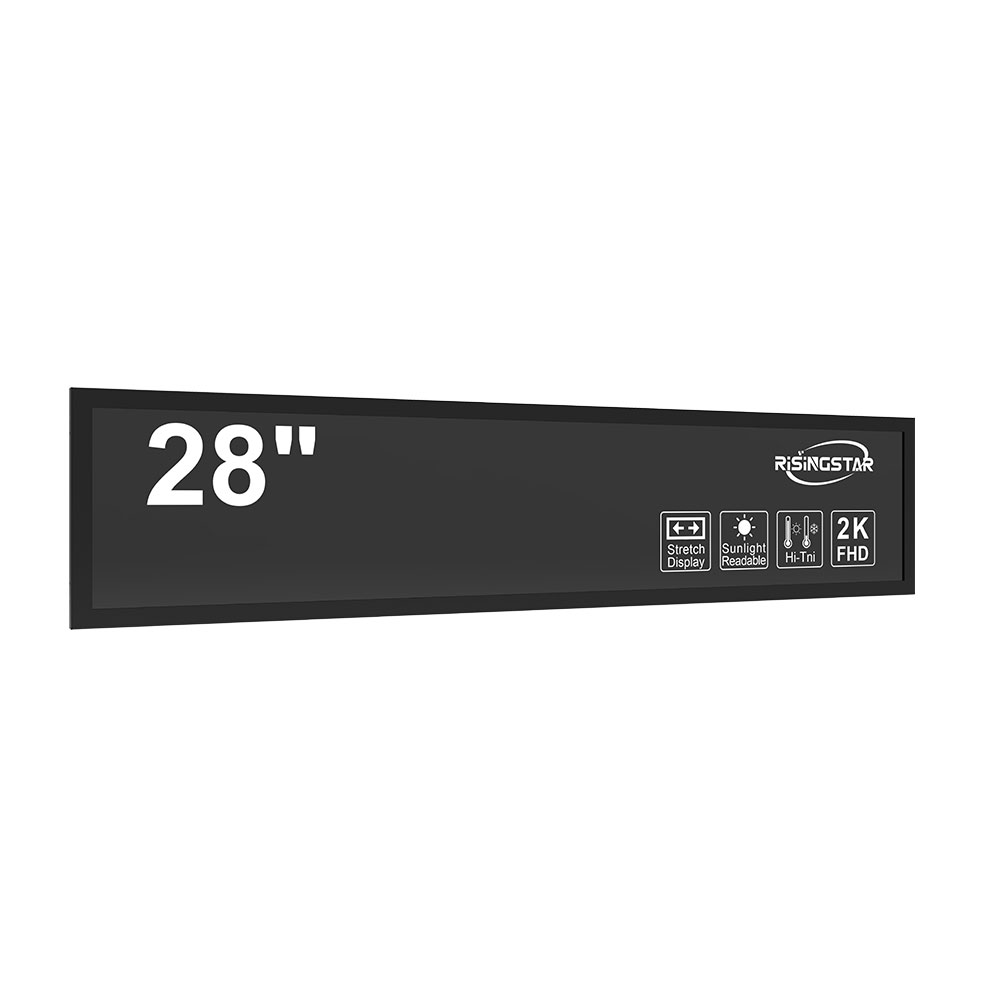
Onboard units endure constant vibration, temperature swings, and passenger handling, requiring compliance with EN 50155 and EN 61373 (vibration standard for rolling stock, which mandates resistance to 5g random vibration). Stretch bar displays (link to /products/stretch-bar/) are ideal for train interiors, as their slim, flexible design fits narrow spaces above doorways or along car sides. The 2021 London Overground upgrade used 1,200 EN 50155-compliant stretch bar displays, reducing passenger route inquiry delays by 28% due to improved visibility in natural light. These displays also integrate accessibility features like high-contrast text and adjustable font sizes for visually impaired passengers.
#Platform Edge Displays (PEDs)
Platform edge displays (link to /products/platform/) are critical for real-time passenger info and station safety, located in high-glare outdoor or semi-outdoor areas. The MTA’s 2022 L line upgrade in New York replaced outdated displays with 2,000-nits IP65-rated PEDs, which eliminated visibility issues during summer midday sun, reducing passenger near-misses at track edges by 12%. These displays also integrate platform arrival timers and service disruption alerts, ensuring passengers have accurate info at all times.
#Bus Destination Displays
Bus displays need to be visible from both inside the vehicle and from street level, operating in variable outdoor light. The 2023 Dubai RTA bus upgrade deployed 500 1,800-nits IP65 LCD displays compliant with EN 50155, replacing static LED signs that were hard to read in desert sun. The new dynamic displays reduced route confusion for passengers and drivers, cutting missed stops by 22%.
Common Challenges and Mitigation Strategies
Transit displays face unique operational challenges, with targeted solutions to address them:
1. LCD Sun Burn: Prolonged direct sunlight exposure can degrade LCD pixels, leading to uneven brightness. This is mitigated with UV-stabilized substrates and motion-activated brightness dimming (reducing brightness when no passengers are present, cutting power use by 30% per 2024 Transit Innovation Forum data).
2. Condensation: Outdoor displays can trap moisture inside, causing short circuits. Pressure equalization vents (required for IP65 compliance) prevent moisture buildup while keeping dust out, eliminating this issue.
3. Vibration-Induced Failure: Constant rail vibration can loosen circuit boards. Shock-mounted PCBs and military-grade connectors compliant with EN 61373 reduce failure rates by 50%, per OEM test data.
Latest Trends in Transit Display Technology
The future of transit displays is focused on smart, sustainable design: AI-driven ambient light sensing automatically adjusts brightness in real time, reducing energy use without sacrificing visibility. Stretchable OLED displays are also in pilot stages for train interiors, offering higher contrast and thinner profiles, though they remain cost-prohibitive for mass deployment.
For transit authorities and OEMs, selecting high-brightness sunlight-readable displays requires balancing compliance, technical performance, and real-world reliability. By prioritizing optical bonding, passive thermal management, and adherence to global standards, operators can reduce delays, improve passenger experience, and enhance safety. To learn more about specialized transit display solutions, talk to an engineer today or request a custom quote (link to /contact/).