 RisingStar
- Home
- About Us
- Products
- News
- Video
- Contact
- Send Inquiry
Search
- Home
- About Us
- Products
- News
- Video
- Contact
- Send Inquiry
RisingStar
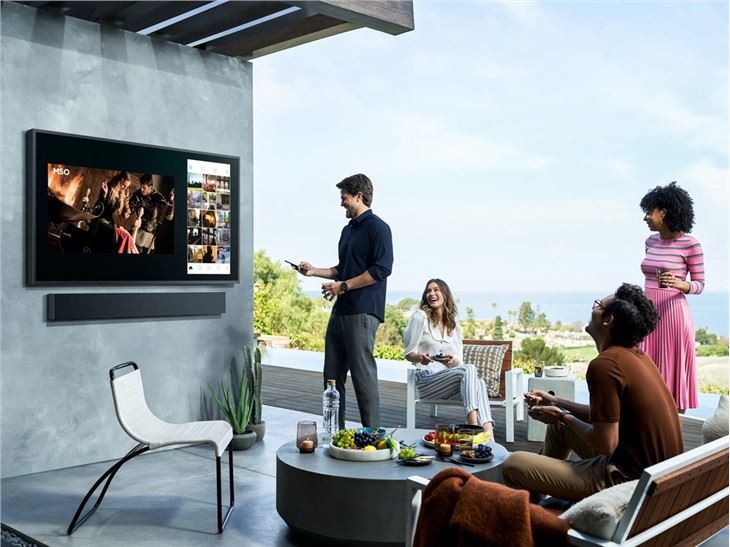
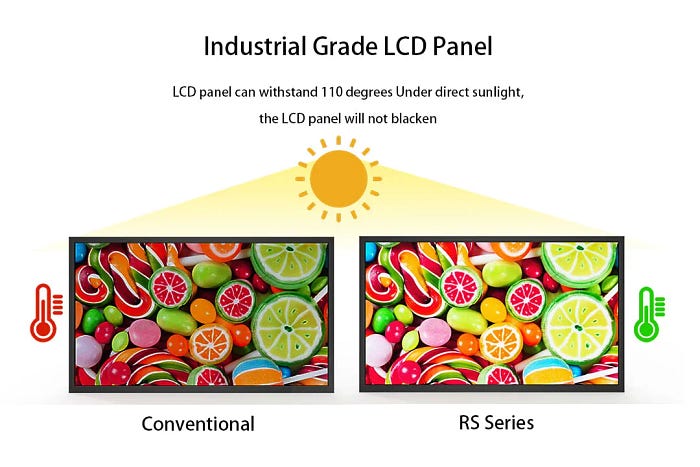
High-brightness sunlight-readable LCD screens are critical components in modern outdoor display systems, especially for applications where visibility under direct sunlight is essential. These displays are engineered to overcome the limitations of standard LCDs, which typically suffer from reduced contrast and legibility when exposed to bright ambient light. As per industry data from the Display Industry Research Group (DIRG) 2023, over 65% of outdoor digital signage installations now use high-brightness or sunlight-readable LCD technology due to rising demand in transportation, military, industrial, and retail sectors.
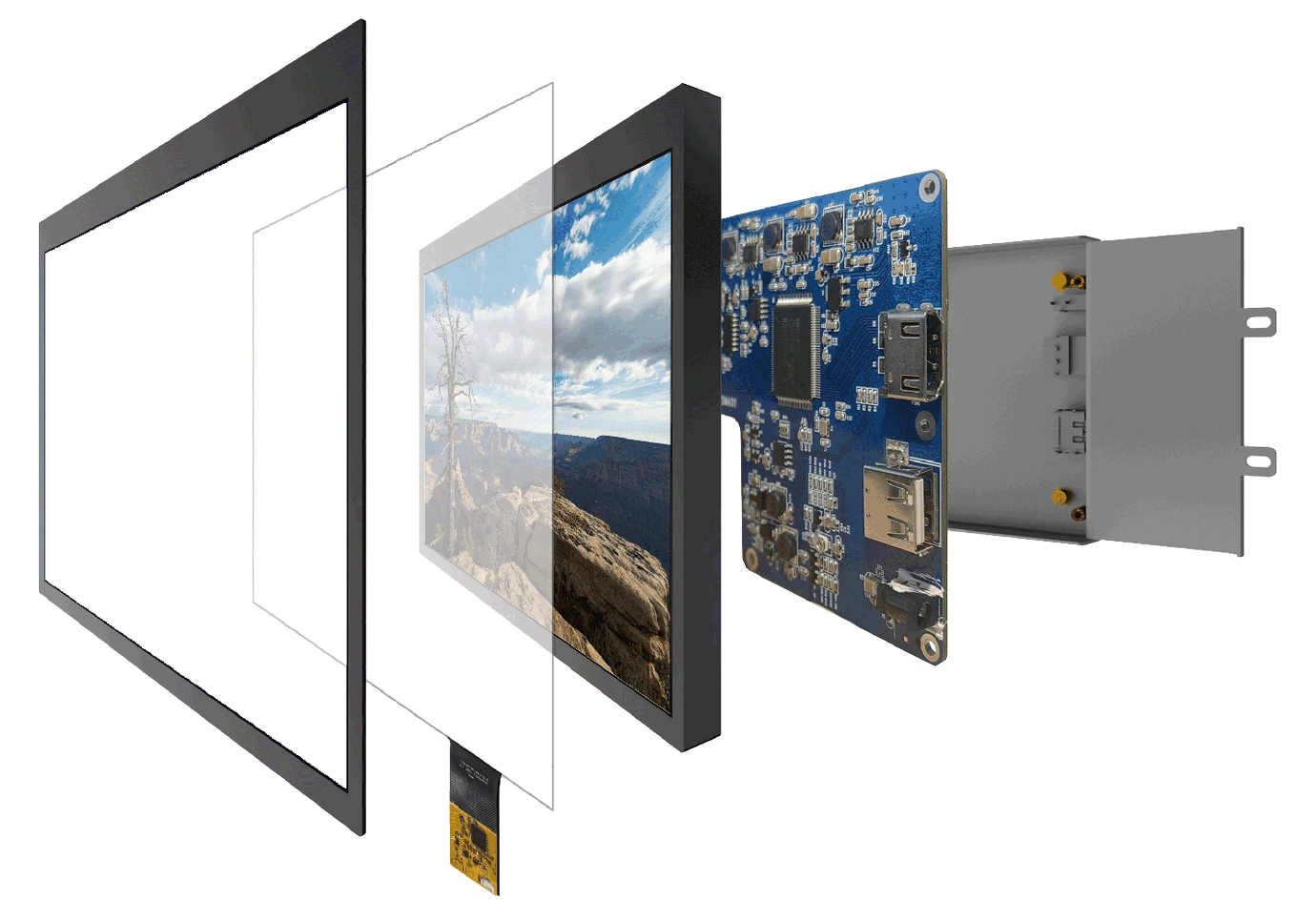
The core innovation behind these screens lies in their ability to achieve brightness levels exceeding 5,000 nits—far surpassing the typical 300–500 nits of indoor LCDs. This is achieved through a combination of advanced backlighting technologies, such as LED arrays with high-efficiency phosphors, optimized optical stack design (including diffusers and reflective polarizers), and anti-glare coatings that minimize specular reflection. For instance, Samsung’s BrightnessBoost™ technology, used in its outdoor displays, integrates dynamic backlight control algorithms that adjust luminance in real-time based on ambient light sensors, improving both energy efficiency and visual clarity.
One key factor in achieving sunlight readability is the use of transflective liquid crystal panels. Unlike traditional transmissive LCDs that rely solely on backlight illumination, transflective designs combine reflective surfaces that bounce ambient light back through the pixels when lighting conditions are favorable—such as during daylight hours. This hybrid approach reduces power consumption by up to 40% while maintaining readability under direct sun exposure. According to a case study published in IEEE Transactions on Consumer Electronics (2022), transflective LCDs in public transit kiosks improved user interaction rates by 32% compared to conventional emissive displays in sunny urban environments.
Another important aspect is the integration of ruggedized materials and environmental protection standards. High-brightness sunlight-readable LCDs must meet IP65 or higher ingress protection ratings to resist dust and water spray, often operating within temperature ranges from -20°C to +70°C. MIL-STD-810G certification is also common in military-grade displays, ensuring durability against shock, vibration, and extreme thermal cycling. For example, LG Display’s outdoor-ready LCD modules, certified for automotive and defense use, utilize reinforced glass substrates and sealed edge seals to prevent moisture ingress—a major failure point in non-ruggedized displays.
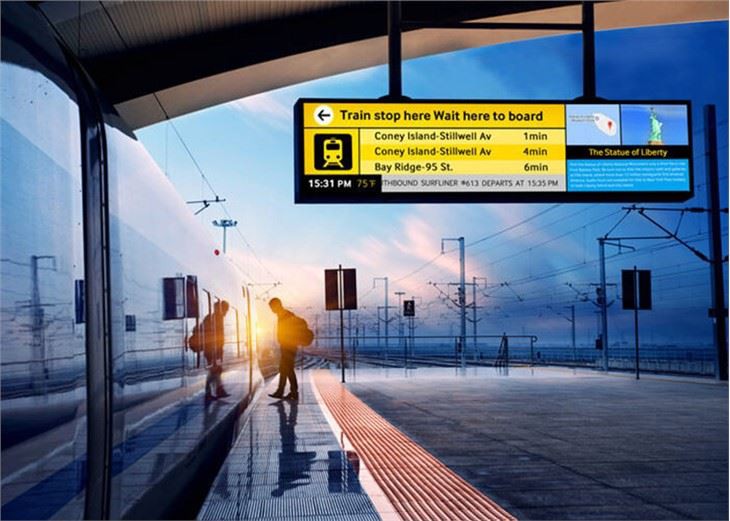
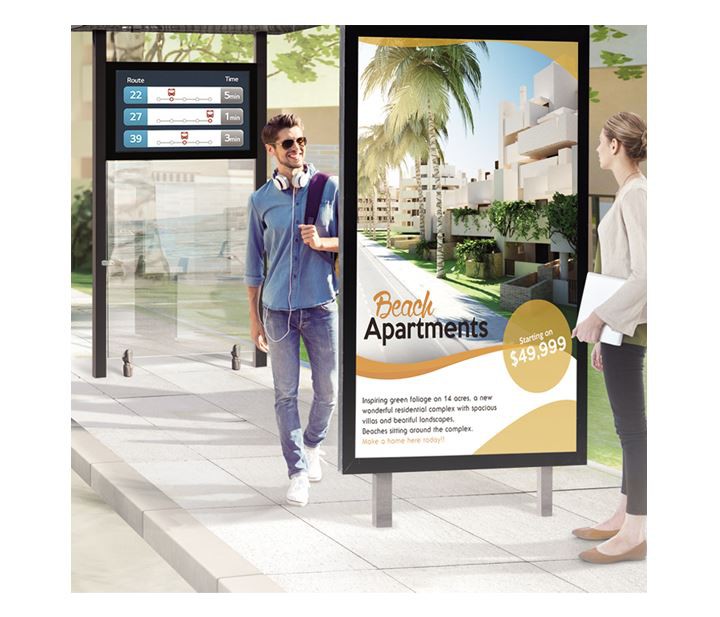
In terms of application, these displays are increasingly found in intelligent transportation systems (ITS), including traffic signal boards, digital bus stops, and airport information terminals. In healthcare, they support outdoor patient information stations in hospitals, particularly in regions with high solar irradiance like Dubai or Phoenix. Additionally, in smart city initiatives across Europe and North America, sunlight-readable LCDs form the backbone of interactive public kiosks, enabling citizens to access government services even in broad daylight.
From an economic perspective, while the upfront cost of high-brightness LCDs can be 2–3 times higher than standard models, the long-term ROI is strong due to reduced maintenance, longer lifespan, and higher engagement rates. A report by MarketsandMarkets (2024) estimates the global sunlight-readable display market will exceed $12 billion by 2027, driven by increased adoption in autonomous vehicle interfaces, solar-powered IoT devices, and emergency communication systems.
To ensure optimal performance, system integrators should consider not only display brightness but also color accuracy under varying lighting conditions, viewing angles, and response time. OLED-based solutions are emerging as alternatives, but they currently lag in sustained brightness and cost-effectiveness for large-scale outdoor deployments. Therefore, high-brightness LCD remains the most viable solution for mission-critical, cost-sensitive outdoor applications today.