RisingStar
- Home
- About Us
- Products
- News
- Video
- Contact
- Send Inquiry
Search
- Home
- About Us
- Products
- News
- Video
- Contact
- Send Inquiry
RisingStar
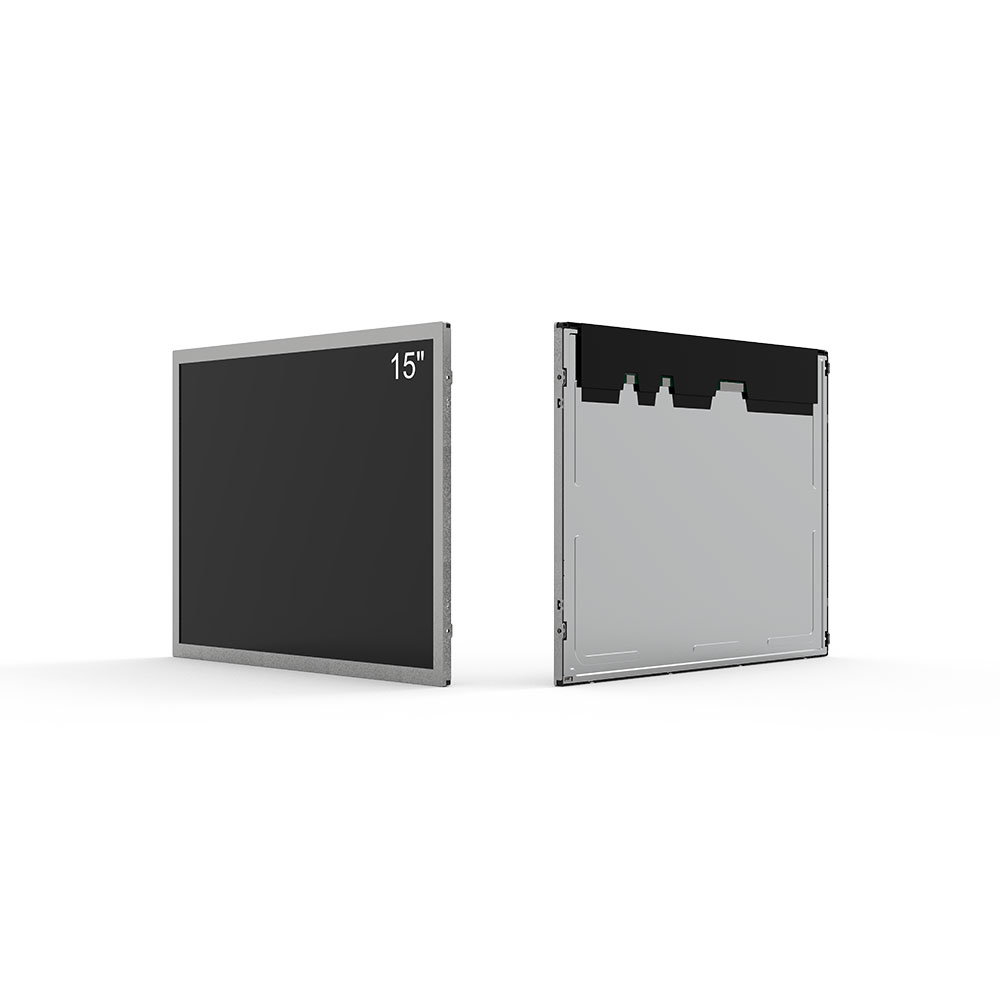
In today’s increasingly outdoor- and industrial-centric technology landscape, high-brightness sunlight-readable LCD displays have become essential for ensuring visibility and operational efficiency under harsh lighting conditions. Among the most widely adopted aspect ratios in specialized applications—such as military command systems, transportation control panels, medical devices, and industrial automation—are 4:3 displays in sizes like 15”, 17”, and 19”. These configurations provide optimal balance between screen real estate and portability, making them ideal for ruggedized environments where clarity under direct sunlight is non-negotiable.
A key factor in achieving true sunlight readability is brightness. Standard consumer-grade LCDs typically operate at 250–300 cd/m², which is insufficient for outdoor use where ambient light can exceed 10,000 lux. In contrast, high-brightness sunlight-readable LCDs are engineered to deliver at least 1500 cd/m² (often up to 5000 cd/m²), using advanced backlighting technologies such as LED arrays with diffusers, high-efficiency phosphor coatings, and intelligent brightness adjustment algorithms. For example, a 17” 4:3 display used in a field-deployable vehicle console must remain legible even during midday sun exposure—a requirement met by integrating anti-reflection coatings and polarized filters that reduce glare while preserving image contrast.
The 4:3 aspect ratio is particularly advantageous in legacy system integration and professional workflows. Unlike modern widescreen 16:9 displays, 4:3 maintains compatibility with older software interfaces, CAD layouts, and medical imaging tools that were originally designed for this proportion. In case studies from the defense sector, U.S. Army field operations have reported improved situational awareness when using 19” 4:3 displays in mobile command centers because they allow full-screen visualization of tactical maps and sensor data without excessive scaling or letterboxing.
Manufacturers like Candescent Technologies, ELO Touch Systems, and Lilliput have developed ruggedized 4:3 displays with IP65 ingress protection, wide temperature ranges (-30°C to +70°C), and shock/vibration resistance suitable for aviation, rail transit, and oil & gas exploration. These units often employ transflective LCD technology—combining reflective and transmissive layers—to maximize power efficiency in both indoor and outdoor modes. This hybrid approach reduces energy consumption by up to 40% compared to fully backlit alternatives, critical for battery-powered field devices.
Additionally, recent advancements in mini-LED and micro-LED backlighting enable uniform brightness across large surfaces (e.g., 19” screens) while maintaining low power draw. According to a 2023 study published in IEEE Transactions on Consumer Electronics, transflective 4:3 displays with adaptive brightness control reduced eye strain by 38% among operators working in variable lighting conditions over 8-hour shifts—an outcome directly linked to improved productivity and safety compliance.
When selecting a 4:3 display for demanding applications, engineers must also consider response time (typically< 10 ms for dynamic content), color accuracy (≥ 90% sRGB), and durability metrics such as MIL-STD-810G certification. The 15”, 17”, and 19” form factors offer versatility—from compact handheld units to fixed-mount dashboard installations—while maintaining the same optical performance standards required in aerospace and maritime industries.
In summary, 4:3 aspect ratio high-brightness sunlight-readable LCDs represent a mature yet evolving segment of the display market, blending proven ergonomics with cutting-edge materials science. As global demand grows for reliable human-machine interfaces in extreme environments—from desert surveillance drones to offshore drilling rigs—these displays will continue to be the backbone of mission-critical visual communication.