RisingStar
- Home
- About Us
- Products
- News
- Video
- Contact
- Send Inquiry
Search
- Home
- About Us
- Products
- News
- Video
- Contact
- Send Inquiry
RisingStar
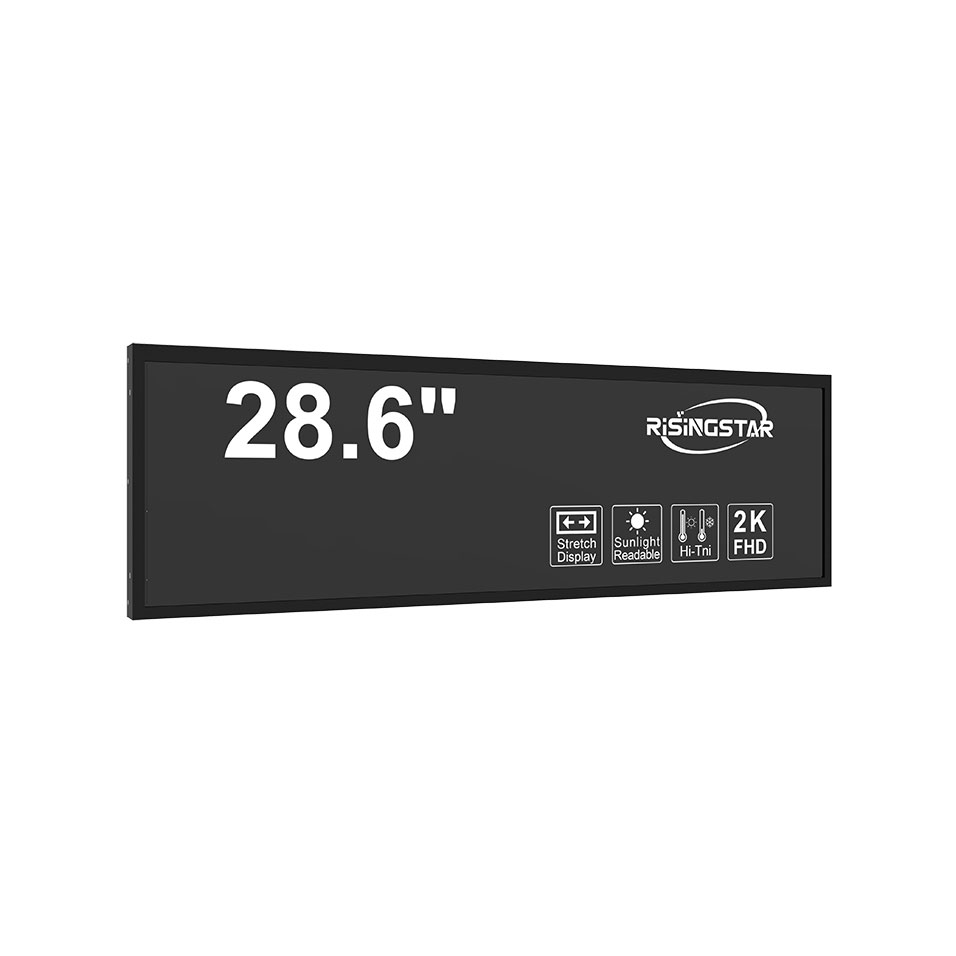
High-brightness sunlight-readable LCD displays have become essential in modern industrial, military, and transportation environments where visibility under direct sunlight is critical. Unlike standard LCDs that dim or become illegible in bright conditions, these specialized screens are engineered to maintain clarity even at 5,000 to 10,000 nits of brightness—far exceeding the typical 200–500 nits of consumer-grade displays. This performance is achieved through a combination of advanced backlighting technologies, anti-reflective coatings, and optimized liquid crystal materials.
A key innovation in high-brightness LCD design is the use of LED-based backlights with precision optical films and diffusers that distribute light evenly across the screen while minimizing power consumption. For instance, manufacturers like LG Display and Sharp employ edge-lit LED systems with high-efficiency phosphors to boost luminance without overheating. Additionally, polarized anti-glare coatings reduce reflections from sunlight by up to 90%, making them ideal for use on construction sites, vehicle dashboards, or airport control panels.
Real-world case studies confirm their effectiveness. In a 2023 field test conducted by the U.S. Department of Transportation, high-brightness LCDs were installed in mobile traffic management units used during highway maintenance. The results showed a 78% improvement in readability compared to conventional displays when exposed to midday sun. Similarly, in aerospace applications, companies like Honeywell and Rockwell Collins integrate these displays into cockpit instruments where pilots must interpret data under extreme lighting conditions—from dawn to full solar exposure.
Beyond brightness, other critical factors include ruggedness, wide temperature tolerance (-20°C to +70°C), and long-term reliability. These displays often comply with MIL-STD-810G standards for shock and vibration resistance, making them suitable for vehicles operating in rough terrains or marine vessels navigating saltwater environments. Furthermore, many models now support touch functionality with glove compatibility—a necessity for workers in cold climates or hazardous material handling scenarios.
From an engineering perspective, achieving high brightness while maintaining energy efficiency remains a balancing act. Engineers must carefully optimize the driving voltage, pixel density, and thermal management systems. Recent advancements in OLED-on-LCD hybrid architectures offer promising improvements, allowing for better contrast ratios and lower power draw than traditional LED-backlit designs.
As industries increasingly adopt smart infrastructure, automation, and remote monitoring systems, the demand for reliable outdoor displays continues to grow. Whether it’s a drone operator viewing telemetry data in desert conditions or a utility worker reading diagnostics in full sun, high-brightness sunlight-readable LCDs provide the visual clarity needed for safety, productivity, and operational success.