RisingStar
- Home
- About Us
- Products
- News
- Video
- Contact
- Send Inquiry
Search
- Home
- About Us
- Products
- News
- Video
- Contact
- Send Inquiry
RisingStar
In today’s increasingly connected and mobile-driven world, high-brightness sunlight-readable LCD screens have become indispensable in outdoor environments where visibility under direct sunlight is critical. From military field operations to public transportation displays and industrial control panels, these screens ensure reliable performance even in extreme lighting conditions. As global demand rises—particularly in defense, automotive, and smart city sectors—understanding the technology behind high-brightness LCDs is essential for engineers, procurement managers, and product designers seeking durable, efficient solutions.
The core challenge in outdoor display design lies in achieving sufficient brightness to overcome ambient light, especially solar irradiance that can exceed 100,000 lux during midday sun. Standard indoor LCDs typically operate at 250–300 cd/m² (candelas per square meter), which becomes nearly invisible in sunlight. In contrast, high-brightness sunlight-readable LCDs are engineered to deliver 3,000–5,000 cd/m² or more—making them visible under harsh daylight without compromising energy efficiency or longevity. This enhanced brightness is achieved through a combination of specialized backlighting technologies, such as LED arrays with optimized optical films, and advanced liquid crystal formulations that improve contrast ratios and viewing angles.
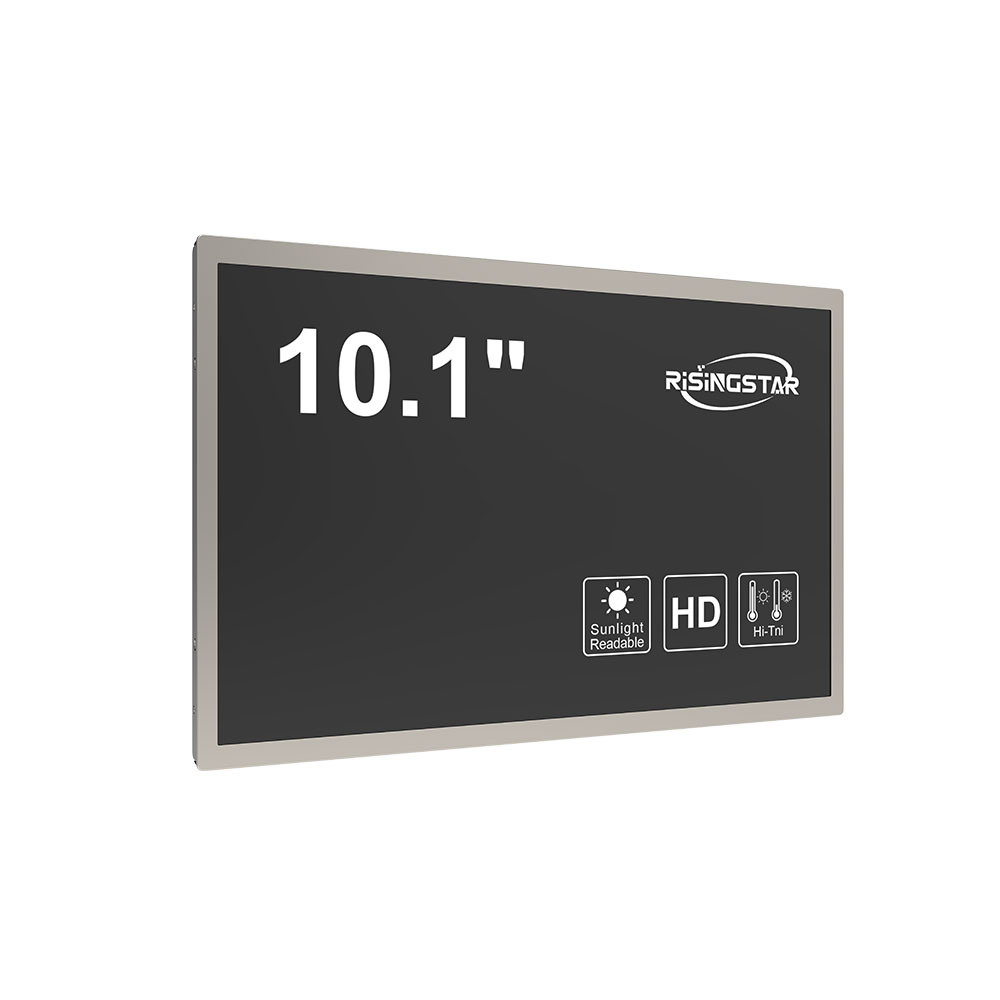
One key innovation in this space is the use of transflective liquid crystal technology, which combines both transmissive and reflective properties. Unlike purely transmissive displays that rely entirely on a backlight, transflective screens reflect ambient light when brightness is low (e.g., night or shaded areas) and switch to backlight mode in bright conditions. This dual-mode operation significantly reduces power consumption while maintaining readability—a crucial advantage for battery-powered devices like handheld tactical computers or remote monitoring equipment. According to a 2023 study by the Society for Information Display (SID), transflective LCDs consume up to 40% less power than traditional backlit alternatives in mixed lighting environments.
Another critical component is the application of anti-reflective coatings and polarized filters that minimize glare and enhance contrast. Industry leaders like Eizo, LG Display, and Japan Display Inc. have developed proprietary multi-layer coatings that reduce surface reflection by over 90%, ensuring crisp image quality even when viewed from oblique angles. These improvements are particularly vital in applications such as vehicle dashboards, where drivers must quickly interpret data while driving in direct sunlight—a safety requirement enforced by ISO 15008 standards for automotive displays.
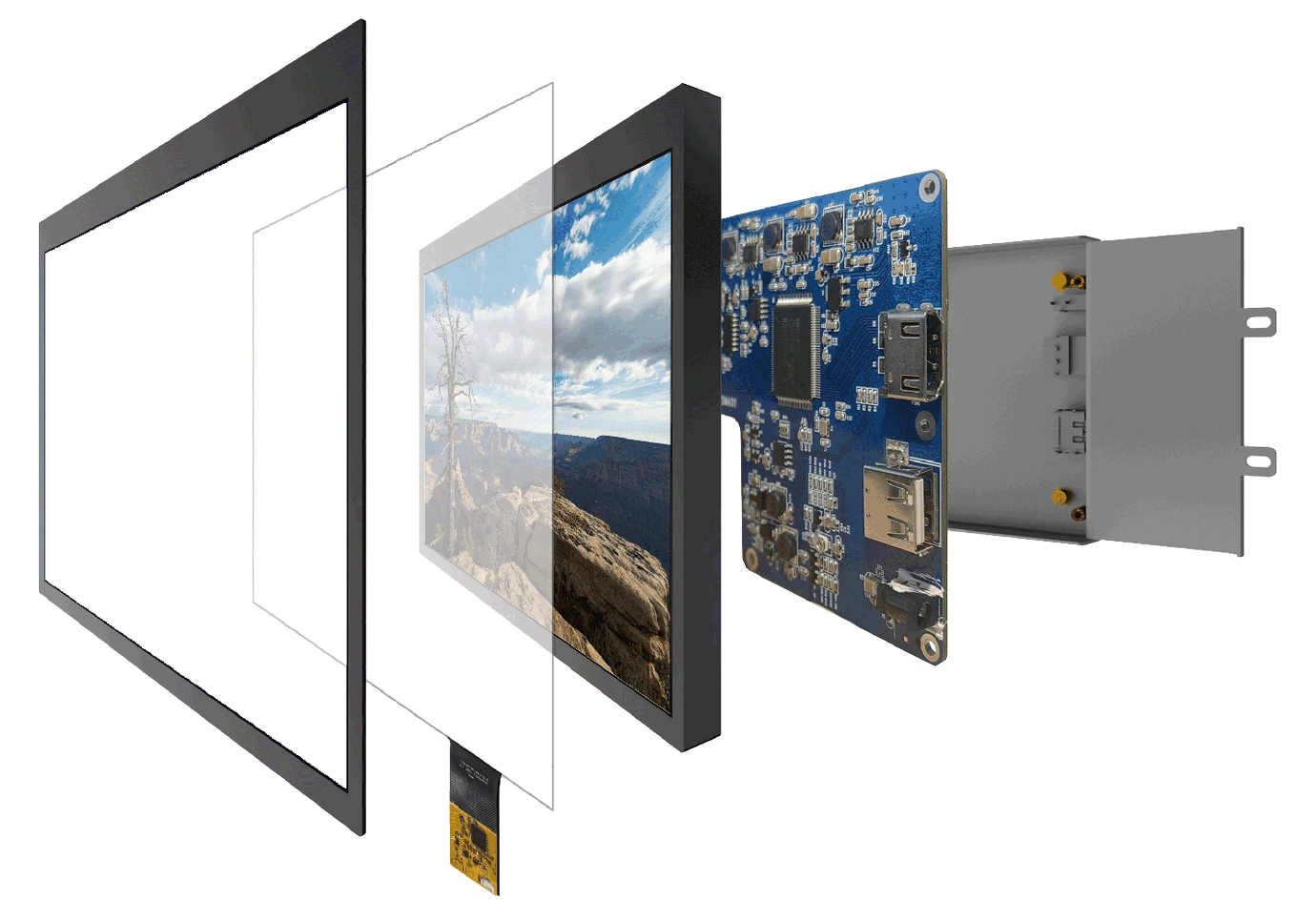
Additionally, environmental durability plays a major role in real-world deployment. High-brightness LCDs designed for outdoor use must withstand temperature extremes (-30°C to +70°C), humidity (up to 95% non-condensing), dust ingress (IP65 rating), and mechanical shocks. For example, the U.S. Department of Defense has mandated MIL-STD-810G compliance for all portable electronic displays used in field operations, ensuring reliability in combat zones. Manufacturers often incorporate ruggedized glass, sealed bezels, and thermal management systems—such as heat pipes or passive cooling—to maintain optimal operating temperatures under prolonged exposure to solar radiation.
Case studies further demonstrate the impact of these technologies. In a 2022 deployment by Siemens Energy for offshore wind turbine monitoring systems, high-brightness sunlight-readable LCDs reduced maintenance costs by 25% due to fewer screen failures caused by overheating or fading. Similarly, the City of Dubai implemented solar-resistant LCDs in its smart traffic signal system, improving driver comprehension and reducing accident rates during peak sunlight hours.
In conclusion, high-brightness sunlight-readable LCD screens represent a mature yet rapidly evolving field of display technology. With advancements in materials science, optical engineering, and environmental resilience, they continue to set new benchmarks for outdoor usability across diverse industries. As global urbanization and automation accelerate, these displays will remain foundational to human-machine interaction in daylight-intensive environments—from battlefield command centers to public kiosks in sunny cities.