 RisingStar
- Home
- About Us
- Products
- News
- Video
- Contact
- Send Inquiry
Search
- Home
- About Us
- Products
- News
- Video
- Contact
- Send Inquiry
RisingStar
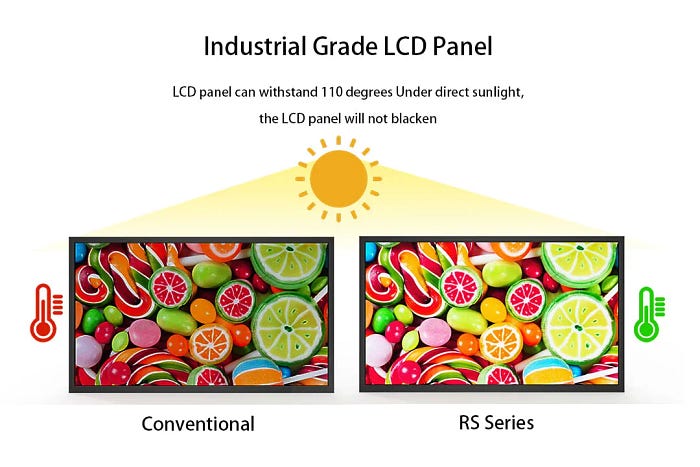
In the rapidly evolving world of display technology, high-brightness sunlight-readable LCD screens have become indispensable in outdoor and harsh environmental applications. These specialized displays are engineered to maintain clarity, contrast, and readability even under direct sunlight—typically exceeding 10,000 nits of peak brightness—a stark contrast to standard indoor LCDs that usually top out at around 300–500 nits. This capability is critical for industries such as defense, transportation, agriculture, medical field devices, and industrial automation, where visibility under extreme lighting conditions directly impacts operational safety and efficiency.
The core challenge in designing a sunlight-readable LCD lies in overcoming ambient light interference. Unlike indoor displays, which operate in controlled lighting, outdoor displays must contend with variable solar irradiance, glare, and rapid changes in light intensity. To address this, manufacturers employ advanced technologies such as transflective liquid crystal panels, which combine transmission and reflection modes for optimal performance across both bright and dim environments. Additionally, anti-glare coatings, polarized filters, and optimized backlighting systems (e.g., LED arrays with dynamic brightness control) are integrated to enhance contrast ratios and reduce visual fatigue.
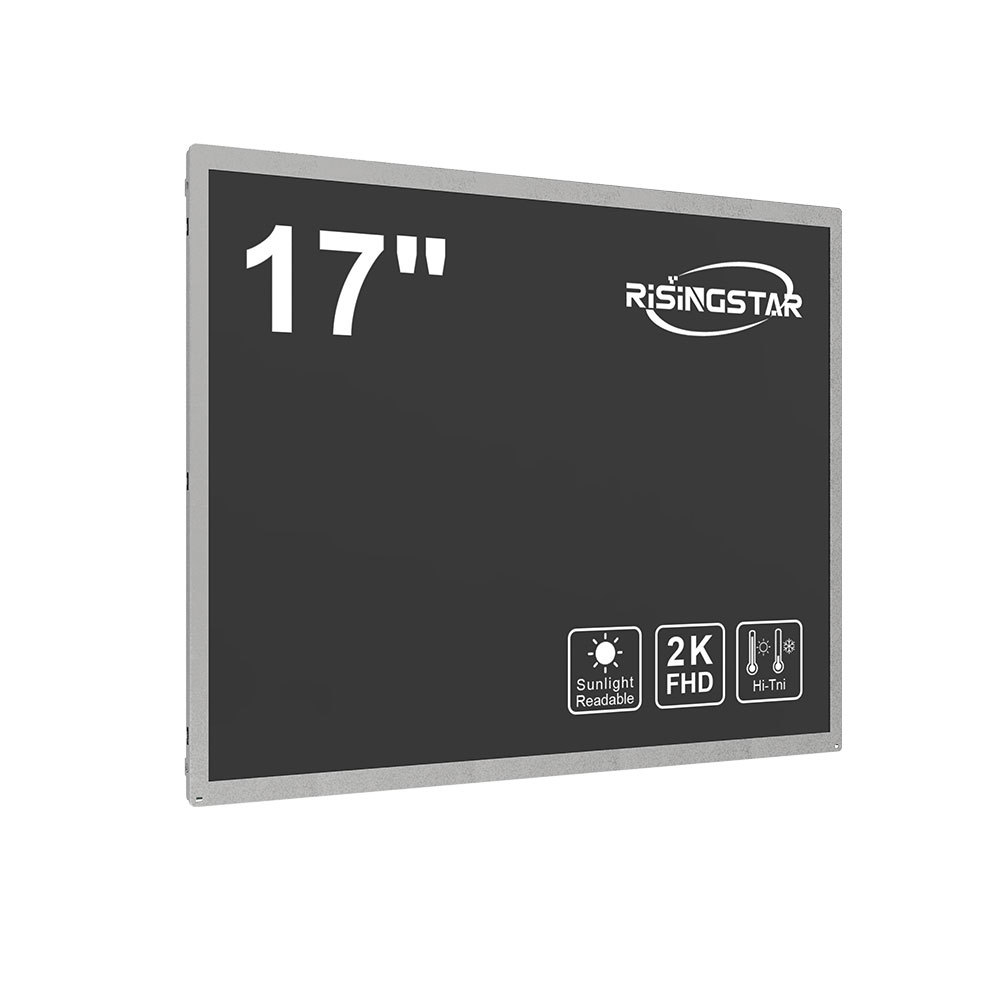
A key differentiator in high-brightness LCDs is their use of high-efficiency LEDs or OLED micro-displays for backlighting. For example, recent case studies from companies like Innolux and LG Display demonstrate how edge-lit LED configurations with distributed diffusers can achieve uniform brightness across large screen areas while minimizing power consumption—a crucial factor for battery-powered outdoor equipment. In military-grade applications, such as those used in armored vehicles or UAVs, these displays often meet MIL-STD-810G standards for shock, vibration, temperature extremes, and humidity resistance, ensuring reliability in combat zones.
Furthermore, modern sunlight-readable LCDs increasingly incorporate intelligent brightness adjustment via ambient light sensors. This not only enhances readability but also extends device battery life—an essential feature for mobile solutions like handheld scanners, field medical devices, and construction site monitors. The integration of touch-sensitive overlays compatible with gloves or styluses adds another layer of usability in real-world environments, particularly in cold weather or dirty conditions.
Industry adoption continues to rise. According to market research by MarketsandMarkets (2024), the global high-brightness display market is projected to grow at a CAGR of 7.8% through 2029, driven by increasing demand in smart infrastructure, electric vehicle dashboards, and autonomous machinery. Notably, Tesla’s latest Model Y dashboard uses a high-brightness LCD with adaptive brightness and wide viewing angles, setting new benchmarks for automotive OEMs globally.
In conclusion, high-brightness sunlight-readable LCD screens represent a convergence of optical engineering, material science, and intelligent control systems. Their design demands a holistic approach—from pixel-level optimization to system-level integration—with a strong focus on durability, energy efficiency, and human-centric usability. As the world moves toward more connected, mobile, and resilient technologies, these displays will remain a foundational element in bridging the gap between digital interfaces and real-world outdoor challenges.