RisingStar
- Home
- About Us
- Products
- News
- Video
- Contact
- Send Inquiry
Search
- Home
- About Us
- Products
- News
- Video
- Contact
- Send Inquiry
RisingStar
High-brightness sunlight-readable LCD screens have become essential in modern outdoor and industrial applications where visibility under direct sunlight is critical. These displays are engineered to maintain clarity, contrast, and color accuracy even under extreme lighting conditions—such as full daylight at 10,000 lux or more—making them indispensable in sectors like military operations, transportation, construction, agriculture, and public infrastructure.
One of the primary advantages of these screens lies in their ability to provide consistent visual performance in harsh environments. Unlike standard LCDs that often become unusable under bright sunlight due to glare and reduced contrast, sunlight-readable LCDs utilize advanced backlighting technologies such as high-luminance LED arrays (typically 5,000–10,000 cd/m²), anti-reflective coatings, and polarized filters. Some models integrate active ambient light compensation systems that automatically adjust brightness based on real-time environmental light levels—a feature increasingly common in ruggedized tablets and field-deployed command units.
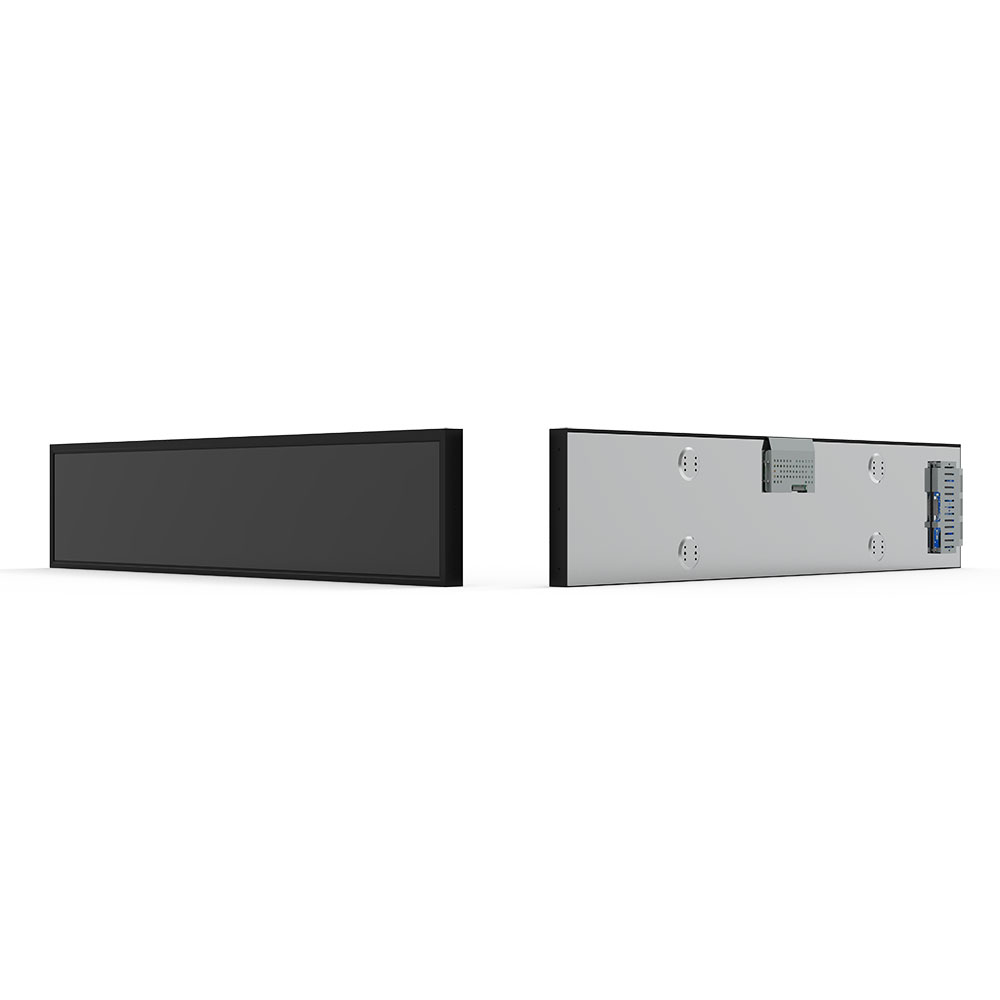
Practical applications span a wide range. In military and defense, these screens are used in unmanned ground vehicles (UGVs) and battlefield communication devices where operators must read maps, telemetry, or mission-critical data without squinting. In automotive and aviation industries, they power dashboards and flight control interfaces exposed to intense solar radiation. Public-facing applications include digital signage in airports, bus stops, and smart city kiosks—where readability ensures user engagement even during peak sun hours.
Despite their robust design, common problems persist. One issue is thermal management: high-brightness backlights generate heat, which can shorten screen lifespan if not properly dissipated. Another is power consumption—these screens typically draw more energy than standard displays, making battery-powered solutions less efficient unless optimized with adaptive brightness algorithms. Additionally, cost remains a barrier for mass-market adoption; premium-grade sunlight-readable LCDs can be 3–5 times more expensive than conventional ones.
The latest trends show a shift toward hybrid display technologies. For example, manufacturers are integrating OLED elements into sunlight-readable panels to improve contrast ratios while reducing overall power use. Recent innovations also include micro-LED backlighting, which offers higher efficiency and longer durability. According to a 2023 report by MarketsandMarkets, the global sunlight-readable display market is projected to grow at a CAGR of 7.4% from 2023 to 2028, driven by demand from autonomous vehicle manufacturers and IoT-enabled industrial equipment.
Moreover, compliance with international standards such as MIL-STD-810G (for ruggedness) and IEC 60068 (for environmental stress testing) ensures reliability across diverse climates—from desert heat to arctic cold. Leading OEMs like LG Display, Sharp, and Samsung are now offering custom-engineered modules tailored to specific industries, emphasizing modularity, IP65/IP67 ingress protection, and compatibility with ruggedized enclosures.
In conclusion, high-brightness sunlight-readable LCDs are no longer niche products—they are mainstream tools enabling safer, more efficient outdoor operations. As technology advances, these displays will continue to evolve with smarter power management, improved materials, and deeper integration into AI-driven systems, ensuring they remain vital for next-generation human-machine interaction in the open air.