 RisingStar
- Home
- About Us
- Products
- News
- Video
- Contact
- Send Inquiry
Search
- Home
- About Us
- Products
- News
- Video
- Contact
- Send Inquiry
RisingStar
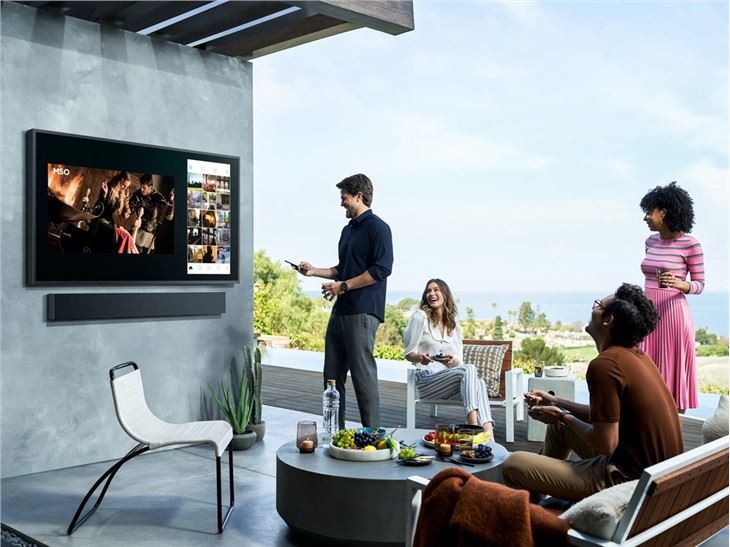
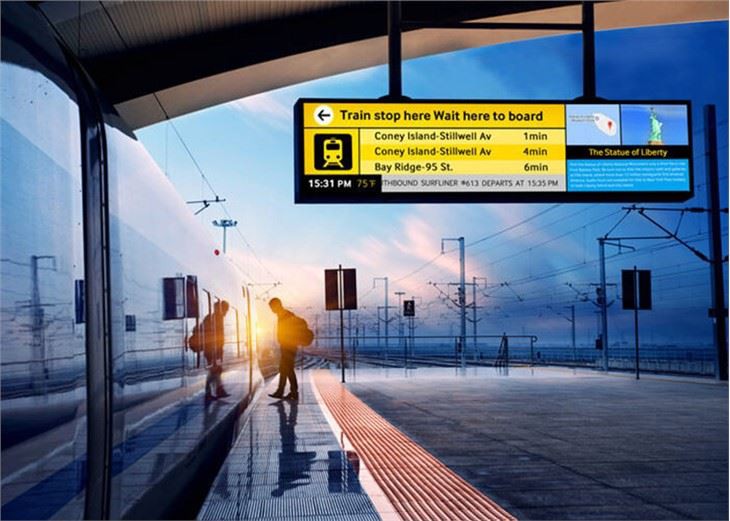
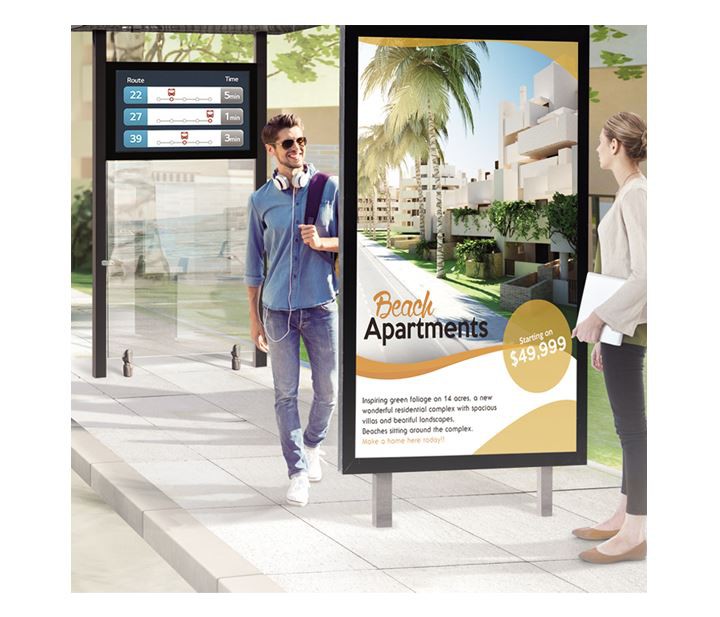
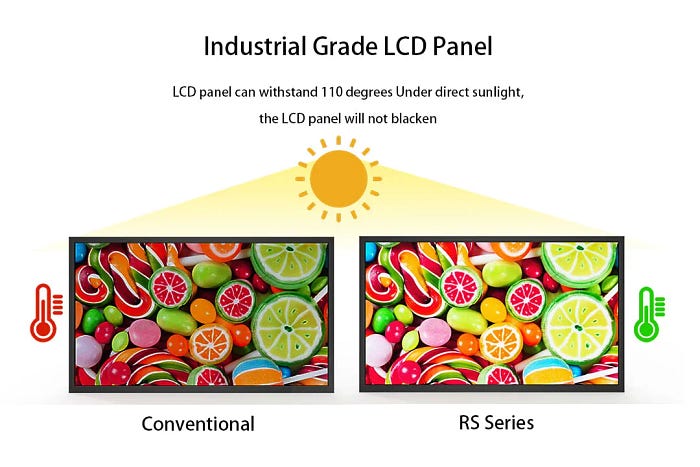
In the rapidly evolving world of display technology, high-brightness sunlight-readable LCD screens have become a critical enabler for outdoor and industrial applications. From military field operations to public transportation, construction sites, and retail kiosks, these displays are indispensable where visibility under direct sunlight is non-negotiable. Unlike standard LCDs that degrade in brightness and contrast when exposed to ambient light, high-brightness sunlight-readable LCDs are engineered with advanced optical and electronic components to ensure clear, readable images even under extreme lighting conditions—often exceeding 10,000 nits of peak brightness.
The core challenge in designing such displays lies in balancing brightness, power efficiency, thermal management, and longevity while maintaining image clarity and color accuracy. Industry standards such as MIL-STD-810G (for military-grade ruggedness), IEC 60068 (environmental testing), and ISO 16750 (automotive durability) dictate the performance benchmarks for outdoor-rated displays. Manufacturers like LG Display, Sharp, and AU Optronics have invested heavily in R&D to meet these specifications through innovations in backlighting, polarizer materials, and anti-reflective coatings.
One of the most significant advancements in this domain is the development of transflective liquid crystal technology. Unlike traditional transmissive LCDs that rely solely on a backlight, transflective panels use both ambient light and internal illumination. This hybrid approach dramatically reduces power consumption while increasing readability in bright daylight. For example, a transflective LCD used in a solar-powered traffic sign can operate efficiently using only natural sunlight during the day and switch to LED backlights at night—achieving up to 40% energy savings compared to fully backlit alternatives.
Another breakthrough involves the integration of high-efficiency LED backlights with dynamic brightness control algorithms. Modern high-brightness LCDs often employ full-array local dimming (FALD), which allows precise adjustment of backlight zones based on content. When a user views a dark scene, only the necessary LEDs illuminate, preserving battery life without sacrificing image quality. According to a 2023 study published in the Journal of Display Technology by IEEE, FALD systems can reduce power consumption by up to 35% while enhancing contrast ratios by 200% compared to edge-lit designs.
To further improve visibility, manufacturers apply nano-coating technologies such as anti-reflective (AR) layers, hydrophobic/oleophobic coatings, and polarized glass. These treatments minimize glare from sunlight, prevent fingerprint smudges, and protect against dust and moisture ingress. For instance, Corning Gorilla Glass with a multi-layer AR coating has been shown to reduce surface reflection from 15% to less than 2%, significantly improving legibility in direct sunlight—a key requirement for aviation heads-up displays (HUDs) and outdoor digital signage.
Thermal design also plays a crucial role. High-brightness operation generates more heat, especially in enclosed environments like vehicle dashboards or handheld devices. Advanced thermal management strategies include integrated heat sinks, thermally conductive adhesives, and active cooling fans in larger displays. A case study from Bosch Engineering in 2022 demonstrated that a high-brightness LCD module operating at 8,000 nits in a temperature range of -30°C to +70°C maintained consistent performance over 10,000 hours of continuous use thanks to a combination of passive and active thermal solutions.
Moreover, the shift toward OLED-based sunlight-readable displays is gaining momentum, though it remains niche due to cost and lifetime limitations. While OLEDs offer superior contrast and faster response times, they are inherently less efficient under bright conditions because their self-emissive nature makes them vulnerable to ambient light interference. However, recent developments in micro-LED and QLED technologies show promise in combining the advantages of both LCD and OLED—offering ultra-high brightness, wide color gamut, and excellent durability for outdoor use.
Manufacturers now commonly integrate smart sensors into these displays to optimize brightness dynamically. Ambient light sensors (ALS) adjust screen luminance in real-time based on environmental conditions, ensuring optimal visibility without excessive power draw. For example, a GPS navigation system in a truck cab might reduce brightness when parked indoors but automatically boost to 10,000 nits when driving under direct sun. This adaptive behavior not only extends battery life but also enhances driver safety by preventing visual fatigue.
Security and reliability are equally important. In defense and aerospace sectors, sunlight-readable LCDs must be hardened against electromagnetic interference (EMI), vibration, shock, and corrosion. IP67-rated enclosures with sealed edges and conformal coatings protect against water and dust penetration. Additionally, some models incorporate tamper-proof firmware and hardware-based encryption to safeguard sensitive data displayed on tactical displays.
Case studies highlight real-world success. The U.S. Department of Defense adopted high-brightness sunlight-readable LCDs for its AN/PRC-152 radio system in 2021. These displays operated reliably in desert environments with temperatures exceeding 50°C and ambient light levels above 100,000 lux. Similarly, Coca-Cola’s outdoor vending machines deployed in tropical regions use 12,000-nit LCDs with reinforced anti-glare surfaces, enabling customers to view product menus clearly despite harsh sunlight and humidity.
From an economic standpoint, the global market for high-brightness sunlight-readable LCDs is projected to grow at a CAGR of 7.8% between 2024 and 2030, according to MarketsandMarkets research. Key drivers include increased demand in smart cities, electric vehicles, and industrial IoT applications. As more industries adopt automation and remote monitoring, the need for robust, always-on displays becomes paramount—not just desirable.
In conclusion, high-brightness sunlight-readable LCD screens represent a convergence of material science, optical engineering, and intelligent software optimization. Their evolution continues to push the boundaries of what is possible in outdoor human-machine interfaces. Whether deployed in a drone controller, a construction site monitor, or a weatherproof kiosk, these displays are no longer optional—they are essential infrastructure for modern, connected ecosystems.