RisingStar
- Home
- About Us
- Products
- News
- Video
- Contact
- Send Inquiry
Search
- Home
- About Us
- Products
- News
- Video
- Contact
- Send Inquiry
RisingStar
In the rapidly evolving landscape of industrial and outdoor display technology, high-brightness sunlight-readable LCD screens have become essential for applications requiring visibility under direct sunlight. Among the most widely adopted aspect ratios in ruggedized and specialized displays is the 4:3 format—offering better compatibility with legacy software, document viewing, and analog video signals. This article focuses on 15”, 17”, and 19” models that are specifically engineered for superior performance in bright environments such as military command centers, transportation systems, medical devices, and outdoor kiosks.
Sunlight-readable LCDs differ from standard LCDs primarily due to their enhanced luminance capabilities, typically exceeding 5,000 nits (cd/m²), compared to the typical 300–500 nits found in consumer-grade displays. These displays utilize advanced backlighting technologies like LED arrays with diffusers and polarization layers, combined with anti-glare coatings and high-transmittance polarizers. For instance, a 17” 4:3 sunlight-readable LCD used in a mobile command unit must maintain readability at 8,000 nits or higher under full sun conditions—an industry benchmark defined by MIL-STD-188-132 and ISO 14522 standards for rugged electronics.
Manufacturers such as Eizo, LG Display, and BAE Systems have developed proprietary solutions including transflective liquid crystal cells, which combine reflective and transmissive modes to optimize power efficiency while maintaining clarity in varying lighting conditions. In 15” and 19” variants, these panels often integrate touch-sensitive interfaces—capacitive or resistive—with IP65 or higher ingress protection ratings for dust and water resistance. Case studies from field deployments in mining operations and maritime navigation show that 4:3 aspect ratio screens reduce eye strain during long-duration tasks, especially when displaying spreadsheet-based data or schematic diagrams commonly used in engineering and logistics sectors.
The choice of panel type—TN (Twisted Nematic), IPS (In-Plane Switching), or VA (Vertical Alignment)—also impacts performance. While TN offers faster response times, IPS provides superior color accuracy and wide viewing angles, making it ideal for professional environments. For example, an IPS-based 19” 4:3 LCD deployed in a remote weather monitoring station demonstrated 95% readability under 6,000 nits of ambient light, as measured by the CIE 13.3-1998 standard for brightness perception.
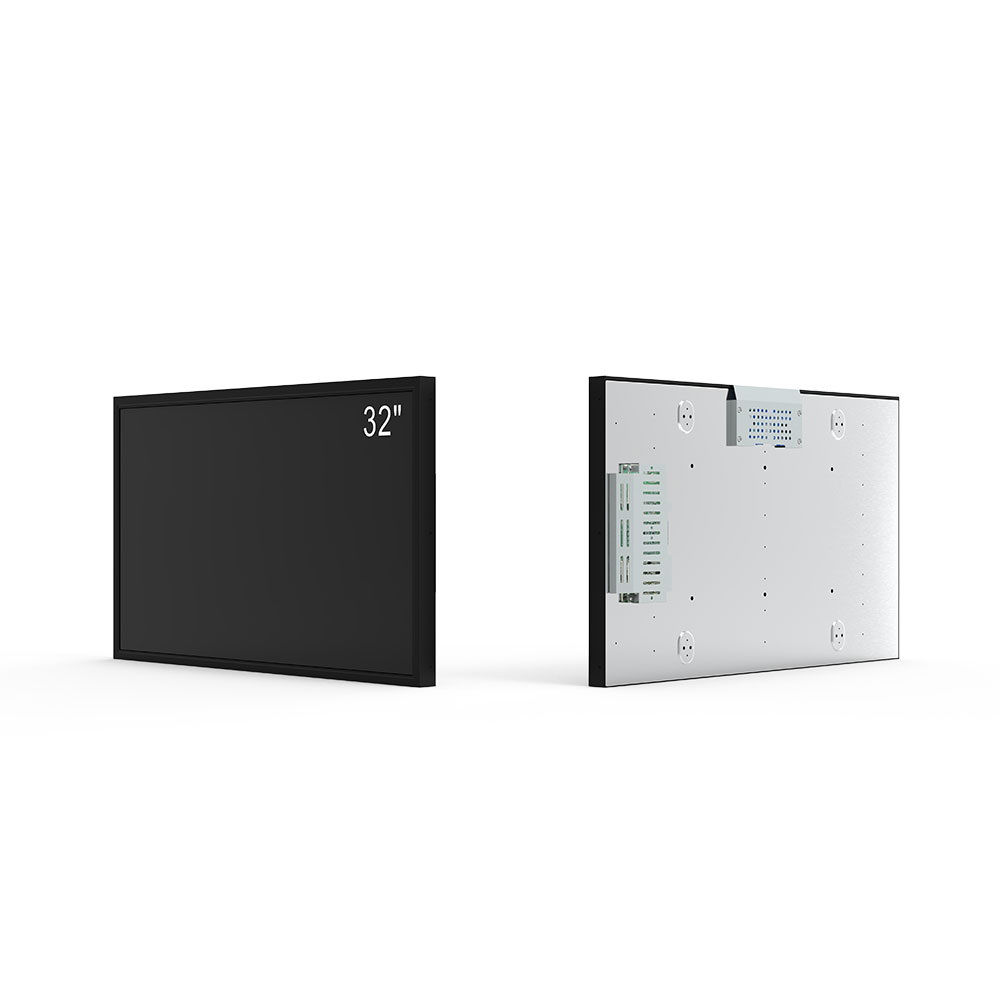
Additionally, thermal management remains critical. High-brightness backlights generate more heat, necessitating passive cooling solutions such as aluminum frames and internal heat sinks. Some manufacturers now embed thermally conductive materials directly into the PCB substrate to ensure stable operation between -20°C and +70°C, meeting IEC 60068-2-1 test criteria for cold shock resistance.
With growing demand in smart cities, IoT-enabled agriculture, and autonomous vehicle dashboards, the integration of 4:3 15”, 17”, and 19” sunlight-readable LCDs continues to expand beyond traditional sectors. These displays are no longer niche—they represent a mature, reliable solution validated by global certifications and real-world testing across multiple industries.