RisingStar
- Home
- About Us
- Products
- News
- Video
- Contact
- Send Inquiry
Search
- Home
- About Us
- Products
- News
- Video
- Contact
- Send Inquiry
RisingStar
High-brightness sunlight-readable LCD screens have become indispensable in modern outdoor and industrial environments where visibility under direct sunlight is critical. These displays are engineered to maintain clarity, contrast, and color accuracy even in extreme lighting conditions—such as those found in military vehicles, construction sites, agricultural equipment, transportation systems, and public information kiosks. Unlike standard LCDs that suffer from glare and washed-out images in bright light, sunlight-readable LCDs utilize advanced optical technologies including transflective liquid crystal layers, high-luminance LED backlights, and anti-glare coatings.
One of the most significant advantages of high-brightness sunlight-readable LCDs is their ability to operate reliably in environments with ambient light levels exceeding 100,000 lux—a common condition during midday sun exposure. For instance, the U.S. Department of Defense mandates that all field-deployed electronic devices must be readable in full sunlight, which has driven widespread adoption of these screens in military applications such as UAVs (Unmanned Aerial Vehicles) and handheld command units. Similarly, companies like John Deere and Caterpillar integrate these displays into heavy machinery for real-time diagnostics, GPS navigation, and safety monitoring.
The practical applications extend beyond defense and agriculture. In the transportation sector, transit agencies use high-brightness LCDs in bus stop information boards, train control panels, and airport departure screens to ensure passengers can read schedules clearly regardless of weather or time of day. In healthcare, portable diagnostic devices such as ultrasound machines rely on these screens for accurate image interpretation in emergency field settings.
Despite their robust performance, common issues include thermal management challenges—especially when operating in high-temperature environments like desert regions—and limited viewing angles compared to indoor-oriented OLED or IPS displays. To address this, manufacturers now incorporate passive cooling designs and adaptive brightness control algorithms that adjust luminance based on ambient light sensors. Recent trends also show a shift toward integrating touch functionality with glove compatibility and enhanced durability through IP65/IP67 ratings for dust and water resistance.
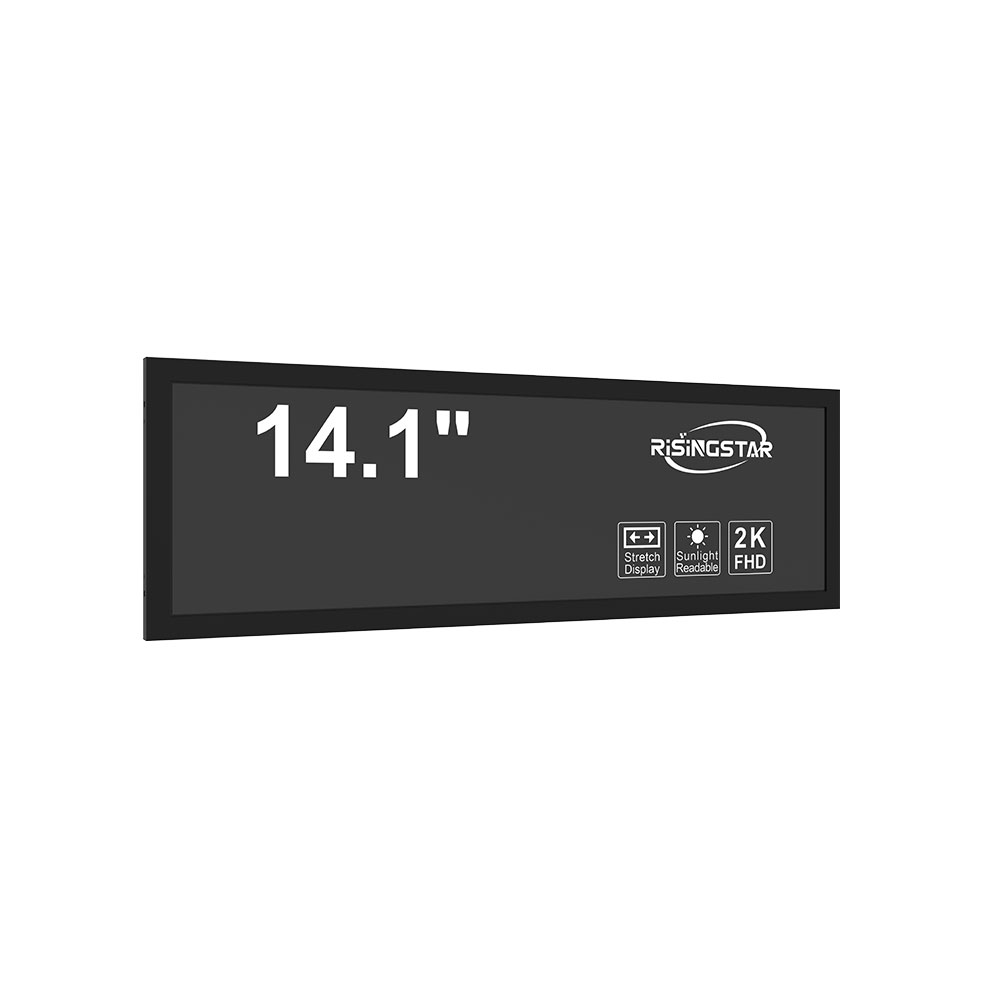
A key innovation in 2023–2024 was the development of micro-LED-based sunlight-readable displays by companies like MicroVision and LG Display. These offer higher peak brightness (up to 5,000 nits), lower power consumption, and superior longevity compared to traditional LED-backlit LCDs. Industry analysts at Display Supply Chain Consultants (DSCC) report that the global market for sunlight-readable displays is expected to grow at a CAGR of 8.2% from 2024 to 2030, driven by demand in electric vehicles, smart cities, and IoT-enabled infrastructure.
In conclusion, high-brightness sunlight-readable LCDs are not just a niche solution—they represent a core technological advancement enabling reliable human-machine interaction in demanding outdoor and industrial contexts. As lighting conditions vary globally and industries adopt more ruggedized electronics, understanding the design principles, applications, and emerging innovations in this space is essential for engineers, procurement specialists, and product designers.