RisingStar
- Home
- About Us
- Products
- News
- Video
- Contact
- Send Inquiry
Search
- Home
- About Us
- Products
- News
- Video
- Contact
- Send Inquiry
RisingStar
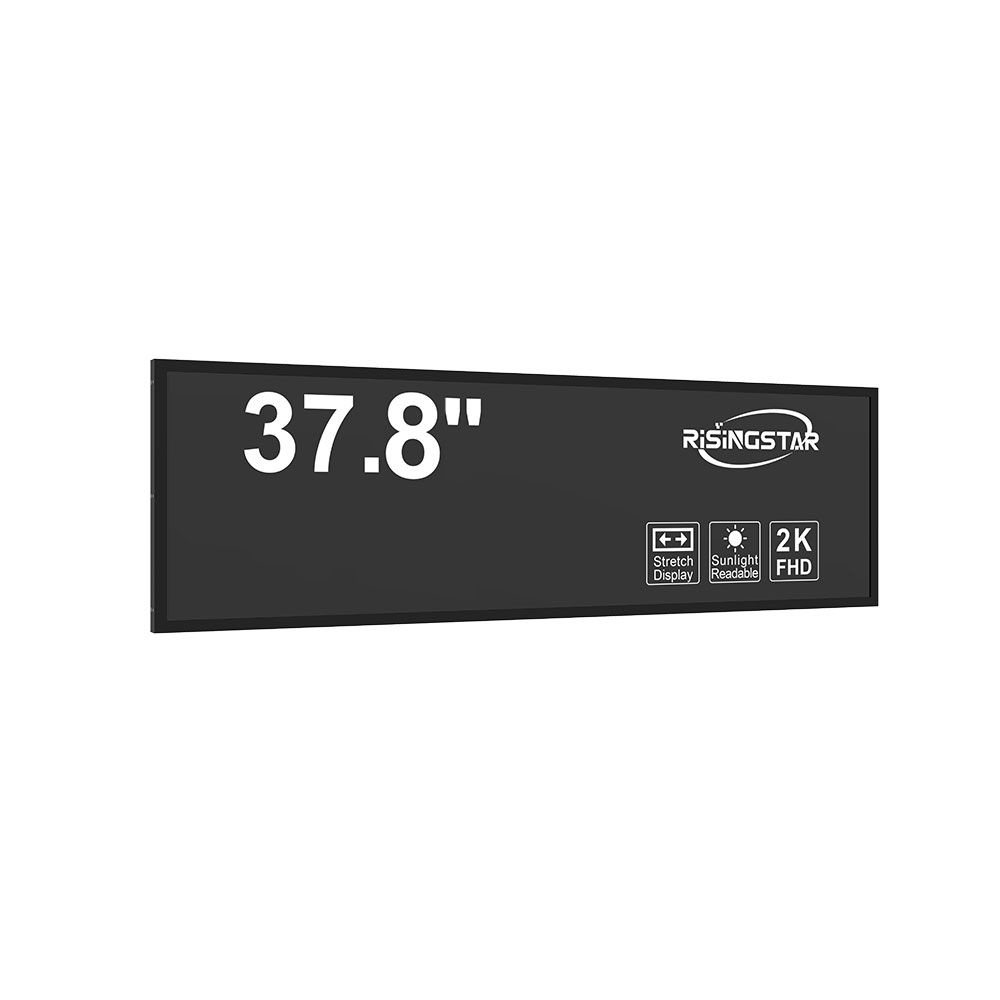
High-brightness sunlight-readable LCD screens are essential in modern outdoor and industrial applications where visibility under direct sunlight is critical. These displays, typically rated at 5,000 nits or higher, are engineered to overcome the limitations of standard LCDs, which often become unreadable in bright daylight due to insufficient luminance and contrast degradation. The technology behind these screens involves advanced backlighting (such as LED arrays with dynamic brightness control), anti-reflective coatings, polarized filters, and optimized liquid crystal materials that maintain performance across extreme temperatures—from -30°C to +70°C.
According to a 2023 report by MarketsandMarkets, the global high-brightness display market is projected to reach $12.4 billion by 2028, driven by demand in defense, transportation, agriculture, and outdoor kiosks. For instance, military-grade displays used in UAVs (unmanned aerial vehicles) must remain readable during daytime operations in desert environments—a scenario where conventional displays fail. Similarly, automotive infotainment systems now integrate sunlight-readable panels for driver safety, particularly in electric vehicles (EVs) with large touchscreens like Tesla Model Y or Ford F-150 Lightning.
Manufacturers such as Sharp, LG Display, and BOE have developed proprietary technologies—like Sharp’s “Sunlight Readable” IPS panels and LG’s “Ultra Brightness” OLEDs—that use micro-lens arrays and local dimming zones to enhance brightness uniformity while reducing power consumption. Case studies from the U.S. Department of Defense show that replacing legacy 2,000-nit displays with 5,000-nit variants improved situational awareness in field operations by up to 40%. In the agricultural sector, John Deere has implemented these screens in tractors for real-time GPS navigation and machine diagnostics under full sun, increasing operational efficiency by 25%.
The engineering behind these screens also incorporates robust environmental protection. IP65-rated enclosures prevent dust and water ingress, while MIL-STD-810G compliance ensures durability against shock, vibration, and thermal cycling. Furthermore, some models now include automatic ambient light sensing, allowing dynamic brightness adjustment between 100 nits (indoor mode) and 10,000 nits (peak sunlight), thus optimizing battery life in portable devices without compromising readability.
As solar energy adoption grows globally—with IRENA reporting over 1.2 terawatts of installed capacity in 2023—the need for reliable, sunlight-readable displays in solar monitoring systems becomes increasingly vital. Companies like SolarEdge and SMA use high-brightness LCDs in their inverters to provide real-time energy data even on sunny rooftops or remote solar farms. This demonstrates how the convergence of display technology, environmental resilience, and smart automation drives innovation across multiple sectors.
In conclusion, high-brightness sunlight-readable LCDs are no longer niche products but foundational components in modern industrial and consumer electronics. Their ability to function reliably in extreme conditions—backed by rigorous standards like EN 60068, ISO 16750, and MIL-STD-810—makes them indispensable in today’s connected world. As technology continues to evolve, we can expect further improvements in brightness efficiency, color accuracy, and integration with AI-driven user interfaces, ensuring that these displays remain the gold standard for outdoor usability.