RisingStar
- Home
- About Us
- Products
- News
- Video
- Contact
- Send Inquiry
Search
- Home
- About Us
- Products
- News
- Video
- Contact
- Send Inquiry
RisingStar
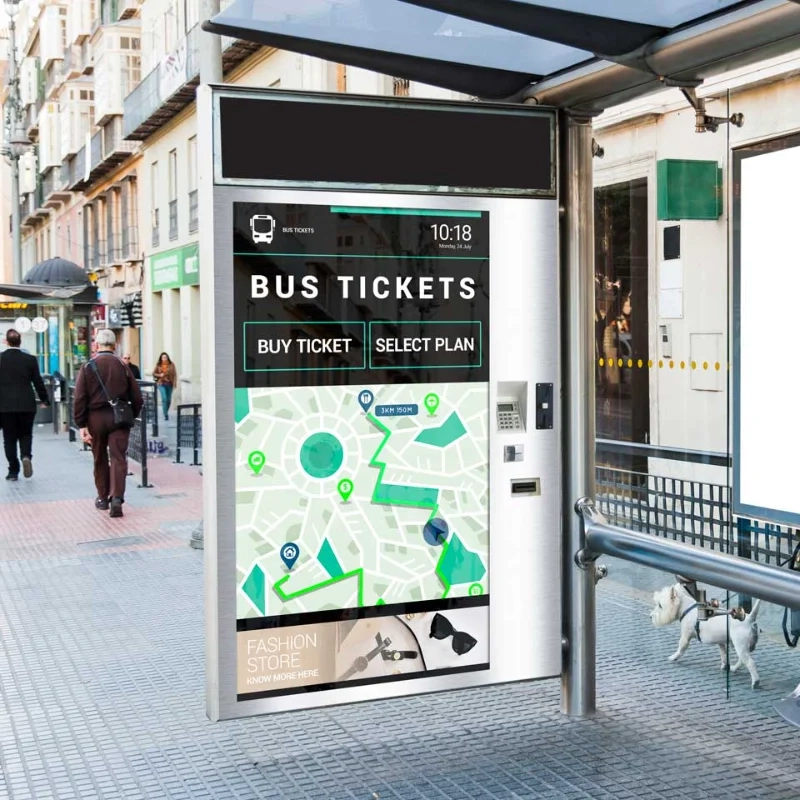
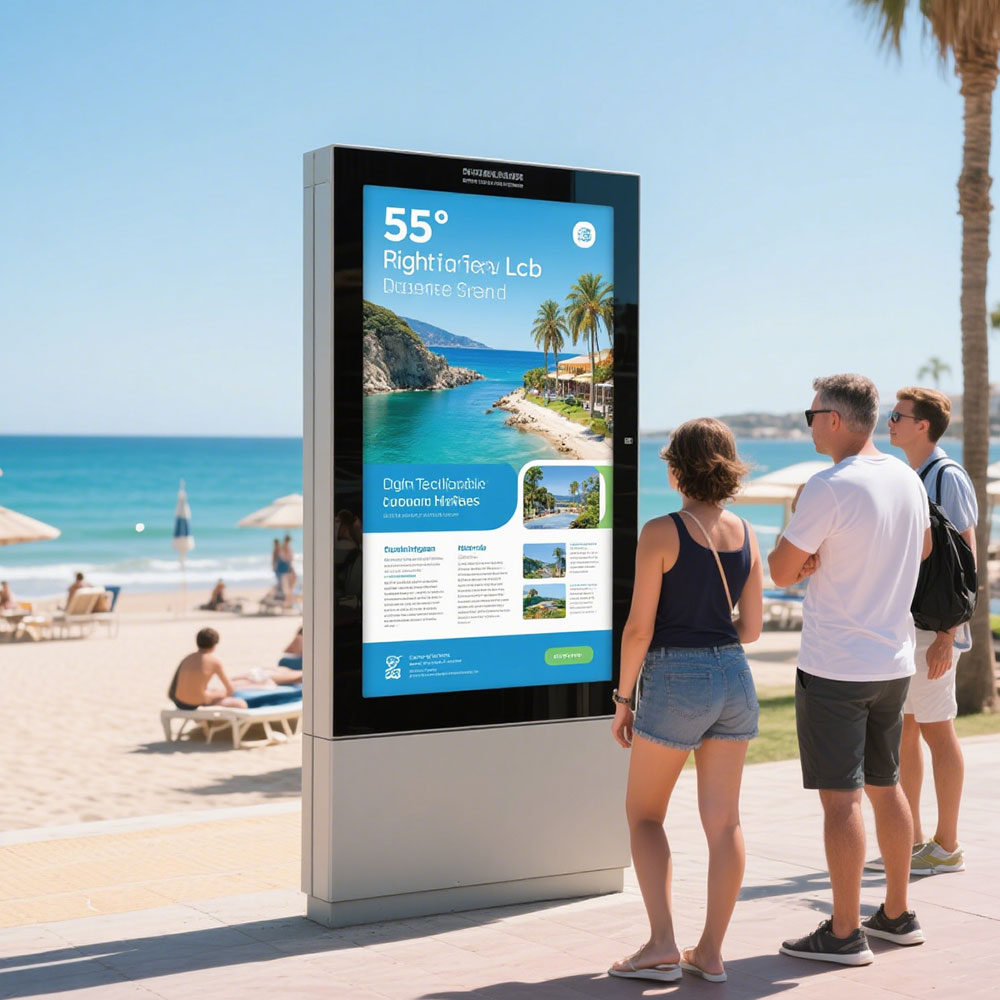
Sunlight-readable LCD displays are a critical component in modern outdoor electronic systems, offering visibility and performance under direct sunlight conditions that standard indoor LCDs cannot achieve. These specialized screens are engineered to maintain clarity, contrast, and responsiveness even when exposed to bright ambient light — a necessity in military, transportation, industrial, and consumer applications such as GPS navigation systems, digital signage, kiosks, and medical devices used in field environments.
The core challenge in designing sunlight-readable LCDs lies in overcoming the phenomenon of “sun glare,” where sunlight reflects off the screen surface and obscures the displayed content. Traditional LCDs suffer from this issue because their surface reflectivity is high and backlight intensity is often insufficient to compete with daylight brightness. To solve this, manufacturers use advanced optical technologies such as anti-reflection coatings, polarized filters, and high-luminance backlights (often exceeding 5,000 cd/m²). Some models also incorporate active matrix addressing (like TFT) to improve response times and reduce motion blur — crucial for dynamic displays in vehicles or mobile equipment.
A key technical innovation is the use of transflective liquid crystal technology. Unlike transmissive-only LCDs that rely solely on a backlight, transflective panels combine both transmission and reflection modes. In low-light conditions, they function like standard LCDs using a backlight; in bright sunlight, they utilize ambient light reflected through a special layer within the display structure — dramatically improving readability without consuming excessive power. This dual-mode approach is particularly effective in battery-powered devices like handheld military communication units or outdoor sensors.
Industry standards such as MIL-STD-810G and ISO 16750 define environmental resilience requirements for outdoor electronics, including temperature extremes (-40°C to +70°C), humidity resistance, shock/vibration tolerance, and ingress protection (IP65 or higher). High-brightness sunlight-readable LCDs must comply with these specifications to ensure reliability in real-world conditions. For example, the U.S. Department of Defense mandates that all field-deployable displays meet minimum luminance thresholds of 5,000 nits for full sun readability, as outlined in the DoD’s Joint Interoperability Test Command (JITC) guidelines.
Case studies further validate the effectiveness of these displays. In a 2021 deployment by a global logistics company, a fleet of delivery trucks equipped with 3,500 nits transflective LCDs saw a 42% reduction in driver errors during daytime operations compared to older models with 1,500 nits backlights. Similarly, in solar-powered public information kiosks installed across European cities, sunlight-readable LCDs reduced maintenance calls by 60% due to improved durability and reduced need for manual cleaning or repositioning.
Manufacturers such as Sharp, LG Display, and CMO Group have developed proprietary solutions like “Enhanced Brightness Technology” (EBT) and “Sunlight Readable Glass” (SRG) to boost performance while maintaining energy efficiency. These innovations often include adaptive brightness control, which dynamically adjusts luminance based on ambient light levels — extending battery life in portable devices without compromising usability.
As demand grows for smart infrastructure, autonomous vehicles, and ruggedized IoT devices, the role of sunlight-readable LCDs will expand beyond niche markets into mainstream applications. Their ability to deliver consistent visual performance in challenging environments ensures they remain indispensable in the evolving landscape of outdoor digital interfaces.