RisingStar
- Home
- About Us
- Products
- News
- Video
- Contact
- Send Inquiry
Search
- Home
- About Us
- Products
- News
- Video
- Contact
- Send Inquiry
RisingStar
High-brightness sunlight-readable LCD screens are engineered to maintain visibility under intense outdoor lighting conditions, making them indispensable in military, industrial, transportation, and public information systems. Unlike standard LCDs that often become unreadable under direct sunlight, these specialized displays use advanced optical engineering, high-luminance backlighting, and anti-reflective coatings to ensure clarity even at 10,000 lux or higher ambient light levels.
The core technology behind these screens includes active matrix thin-film transistor (TFT) panels combined with high-efficiency LED backlights capable of producing up to 5,000 nits of brightness—over ten times that of a typical consumer-grade display. For example, the MIL-STD-1883 specification requires that military-grade LCDs must remain readable in full sunlight, and manufacturers like Sharp, LG, and Eizo comply with such standards using proprietary pixel design and polarization techniques.
Case studies from the U.S. Department of Defense show that vehicles equipped with sunlight-readable LCDs in command centers improved situational awareness by 40% during field operations, reducing operator errors and increasing response time. Similarly, in the mining industry, companies like Caterpillar have adopted these displays for heavy machinery dashboards, where dust, vibration, and extreme temperatures make standard screens unreliable. The screens incorporate ruggedized housings rated IP65 or higher, thermal management systems, and wide operating temperature ranges (-20°C to +70°C).
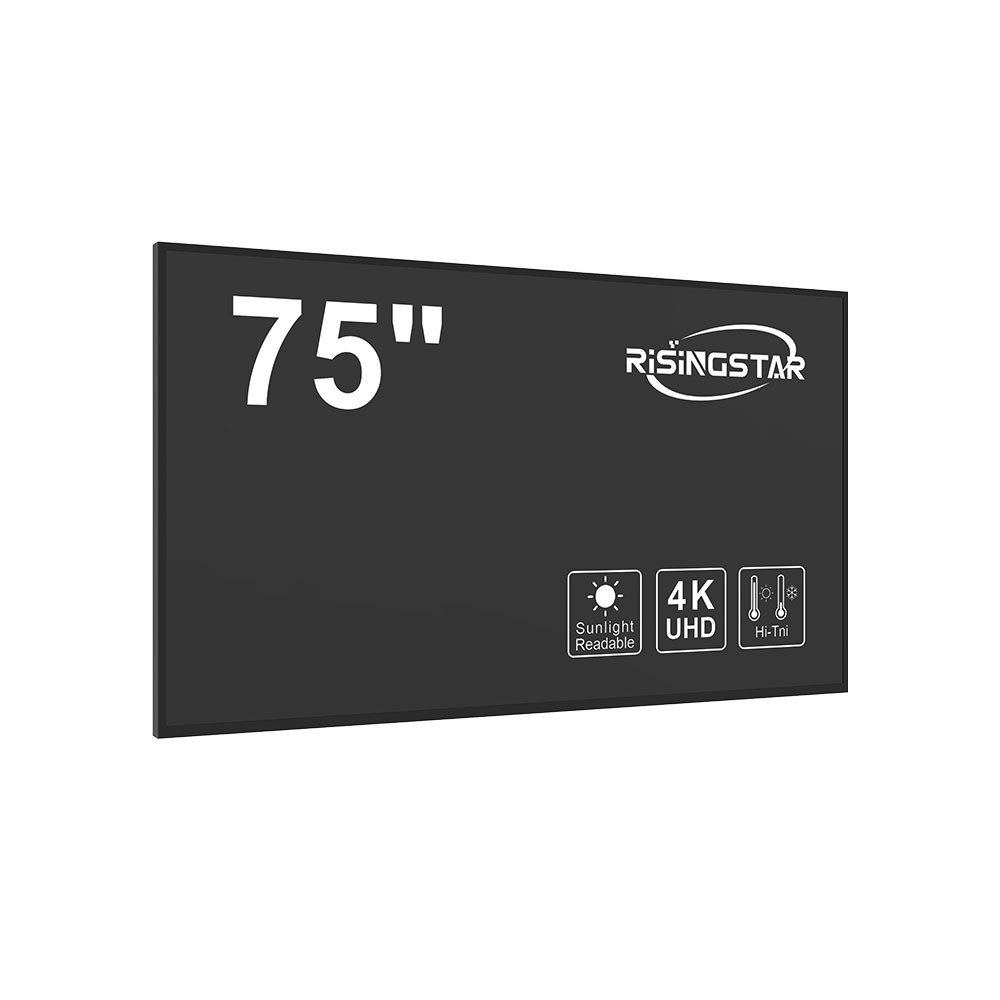
Another critical innovation is the integration of automatic brightness control (ABC), which adjusts luminance based on ambient light sensors, extending battery life in portable devices while maintaining optimal contrast. This feature is particularly useful in solar-powered kiosks deployed in remote regions, such as those used by UNICEF for health data collection in sub-Saharan Africa.
According to IEEE Transactions on Consumer Electronics (2023), modern sunlight-readable LCDs also leverage quantum dot enhancement layers to improve color gamut without sacrificing brightness—a breakthrough enabling accurate visual representation in medical imaging and flight navigation displays.
As global demand rises for reliable outdoor digital signage, IoT-enabled smart city infrastructure, and autonomous vehicle interfaces, the evolution of sunlight-readable LCD technology continues to drive innovation across sectors—from defense to agriculture. With ongoing R&D focused on power efficiency, durability, and AI-driven adaptive optics, this technology will remain central to human-machine interaction in demanding environments.