RisingStar
- Home
- About Us
- Products
- News
- Video
- Contact
- Send Inquiry
Search
- Home
- About Us
- Products
- News
- Video
- Contact
- Send Inquiry
RisingStar
In today’s rapidly evolving industrial and outdoor technology landscape, high-brightness sunlight-readable LCD screens have become indispensable components for equipment manufacturers and distributors operating globally. These displays are engineered to deliver optimal visibility under extreme lighting conditions—from direct sunlight to low-light environments—ensuring reliable performance in critical applications such as medical devices, military systems, transportation controls, and smart infrastructure.
Unlike standard LCDs that suffer from poor readability in bright ambient light, high-brightness sunlight-readable LCDs incorporate advanced optical technologies including anti-reflection coatings, high-luminance LED backlights (often exceeding 5000 nits), and sometimes transflective liquid crystal layers. According to a 2023 report by MarketsandMarkets, the global market for high-brightness displays is projected to grow at a CAGR of 7.6% through 2028, driven by demand from defense, automotive, and industrial automation sectors. This growth underscores the importance of selecting displays that meet rigorous environmental and operational standards.
Key technical features include:
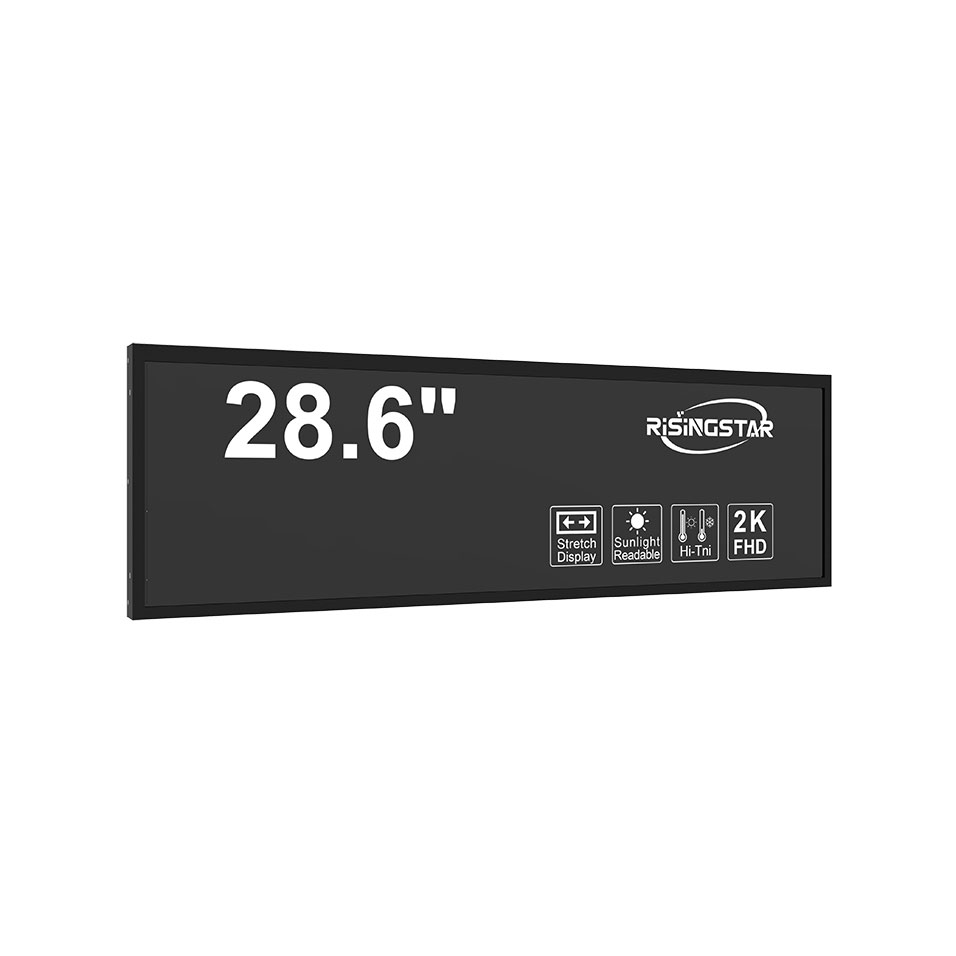
- Brightness Levels: 5000–10,000 nits, surpassing typical indoor displays (250–500 nits) and even many outdoor digital signage solutions.
- Wide Viewing Angles: Often 178° horizontal and vertical, crucial for multi-user or mobile viewing scenarios.
- Environmental Durability: IP65 or higher protection against dust and water ingress; operation across -30°C to +70°C temperature ranges.
- Low Power Consumption: Advanced power management circuits reduce energy use without sacrificing brightness—a key consideration for battery-powered field equipment.
- Compliance with Standards: RoHS, CE, FCC, and MIL-STD-810G certifications ensure safety, regulatory compliance, and ruggedness for harsh environments.
Case Study: A leading European medical equipment manufacturer integrated a 10,000-nit sunlight-readable LCD into its portable ultrasound device. The screen maintained clarity even during field operations in direct sunlight, improving diagnostic accuracy and clinician workflow. Similarly, a U.S.-based logistics company deployed these displays in automated warehouse control terminals, reducing operator errors by 40% due to improved visibility in dimly lit storage areas.
For overseas equipment manufacturers and distributors, partnering with certified suppliers who offer design support, rapid prototyping, and custom integration services is essential. Leading providers like LG Display, AU Optronics, and E-Ink Holdings now offer tailored solutions with embedded drivers, touch capabilities, and modular mounting options for seamless integration into existing product lines.
The future of high-brightness sunlight-readable LCDs lies in adaptive brightness control, OLED-based variants for deeper blacks and wider contrast ratios, and AI-assisted glare reduction algorithms. As industries continue to digitize and deploy intelligent systems outdoors, these displays will remain foundational—not just functional, but strategic assets for competitive differentiation.