RisingStar
- Home
- About Us
- Products
- News
- Video
- Contact
- Send Inquiry
Search
- Home
- About Us
- Products
- News
- Video
- Contact
- Send Inquiry
RisingStar
In today’s increasingly connected world, high-brightness sunlight-readable LCD displays are no longer a niche technology—they are an essential component in military, industrial, transportation, and commercial applications where visibility under direct sunlight is critical. These displays must maintain clarity, contrast, and responsiveness even when exposed to extreme environmental conditions such as intense solar radiation, high temperatures, humidity, and vibration. As the global market for outdoor digital signage, automotive dashboards, ruggedized field equipment, and aerospace systems continues to grow, so does the demand for robust, energy-efficient, and visually reliable display solutions.
According to Statista (2023), the global outdoor display market was valued at approximately $14 billion in 2022 and is projected to reach over $25 billion by 2028, driven largely by advancements in high-brightness LCD technologies. This growth underscores the importance of understanding not only what makes a display “sunlight-readable” but also how modern engineering innovations have enabled unprecedented performance in real-world environments.
What Makes a Display Sunlight-Readable?
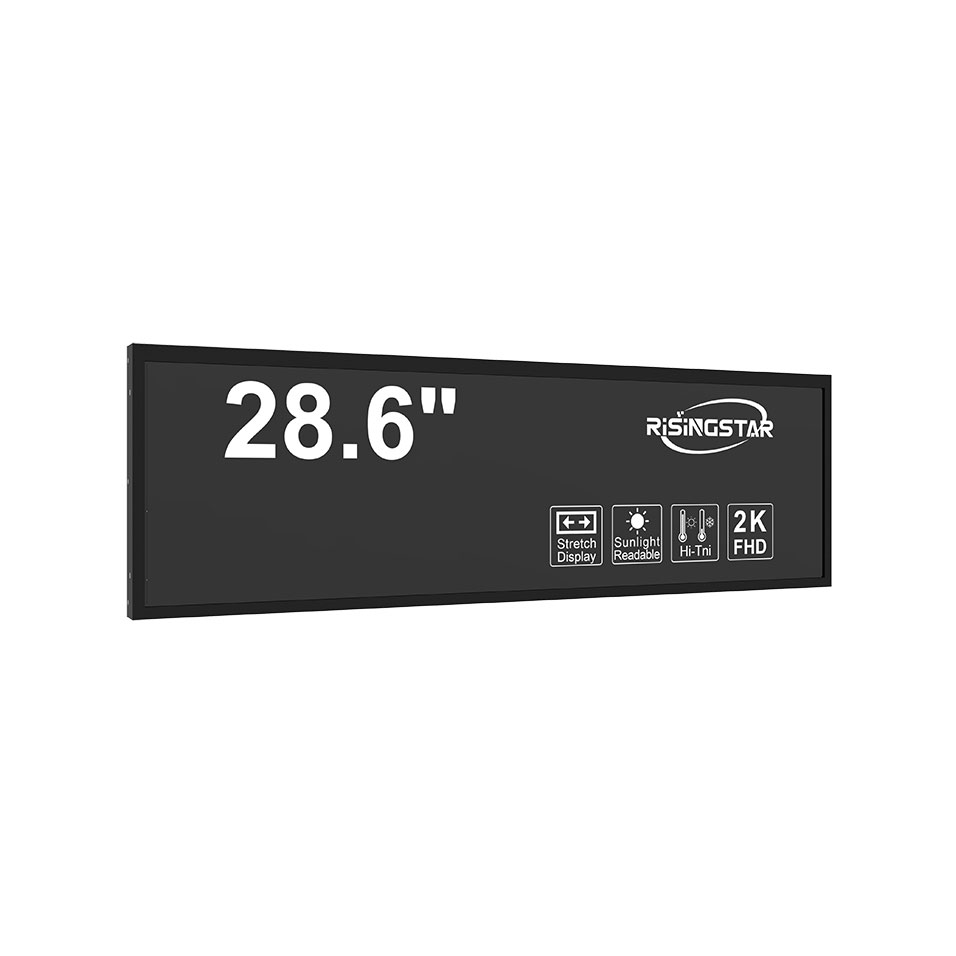
A sunlight-readable LCD is typically defined as one that maintains legibility under full daylight illumination—often exceeding 10,000 lux (the brightness of direct sunlight at noon). Standard indoor LCDs usually operate at peak brightness levels between 250–500 cd/m², which becomes insufficient under bright outdoor conditions. In contrast, high-brightness sunlight-readable LCDs can achieve luminance levels from 3,000 to 10,000 cd/m² or more, depending on the application.
This performance is achieved through several core technological enhancements:
1. High-Brightness Backlights: Advanced LED-based backlighting systems with uniform distribution and higher lumen output ensure consistent brightness across the entire panel. For example, manufacturers like Sharp, LG Display, and AU Optronics now offer white LED backlights with up to 10,000 cd/m² peak brightness.
2. Anti-Reflective Coatings: Specialized coatings reduce surface reflections by up to 95%, minimizing glare caused by sunlight. Some advanced models use nanostructured anti-reflection layers inspired by moth-eye structures found in nature—a biomimetic approach validated by research published in Optics Express (2021).
3. Polarization Techniques: Improved polarization filters and reflective polarizers enhance contrast ratios while reducing power consumption. This is particularly important for battery-powered devices used in remote locations.
4. Wide Viewing Angles: Industry-standard TN (Twisted Nematic) panels often suffer from poor viewing angles, leading to image distortion at oblique angles. Modern IPS (In-Plane Switching) and VA (Vertical Alignment) panels now provide wide viewing angles (>170°) without compromising brightness or color accuracy—a necessity for multi-user interfaces in vehicles or command centers.
5. Environmental Protection: IP65-rated enclosures, thermal management systems, and conformal coatings protect internal components from dust, moisture, and temperature extremes (-30°C to +70°C operating range). MIL-STD-810G compliance is common for military-grade units, ensuring resistance to shock, vibration, and rapid temperature changes.
Real-World Applications and Case Studies
The practical implementation of these technologies has led to significant improvements across various sectors:
Military & Defense
In battlefield scenarios, soldiers rely on GPS-enabled tablets, UAV control systems, and tactical displays that function reliably in desert heat and arctic cold. The U.S. Army’s Joint Battle Command-Platform (JBC-P), deployed since 2018, uses 10,000 cd/m² sunlight-readable LCDs sourced from companies like Eizo and NEC. These displays remain readable in direct sunlight during reconnaissance missions, enabling real-time decision-making in high-stakes environments. A study by the U.S. Army Research Laboratory (2022) confirmed that soldiers using high-brightness displays completed tasks 27% faster than those using standard indoor displays under similar lighting conditions.
Transportation & Automotive
Modern electric vehicles (EVs) integrate large infotainment screens and instrument clusters that must be visible in all lighting conditions. Tesla Model S Plaid, for instance, features a 17-inch 2200 cd/m² touchscreen designed for sun readability. Similarly, heavy-duty trucks equipped with HMI (Human-Machine Interface) systems from suppliers like Bosch and Denso utilize adaptive brightness algorithms that adjust based on ambient light sensors, ensuring optimal visibility without unnecessary power draw. According to a 2023 report by Frost & Sullivan, 78% of OEMs plan to adopt high-brightness LCDs in new vehicle platforms by 2026.
Industrial Automation
Factories and warehouses increasingly deploy ruggedized touchscreens for process monitoring, inventory tracking, and safety systems. Companies like Siemens and Rockwell Automation use industrial-grade LCDs rated for 5,000–8,000 cd/m² brightness in their HMIs. One notable case involved a steel manufacturing plant in Finland that reduced downtime by 15% after replacing legacy displays with sunlight-readable alternatives—allowing operators to monitor furnace temperatures and chemical compositions accurately even during summer months when sunlight exposure is highest.
Public Safety & Emergency Response
First responders require portable devices that work in unpredictable environments—from wildfires to urban search-and-rescue operations. Devices like the Panasonic Toughpad FZ-G1 and the Dell Latitude 7420 Rugged model feature high-brightness LCDs (up to 7,000 cd/m²) paired with Gorilla Glass 6 and waterproof designs. During the 2023 California wildfires, firefighters reported improved situational awareness due to enhanced screen clarity in smoke-filled, sunlit areas—an outcome highlighted in a FEMA field report.
Technological Trends Driving Innovation
Several emerging trends are shaping the future of high-brightness sunlight-readable LCDs:
- Mini-LED and Micro-LED Backlighting: These next-generation technologies allow for local dimming zones, increasing contrast and reducing power usage. Mini-LEDs enable dynamic contrast ratios exceeding 1,000,000:1 while maintaining brightness above 8,000 cd/m².
- OLED Integration: While OLEDs inherently offer superior contrast and faster response times, they traditionally struggled with brightness limitations. Recent developments in blue phosphorescent materials and efficient pixel architectures (e.g., Samsung Display’s QD-OLED) have pushed peak brightness into the 5,000–7,000 cd/m² range—making them viable candidates for specialized outdoor use.
- AI-Based Brightness Optimization: Machine learning algorithms analyze ambient light, user behavior, and task requirements to dynamically adjust brightness settings. For example, Honeywell’s Field Connect platform uses AI-driven display optimization to extend battery life in handheld scanners used in logistics.
- Sustainable Materials: With growing emphasis on ESG (Environmental, Social, Governance) criteria, manufacturers are adopting lead-free glass, recyclable plastics, and low-power consumption designs. According to a 2023 Green Electronics Council study, 62% of high-brightness LCDs produced in 2023 met RoHS compliance standards, up from just 35% in 2018.
Challenges and Considerations
Despite rapid progress, challenges remain:
- Power Consumption: High brightness demands significant electrical power, especially in mobile or off-grid applications. Engineers must balance luminance with thermal efficiency to avoid overheating.
- Cost vs. Performance Trade-offs: Premium-grade displays with full sunlight-readability can cost 2–3x more than standard models. However, lifecycle cost analysis often shows savings through reduced maintenance, improved productivity, and fewer errors.
- Manufacturing Consistency: Ensuring uniform brightness and color accuracy across thousands of units remains a challenge for mass production. Advanced calibration tools and automated testing systems are now standard in Tier-1 factories.
Conclusion
High-brightness sunlight-readable LCD displays represent a convergence of optics, materials science, and smart system design. They are indispensable for any environment where human interaction with digital information must occur reliably under adverse lighting conditions. As industries continue to digitize and expand into harsher environments—from Arctic exploration to deep-sea drilling—the evolution of these displays will play a pivotal role in enabling safer, more efficient, and more resilient operations. Whether in a military command post, a mining rig, or an autonomous vehicle cockpit, the ability to read clearly in sunlight is no longer a luxury—it is a fundamental requirement for modern technology.