RisingStar
- Home
- About Us
- Products
- News
- Video
- Contact
- Send Inquiry
Search
- Home
- About Us
- Products
- News
- Video
- Contact
- Send Inquiry
RisingStar
High-brightness sunlight-readable LCD displays are essential components in modern outdoor electronics, particularly in environments where visibility under direct sunlight is critical. These displays are engineered to maintain clarity and readability even under extreme lighting conditions—ranging from 10,000 to over 50,000 nits of brightness—far exceeding standard indoor LCDs that typically max out at 300–500 nits.
One of the most prominent applications of these screens lies in military and defense systems. For example, the U.S. Army’s M1 Abrams tank uses high-brightness LCDs for targeting and navigation displays, ensuring operational clarity during daylight missions. Similarly, commercial sectors such as aviation, transportation (e.g., bus information systems), and industrial control panels rely on this technology to ensure safety and efficiency. In recent years, the rise of smart cities has also driven demand for these displays in public kiosks, digital signage, and traffic management systems exposed to full sunlight.
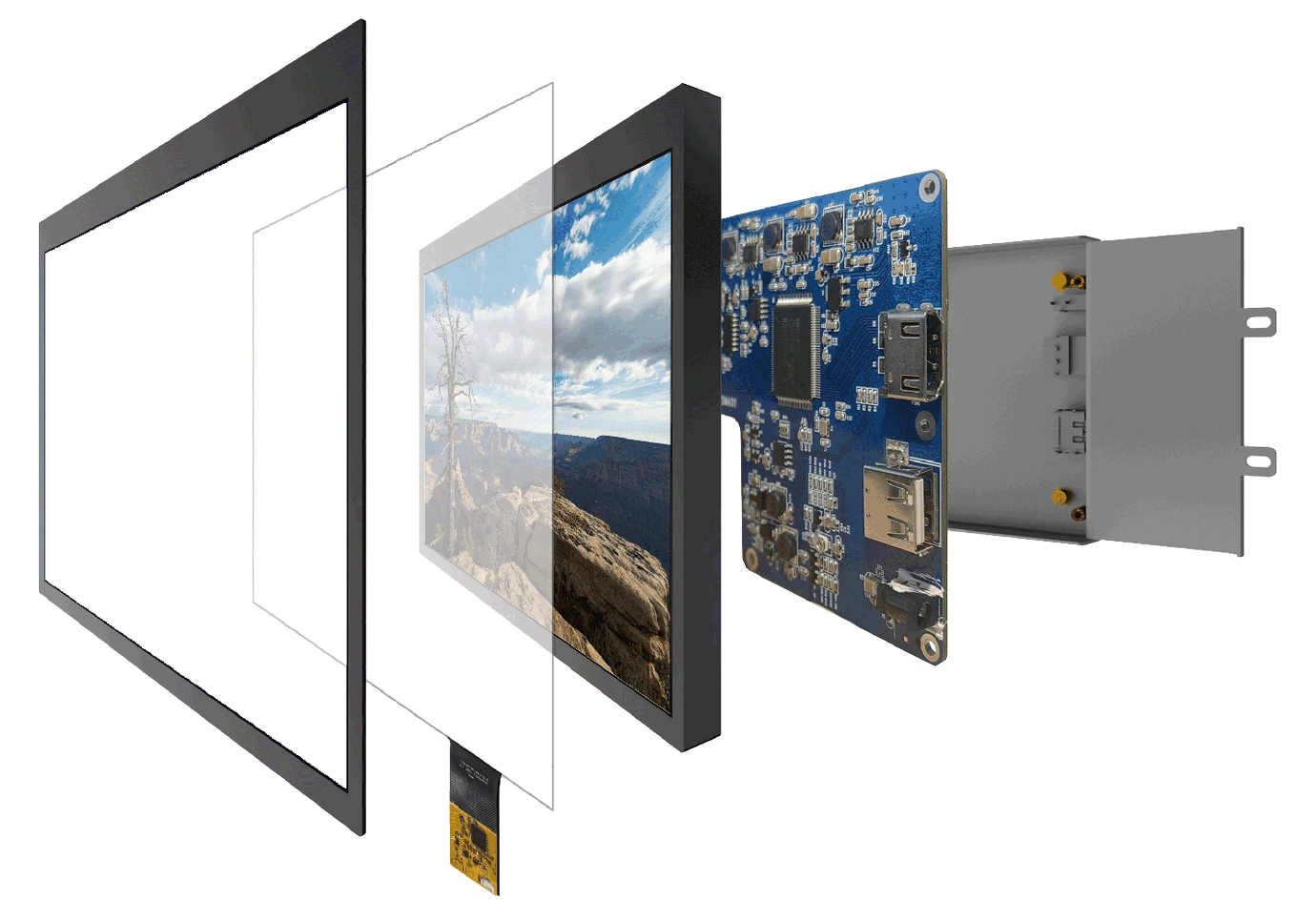
The advantages of high-brightness sunlight-readable LCDs go beyond mere visibility. They often incorporate anti-reflective coatings, polarized filters, and enhanced backlighting technologies like LED arrays with local dimming. Some models integrate automatic brightness adjustment via ambient light sensors, which not only improves user experience but also reduces power consumption—an important factor in battery-powered devices. Additionally, many units are built with ruggedized housings (IP65 or higher) and wide operating temperature ranges (-20°C to +70°C), making them suitable for harsh environments such as deserts, arctic regions, or marine platforms.
Despite their benefits, common problems still exist. One frequent issue is image retention or ghosting when static content is displayed for extended periods—a known challenge in TN (Twisted Nematic) panels. Another is reduced performance in low-light conditions due to overly aggressive backlight suppression algorithms. Manufacturers now address these issues through advanced panel technologies like IPS (In-Plane Switching) and OLED-based solutions, which offer better viewing angles and faster response times while maintaining sunlight readability.
The latest trends include integrating AI-driven adaptive brightness control and leveraging mini-LED backlights for improved contrast ratios. According to a 2024 report by MarketsandMarkets, the global market for sunlight-readable displays is projected to grow at a CAGR of 8.3% through 2030, driven by increasing adoption in autonomous vehicles, mobile command centers, and IoT-enabled infrastructure. Companies like Sharp, LG Display, and Samsung Display have introduced new modular display solutions tailored for automotive dashboards and outdoor industrial monitoring.
As technology evolves, the convergence of high-brightness LCDs with energy-efficient designs and intelligent environmental sensing promises a future where outdoor displays are both highly visible and sustainable. This makes them indispensable across industries—from defense and logistics to smart urban development.