RisingStar
- Home
- About Us
- Products
- News
- Video
- Contact
- Send Inquiry
Search
- Home
- About Us
- Products
- News
- Video
- Contact
- Send Inquiry
RisingStar
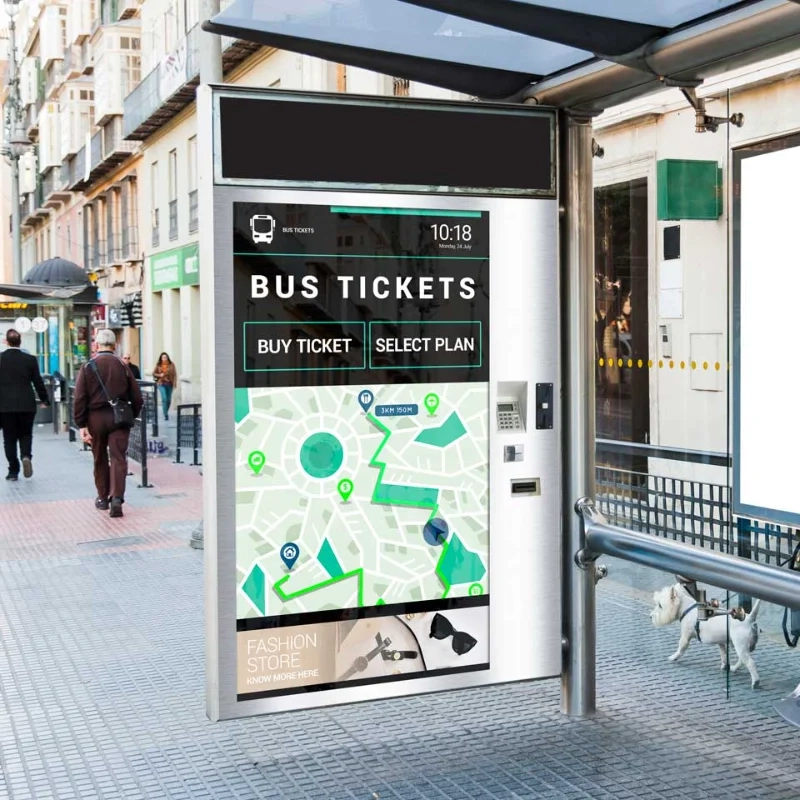
High-brightness sunlight-readable LCD screens are critical components in modern display systems designed for outdoor and high-ambient-light environments such as military vehicles, industrial control panels, public transportation, and outdoor advertising. These displays must maintain visibility under extreme lighting conditions—up to 100,000 lux of direct sunlight—without compromising image clarity, color accuracy, or response time. The technology behind these screens is a sophisticated combination of optical design, backlight engineering, and material science.
A key feature of sunlight-readable LCDs is their ability to achieve brightness levels between 3,000 and 10,000 nits (cd/m²), far exceeding standard indoor LCDs that typically operate at 250–500 nits. This enhanced luminance is achieved through high-efficiency LED backlights, often using full-array local dimming (FALD) or edge-lit configurations with high-power LEDs. For example, the U.S. Department of Defense has mandated minimum brightness standards for avionics and vehicle-mounted displays in field operations, requiring at least 5,000 nits for mission-critical applications—a benchmark now widely adopted across global defense and aerospace industries.
Another crucial element is the use of anti-glare and polarization layers. Sunlight-induced glare reduces contrast and makes text unreadable; therefore, specialized coatings such as matte-finish glass with microstructured surfaces and polarized films are employed to diffuse reflected light. Additionally, some models incorporate active ambient light sensors that dynamically adjust screen brightness based on real-time environmental lighting, optimizing power consumption while preserving readability—an essential feature in battery-powered mobile devices like handheld military radios or drones.
Material innovations also play a vital role. Advanced LCD panels now utilize wide-viewing-angle technologies like IPS (In-Plane Switching) or VA (Vertical Alignment) with enhanced pixel structures to prevent color shift when viewed from oblique angles—a common issue in cockpit or dashboard displays. Furthermore, ruggedization techniques such as sealed housings, shock-resistant mounts, and conformal coatings protect against dust, moisture, and mechanical stress in harsh conditions. MIL-STD-810G certification is commonly required for military-grade units, ensuring reliability in temperature extremes (-40°C to +70°C), vibration, and humidity.
Case studies highlight successful implementations. In 2022, the Royal Navy integrated sunlight-readable LCDs into its offshore patrol vessels’ command centers, improving situational awareness during daytime operations in tropical climates. Similarly, Siemens Energy deployed high-brightness displays in gas turbine control systems in oil rigs located in the Middle East, where solar exposure exceeds 8,000 lux daily. Both projects demonstrated reduced operator fatigue and improved operational safety due to superior visual clarity under direct sunlight.
Standards such as ISO 9241-31 (Human factors for visual displays) and IEC 60950-1 (Safety requirements for information technology equipment) guide design and testing protocols. Moreover, the growing demand for energy-efficient solutions has led manufacturers to explore OLED-based sunlight-readable displays—though current limitations in peak brightness (typically under 3,000 nits) still restrict them to niche applications compared to LED-backlit LCDs.
In conclusion, high-brightness sunlight-readable LCD technology continues to evolve rapidly, driven by advancements in materials, manufacturing processes, and system-level integration. Its importance spans military, industrial, transportation, and consumer markets, making it a foundational enabler of human-machine interaction in demanding environments.