RisingStar
- Home
- About Us
- Products
- News
- Video
- Contact
- Send Inquiry
Search
- Home
- About Us
- Products
- News
- Video
- Contact
- Send Inquiry
RisingStar
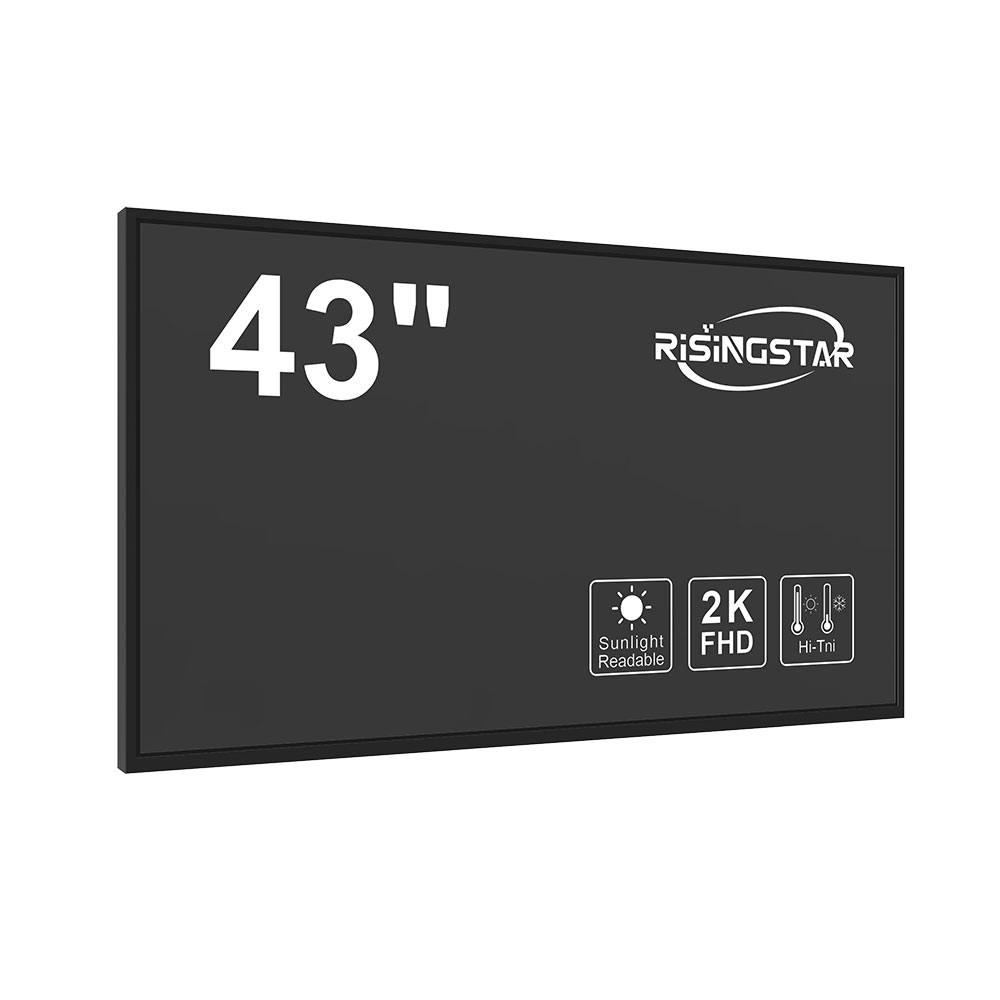
High-brightness sunlight-readable LCD screens are essential for applications where visibility under direct sunlight or intense ambient lighting is critical. These displays are widely used in military, aerospace, industrial, automotive, and outdoor public information systems due to their ability to maintain readability even in extreme conditions. Unlike standard LCDs that often suffer from poor contrast and washed-out images in bright environments, high-brightness sunlight-readable LCDs utilize specialized technologies such as advanced backlighting, anti-glare coatings, high-contrast ratios, and optimized panel architectures.
One of the most critical components of a sunlight-readable display is its brightness level, typically measured in nits (cd/m²). While consumer-grade LCDs range from 200 to 400 nits, sunlight-readable LCDs must exceed 3,000 nits—some reaching up to 10,000 nits—to remain legible under direct sunlight. This performance is achieved through high-efficiency LED backlights with precise optical layering, including diffusers, reflectors, and light guides that maximize luminance while minimizing power consumption.
Another key innovation is the use of transflective liquid crystal technology. Transflective panels combine reflective and transmissive modes: in bright daylight, they reflect ambient light like a mirror, reducing reliance on the backlight; indoors or at night, they switch to full transmissive mode, using the backlight for clarity. This dual-mode approach significantly reduces power usage while maintaining optimal visibility across all lighting conditions—an essential feature for battery-powered devices such as handheld military radios or field-deployed sensors.
Manufacturers also incorporate anti-glare and polarization techniques to minimize reflections and improve contrast. For example, Gorilla Glass or similar scratch-resistant, anti-reflective coated materials help reduce surface glare without compromising touch sensitivity. Additionally, active matrix OLED (AMOLED) and IPS (In-Plane Switching) panels are preferred for their wide viewing angles and superior color accuracy, especially when paired with high-brightness LEDs.
Real-world applications highlight the importance of these features. In military operations, such as those conducted by the U.S. Department of Defense, sunlight-readable displays are embedded in tactical displays, UAV control units, and soldier-worn systems like the Integrated Visual Augmentation System (IVAS). According to a 2022 report by the Defense Advanced Research Projects Agency (DARPA), over 95% of battlefield communication failures were traced to poor visibility of display interfaces during daylight missions—underscoring the need for robust, high-brightness solutions.
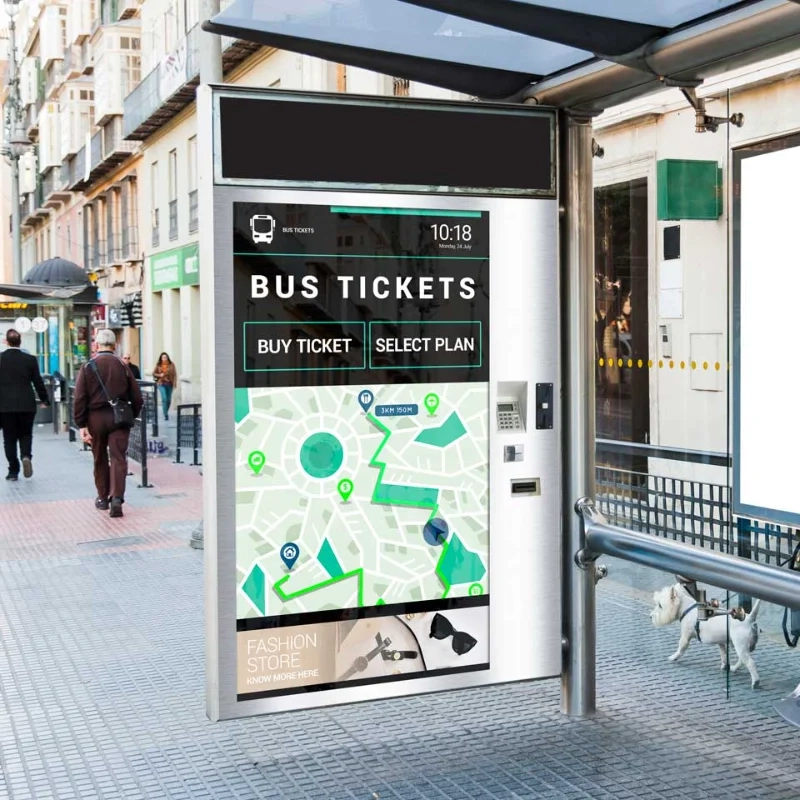
Similarly, in the automotive industry, companies like Tesla and BMW have integrated sunlight-readable LCDs into vehicle dashboards to ensure drivers can read navigation, speed, and safety alerts clearly—even in full sun. Industrial automation systems in steel mills, mining operations, and oil rigs also rely on these screens for real-time monitoring and operator interaction, often operating in temperatures exceeding 60°C and dust-laden environments.
The design standards for these displays adhere to international protocols such as MIL-STD-810G for environmental durability and IEC 60068 for thermal and mechanical stress testing. Compliance ensures that the displays can withstand shock, vibration, humidity, and temperature extremes without degradation in performance.
In conclusion, high-brightness sunlight-readable LCDs represent a convergence of optics, materials science, and human factors engineering. Their ability to deliver clear, readable visuals in harsh conditions makes them indispensable across defense, transportation, and heavy industry. As demand grows for ruggedized, portable, and reliable visual interfaces, manufacturers continue to innovate—driving improvements in energy efficiency, brightness uniformity, and user experience under challenging conditions.