RisingStar
- Home
- About Us
- Products
- News
- Video
- Contact
- Send Inquiry
Search
- Home
- About Us
- Products
- News
- Video
- Contact
- Send Inquiry
RisingStar
In today’s industrial and outdoor technology landscape, the demand for durable, high-brightness sunlight-readable LCD displays has surged—especially in environments where exposure to water, dust, and extreme temperatures is common. Among the most widely adopted protection standards for such applications is IP66, a rating defined by the International Electrotechnical Commission (IEC) under IEC 60529. An IP66-rated display offers complete protection against dust ingress (the "6") and powerful water jets from any direction (the "6"), making it ideal for use in military, marine, automotive, agricultural, and construction sectors.
High-brightness sunlight-readable LCDs with IP66 ratings are engineered using advanced technologies like transflective liquid crystal displays (LCDs), high-luminance LED backlighting (typically 3,000 to 5,000 cd/m²), and anti-glare or polarized glass coatings. These features ensure visibility even under direct sunlight while maintaining performance in low-light conditions. The IP66 sealing is achieved through robust gasket materials (e.g., silicone or EPDM rubber), hermetically sealed enclosures, and reinforced bezel designs that prevent moisture penetration at seams or cable entry points.
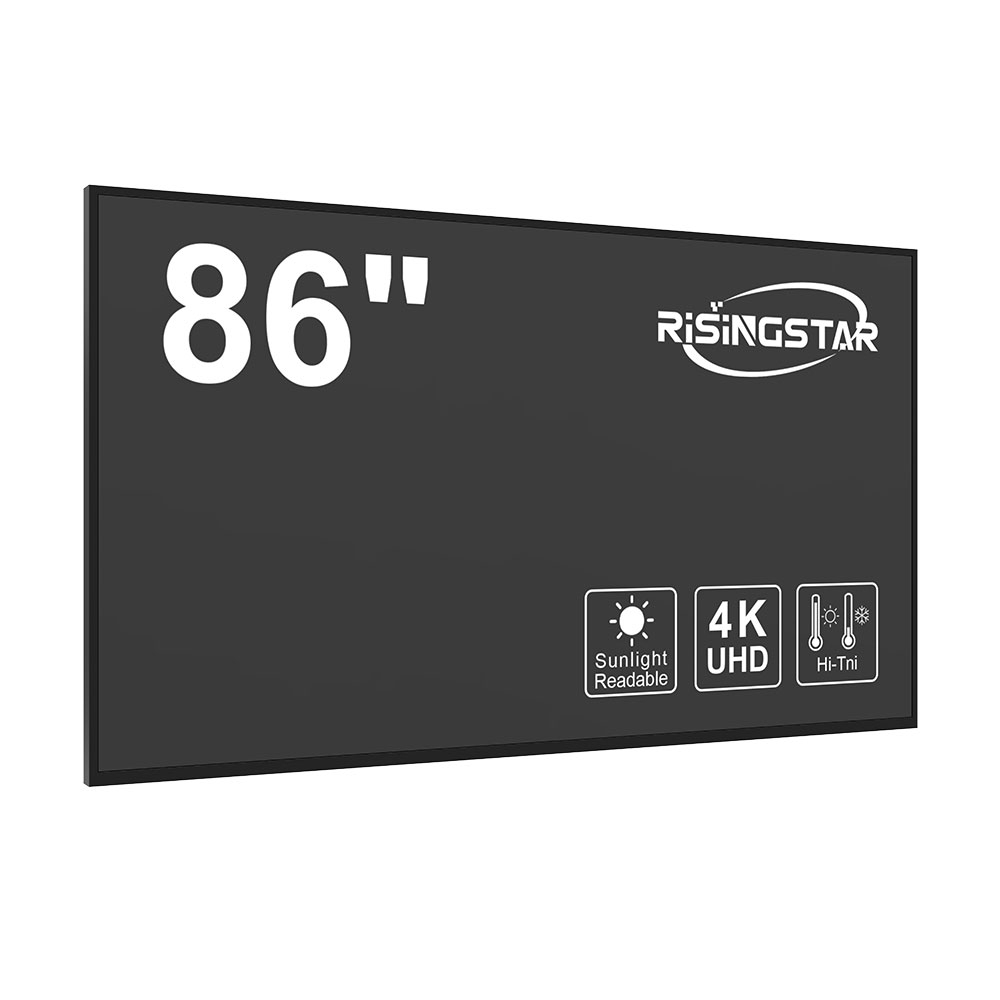
Case studies from leading manufacturers like Sharp, LG Display, and Innolux demonstrate real-world success. For instance, a U.S. Department of Defense field communication unit deployed an IP66-rated 10.4-inch transflective LCD in desert operations. Despite sandstorms and sudden rain, the screen maintained full functionality for over 3 years without degradation—a testament to the effectiveness of IP66 design when combined with proper thermal management and mechanical stability.
Furthermore, compliance with IP66 does not compromise other critical specifications. Modern IP66 displays often meet MIL-STD-810G shock and vibration resistance standards, operate across -20°C to +70°C temperature ranges, and support wide viewing angles (up to 170°). This makes them suitable for integration into rugged tablets, vehicle dashboards, medical equipment used in mobile clinics, and smart agriculture sensors exposed to the elements.
The key to successful IP66 implementation lies in component-level testing during design and validation phases. Manufacturers must perform rigorous environmental stress screening (ESS), including humidity cycling, salt spray tests, and water jet impact simulations per IEC 60529 Annex B. Failure to test under real-world conditions can lead to premature seal degradation, especially in high-vibration or frequent thermal expansion scenarios.
For end-users, selecting an IP66-rated LCD means choosing reliability over cost-cutting shortcuts. While higher initial investment is typical, total cost of ownership drops significantly due to reduced maintenance, fewer replacements, and uninterrupted operation in mission-critical settings. As global industries push toward IoT-enabled edge devices and remote monitoring systems, IP66 waterproofing is no longer optional—it’s a necessity for durability, safety, and long-term performance.