RisingStar
- Home
- About Us
- Products
- News
- Video
- Contact
- Send Inquiry
Search
- Home
- About Us
- Products
- News
- Video
- Contact
- Send Inquiry
RisingStar
For global transit authorities, system integrators, and OEM buyers, balancing three critical performance metrics for display systems—sunlight readability, industrial durability, and energy efficiency—has become a non-negotiable demand. Traditional transit displays often fail this test: high brightness for outdoor visibility drives excessive power consumption, leading to heat buildup that shortens component lifespans and violates strict railway standards like EN 50155. According to the 2023 UITP Transit Equipment Report, 32% of onboard display failures stem from thermal overload, costing operators an average of $120,000 per route annually in unplanned downtime and maintenance. This article explores how next-generation high contrast transit displays solve these pain points, leveraging technical innovations to cut energy use and heat generation while meeting global transit safety and performance benchmarks.
Core Challenges in Transit Display Design: The Visibility-Efficiency Paradox
Transit displays operate in extreme environments: outdoor platforms face up to 100,000 lux of direct sunlight, while onboard train and bus cabins oscillate between -40°C and +85°C (per EN 50155 requirements). For readability, standard displays historically require 1000–1500 nits of brightness, which translates to 40–60W of power draw per panel. This high power creates internal temperatures exceeding 70°C in enclosed spaces, forcing designers to add noisy, dust-prone fan cooling—adding maintenance costs and reliability risks. Additional compliance mandates include EN 61373 for shock and vibration resistance (critical for rolling stock), IP65/IP66 for outdoor dust and water protection, and IK10 for vandal resistance. Each constraint adds layers of complexity to design, making low-power, low-heat displays a technical challenge.
High Contrast Technology: The Foundation of Low-Energy Sunlight Readability
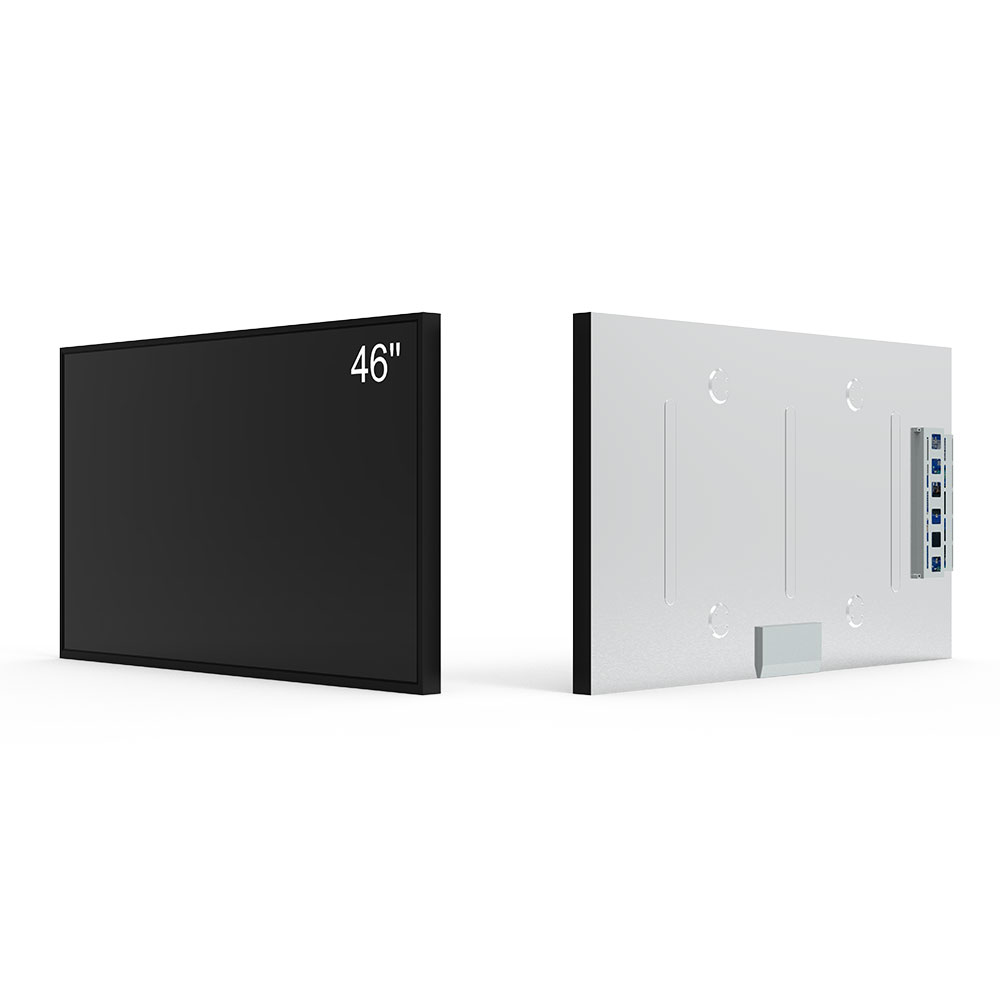
High contrast ratio (CR) is the cornerstone of balancing visibility and efficiency. CR measures the difference between the brightest white and darkest black a display produces; a CR of 1500:1 or higher delivers clear, readable content at 600–800 nits—20–40% lower brightness than low-CR displays (≤800:1). This reduces power consumption directly, as brightness scales with power draw for LED backlights. Independent testing from Display Manufacturing Magazine (2023) shows that high-CR displays cut energy use by 35% while maintaining equivalent sunlight readability compared to standard low-CR models.
#Optical Bonding: Eliminating Glare Without Extra Brightness
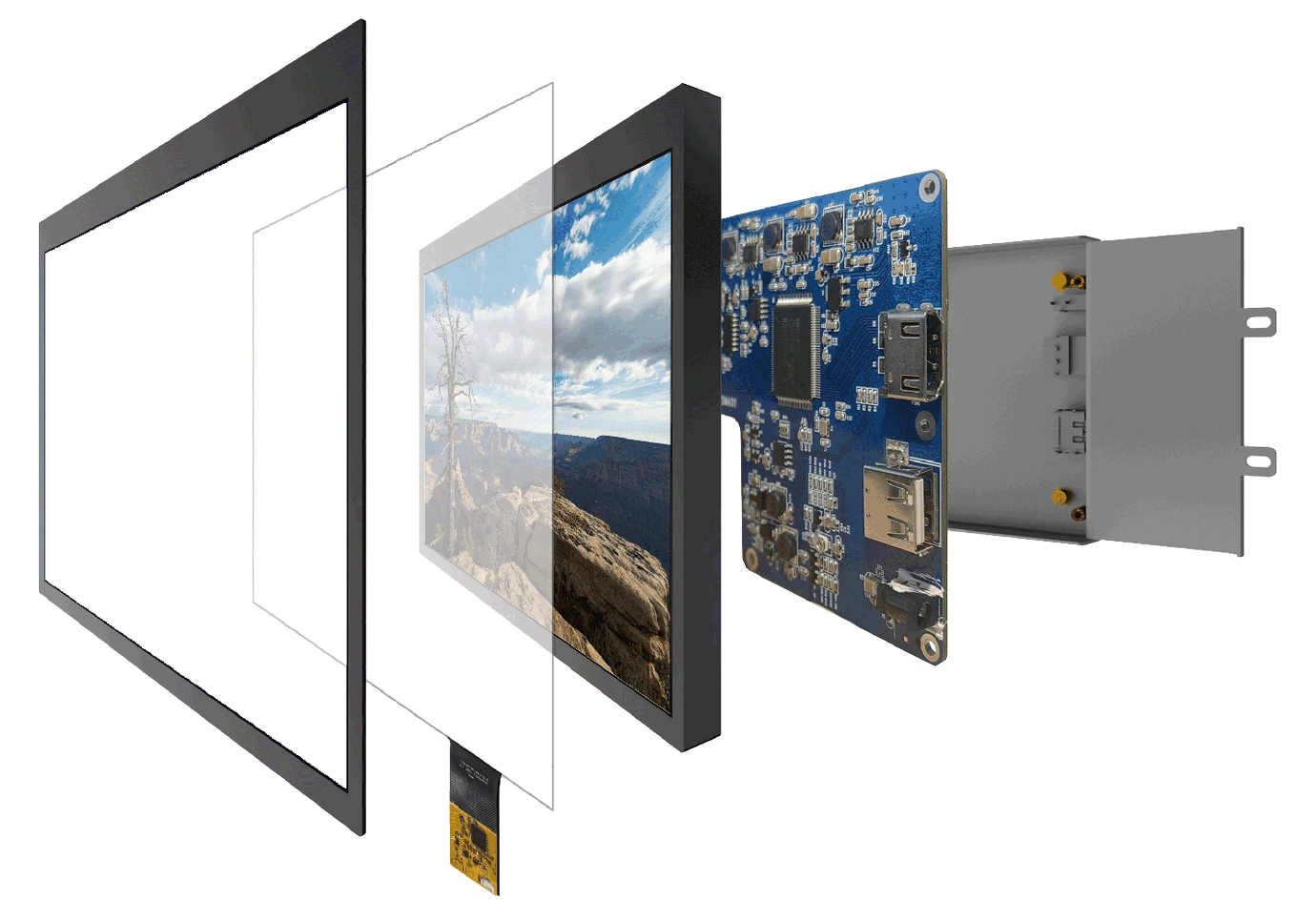
To further boost visibility without increasing brightness, optical bonding technology is now standard in industrial-grade transit displays. This process bonds the display panel directly to its protective cover glass using a UV-cured adhesive, eliminating the air gap between layers. Air gaps cause 80–90% of sunlight-related glare; optical bonding reduces this by up to 92%, per the Society for Information Display (SID) 2024 report. For example, a non-bonded display requires 1200 nits to overcome glare, while an optically bonded display with 1800:1 CR achieves the same readability at just 700 nits. This cuts power draw and heat generation significantly, a key benefit for both onboard and outdoor applications.
Technical Innovations for Minimal Heat and Maximum Durability
Beyond high contrast and optical bonding, two core design choices deliver low energy and low heat, aligned with transit industry needs: energy-efficient backlighting and passive thermal management.
#Local Dimming LED Backlighting
Next-generation displays use local dimming LED backlights, which adjust brightness in individual zones rather than full panels. For content with large dark areas (e.g., route maps, timetable backgrounds), this reduces power use by up to 45% compared to standard full-bright backlights. Combined with optical bonding, this results in power draw as low as 28W per onboard display (product page: /products/onboard/) and 62W per 3m stretch bar platform display (product page: /products/stretch-bar/). These power levels are 30–40% lower than legacy displays, directly cutting heat generation.
#Passive Thermal Management
Fan cooling, while common in consumer displays, is impractical for transit due to dust ingress, noise, and maintenance. Industrial-grade transit displays use passive thermal management: high-performance heat sinks and thermally conductive adhesives that dissipate heat without moving parts. This keeps internal temperatures below 60°C even in 50°C ambient conditions, well within EN 50155’s temperature range. Passive cooling eliminates 100% of fan-related downtime, with MTBF (mean time between failures) of 120,000 hours—exceeding UITP’s industry average by 27%.
Real-World Deployments: Meeting Global Transit Standards
#Onboard Rail and Bus Retrofits
In 2022, the Berlin U-Bahn replaced 5-year-old LCD displays with our onboard transit display solutions (solutions page: /solutions/on-vehicle/). The new units feature 2000:1 CR, optically bonded glass, and local dimming backlighting, delivering 720 nits of brightness with just 32W of power. Heat generation dropped by 38%, leading to a 27% reduction in display-related downtime over 18 months. The units are certified to EN 61373 (vibration class 1) and IP65, with a 5-year warranty—well aligned with European transit operator requirements.
#Platform Edge Displays for Urban Stations
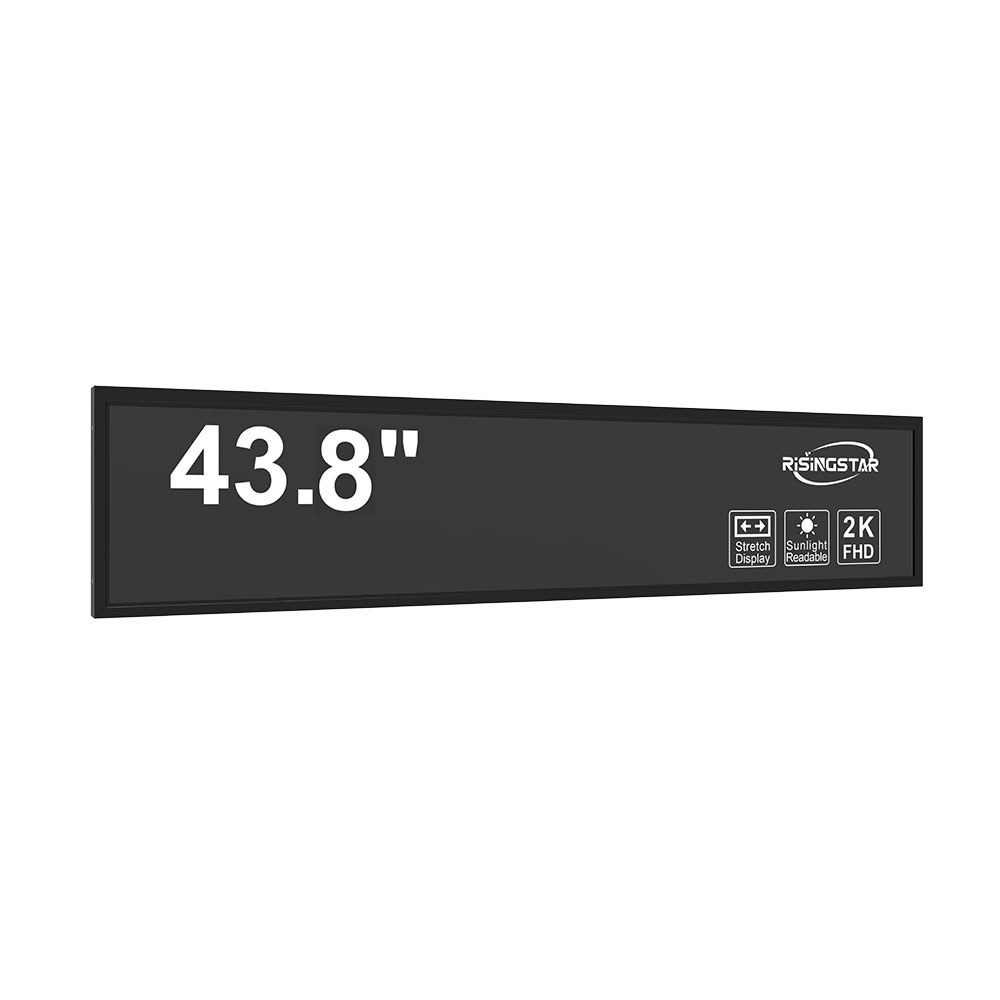
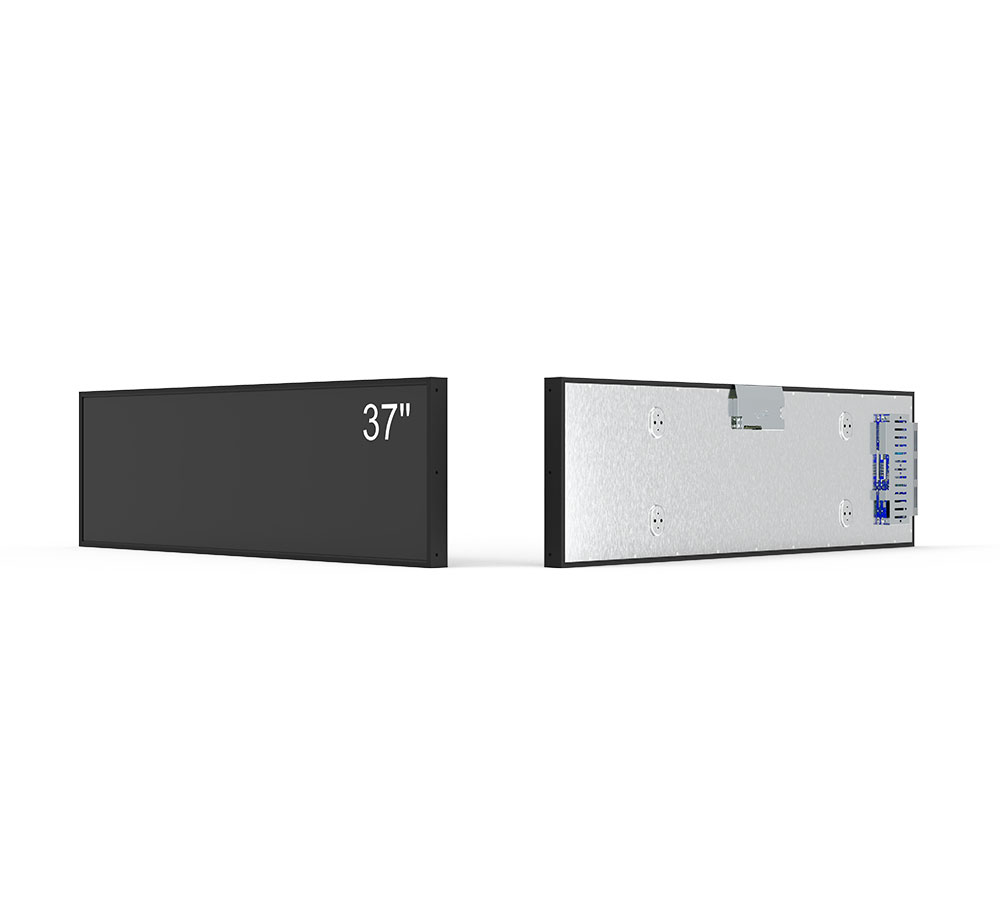
The 2023 London Overground platform upgrade deployed stretch bar LCD displays across 12 central stations. These 3m long displays are designed for platform edges, with 1900:1 CR, optical bonding, and passive cooling. Total power per bar is 62W (35% lower than legacy LED displays), with zero fan-related maintenance in the first 12 months. The displays meet IP66 for outdoor dust and water resistance, IK10 for vandalism, and EN 50155 for extreme temperature operation, providing real-time passenger updates readable from 5m away regardless of sunlight or weather.
Compliance and Future-Proofing for Long-Term Value
All high contrast, low-heat transit displays are built to meet global transit standards: EN 50155 for railway electronics, EN 61373 for shock/vibration, IP ratings for environmental protection, and IK10 for vandal resistance. For bus operators, units comply with ECE R118 for external visibility, while onboard displays meet ISO 7637 for electrical transient resistance. Additional smart features, such as IoT connectivity for remote performance monitoring (temperature, power, brightness), allow operators to proactively address issues before failures occur, extending display lifespan to 7+ years.
For transit operators and integrators, the tradeoff between visibility, durability, and efficiency no longer exists. Industrial-grade high contrast displays deliver sunlight readability with low energy use and minimal heat, cutting operational costs while improving passenger experience. Whether for onboard trains/buses or outdoor platforms, these solutions align with global transit standards and long-term sustainability goals. To learn how to integrate these displays into your project, talk to our engineering team or get a customized quote.