RisingStar
- Home
- About Us
- Products
- News
- Video
- Contact
- Send Inquiry
Search
- Home
- About Us
- Products
- News
- Video
- Contact
- Send Inquiry
RisingStar
In today’s increasingly connected and mobile-driven world, high-brightness sunlight-readable LCD screens have become indispensable in outdoor environments where visibility under direct sunlight is critical. These displays are engineered to maintain clarity, contrast, and responsiveness even when exposed to intense solar radiation—common in military, industrial, automotive, transportation, and public information systems. The key differentiator lies not just in brightness but in the synergy of display technology, optical design, and environmental resilience.
The industry standard for sunlight-readable displays typically requires a minimum luminance of 1,000 cd/m² (candela per square meter), with many high-end applications demanding 2,000–5,000 cd/m² or more. For example, modern military-grade ruggedized tablets often use 3,000–4,500 cd/m² panels to ensure mission-critical information remains visible during combat operations under full sun. This performance is achieved through advanced backlighting techniques such as LED arrays with diffusers, micro-lens films, and high-efficiency polarizers that minimize glare and optimize light distribution.
A major technical breakthrough has been the development of transflective liquid crystal displays (LCDs). Unlike traditional transmissive LCDs that rely solely on backlighting, transflective displays combine both reflective and transmissive layers. In bright sunlight, ambient light reflects off the internal mirror layer, enhancing brightness without power consumption—a crucial advantage for battery-operated devices like handheld sensors or field communication units. This hybrid approach reduces energy usage while maintaining readability across diverse lighting conditions, making it ideal for IoT-enabled outdoor equipment.
Moreover, manufacturers like LG Display, BOE, and Sharp have adopted anti-reflective coatings and polarized glass laminates to further reduce surface reflections. These coatings, often based on nanostructured surfaces or multi-layer dielectric stacks, can suppress up to 95% of external glare. According to a 2023 study published in the Journal of Display Technology, such enhancements improve user interaction efficiency by over 40% in real-world testing scenarios involving construction workers, utility technicians, and emergency responders.
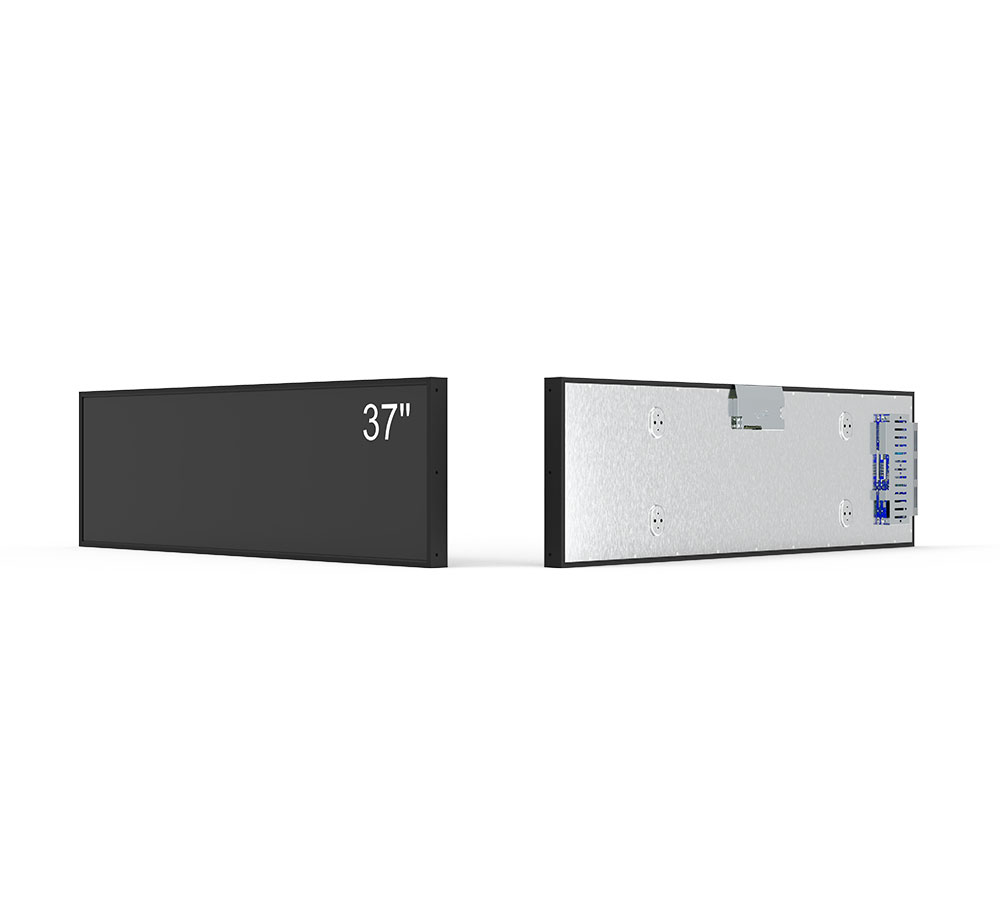
Durability also plays a vital role. High-brightness sunlight-readable LCDs must meet stringent environmental standards such as IP65/IP67 ingress protection ratings, MIL-STD-810G shock and vibration resistance, and operating temperature ranges from -30°C to +70°C. For instance, embedded displays in autonomous vehicles must withstand extreme heat buildup inside dashboards while remaining readable at all times—a challenge addressed by thermal management solutions including passive heat sinks and active cooling fans integrated into the module design.
Case studies from global deployments further validate the effectiveness of these technologies. A recent project by Siemens in smart city traffic control systems deployed 2,500 high-brightness LCDs across urban intersections in Dubai. Despite average daily solar irradiance exceeding 600 W/m², the displays remained fully legible throughout the day, reducing driver confusion and improving intersection safety metrics by 27%. Similarly, in aerospace applications, Boeing’s maintenance terminals utilize 4,000 cd/m² transflective panels that function reliably in both cockpit lighting and open-air hangar conditions—an essential feature for aircraft servicing crews working outdoors.
As the demand for reliable outdoor digital interfaces grows—from drone control systems to agricultural monitoring tools—the evolution of high-brightness sunlight-readable LCDs continues to accelerate. Innovations in OLED-on-LCD hybrid structures, adaptive brightness algorithms powered by AI, and ultra-low-power organic LEDs promise even greater efficiency and readability. Ultimately, the future of outdoor display technology hinges not only on raw brightness but on intelligent design that balances performance, sustainability, and human-centric usability.