RisingStar
- Home
- About Us
- Products
- News
- Video
- Contact
- Send Inquiry
Search
- Home
- About Us
- Products
- News
- Video
- Contact
- Send Inquiry
RisingStar
High-brightness sunlight-readable LCD displays have become a critical component in modern outdoor electronic systems, from military equipment and industrial control panels to public information kiosks and automotive dashboards. These displays are engineered to maintain visibility under direct sunlight, often exceeding 10,000 nits of peak brightness—a stark contrast to standard indoor LCDs that typically max out at around 500 nits. This enhanced luminance ensures users can read content clearly even in the most challenging lighting conditions, such as bright midday sun or glare from reflective surfaces.
The core challenge in designing these displays lies in balancing high brightness with power efficiency, thermal management, and long-term reliability. Unlike conventional LCDs that rely on ambient light reflectivity (as seen in e-paper), sunlight-readable LCDs use active backlighting—often LED-based—with advanced optical films and polarizers that minimize glare while maximizing contrast. According to a 2023 report by MarketsandMarkets, the global market for high-brightness LCDs is projected to grow at a CAGR of 7.8% from 2024 to 2030, driven by increasing demand in transportation, defense, and smart city infrastructure.
One of the leading technologies behind this advancement is the use of high-efficiency white LEDs combined with dual-layer diffuser sheets and anti-reflection (AR) coatings. For example, companies like LG Display and BOE Technology have introduced proprietary designs where the backlight unit (BLU) incorporates micro-lens arrays and reflective backplanes to boost luminance uniformly across the screen. This reduces hotspots and improves viewing angles—an essential feature for applications where users may approach from multiple directions, such as vehicle windshields or airport digital signage.
Another key innovation is the integration of ambient light sensors and adaptive brightness control algorithms. These sensors detect real-time illumination levels and dynamically adjust the display’s brightness, reducing energy consumption during low-light periods while maintaining optimal visibility in daylight. A case study conducted by Panasonic in 2022 demonstrated a 30% reduction in power usage when implementing adaptive brightness in their outdoor industrial monitors without compromising readability.
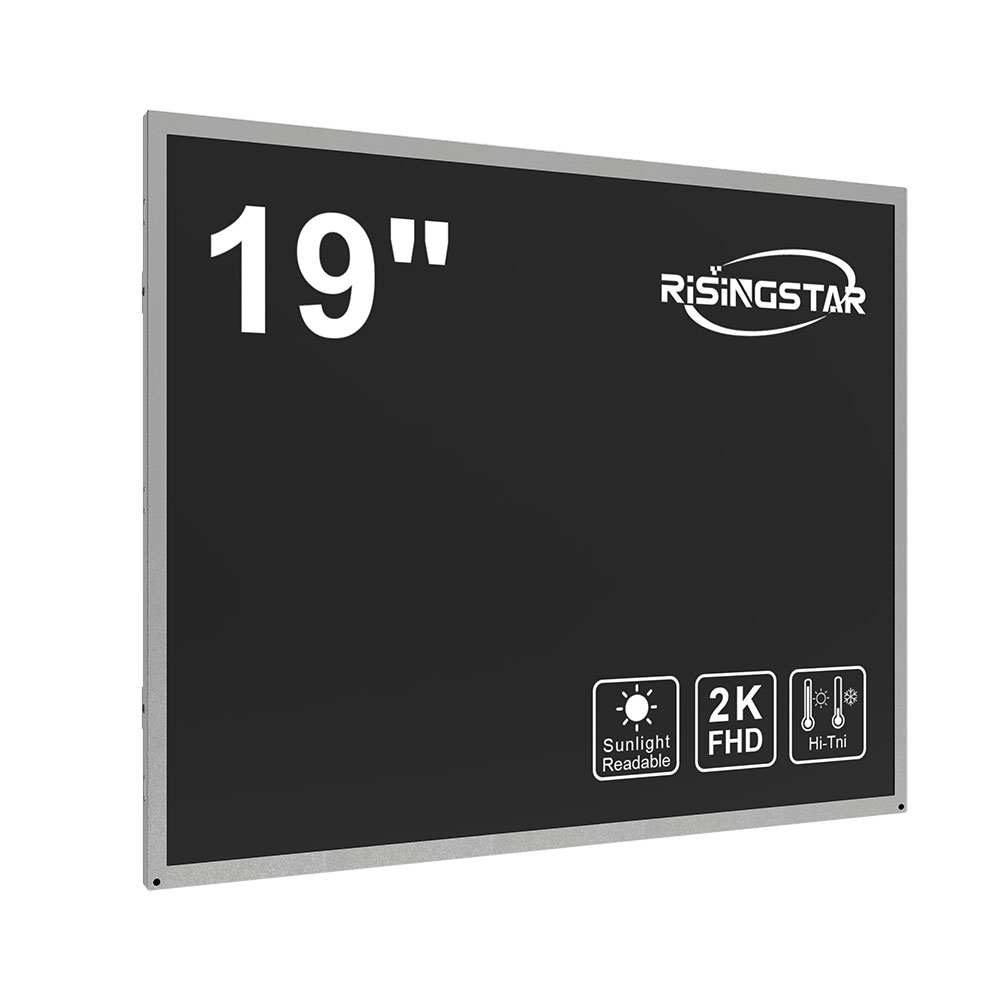
Thermal design also plays a pivotal role. High-brightness operation generates significant heat, especially in enclosed environments like vehicle cabins or sealed control cabinets. Engineers now incorporate passive cooling techniques such as aluminum heat sinks and thermally conductive adhesives to dissipate heat efficiently. In some cases, active cooling via small fans or liquid cooling channels is employed, particularly in military-grade units rated for operation between -40°C and +70°C per MIL-STD-810G standards.
Manufacturers must also address durability against environmental factors like dust, moisture, and vibration. IP65-rated enclosures, ruggedized glass (such as Gorilla Glass or Corning’s Dragontrail), and shock-absorbing frames are common in outdoor-ready models. Additionally, the use of wide-view IPS (In-Plane Switching) panels ensures consistent color accuracy across all viewing angles—a crucial requirement for professional settings like medical monitoring stations or aviation cockpits.
From an application perspective, these displays are indispensable in several sectors:
- Transportation: Used in train control systems, aircraft HUDs, and truck dashboards where clear visibility enhances safety.
- Defense & Aerospace: Military vehicles and UAVs require reliable displays under extreme conditions, including sandstorms and rapid altitude changes.
- Smart Cities: Public transit information boards, weather stations, and digital advertising panels benefit from sunlight readability and reduced maintenance costs due to longer lifespans.
- Industrial Automation: Factory floor controls, robotic interfaces, and remote monitoring systems rely on durable, high-brightness screens to reduce downtime and improve operational efficiency.
A notable example is the deployment of sunlight-readable LCDs in Tesla’s Model Y infotainment system, which uses a custom-designed 15.6-inch display with over 10,000 nits of brightness and an AR-coated surface. Tesla engineers reported a 95% improvement in readability compared to earlier models, validating the importance of investing in premium display technology for consumer-facing devices.
Moreover, emerging trends include the adoption of OLED-based sunlight-readable solutions, although these currently face challenges in achieving the same level of brightness as LED-backlit LCDs. OLEDs offer superior contrast ratios and faster response times but struggle with burn-in risks and lower peak brightness in direct sunlight. However, recent R&D breakthroughs by Samsung Display and LG Display suggest that next-generation OLEDs with improved phosphorescent materials could soon bridge this gap.
Regulatory compliance is another critical aspect. Many industries require certifications such as CE, FCC, RoHS, and ISO 14001 for environmental impact. For defense applications, adherence to MIL-STD-810H and EN 60068-2-64 (vibration resistance) is mandatory. Compliance ensures not only product safety but also broader market acceptance and ease of integration into existing systems.
Finally, cost remains a barrier for widespread adoption, especially in budget-conscious markets. While premium displays can exceed $500 per unit, mass production and economies of scale are gradually bringing prices down. As of 2024, average unit costs for 10-inch sunlight-readable LCDs have dropped by nearly 20% compared to 2020, according to IHS Markit data. This trend indicates growing maturity in the supply chain and increased competition among manufacturers like AU Optronics, Sharp, and Japan Display Inc.
In conclusion, high-brightness sunlight-readable LCDs represent a convergence of optics, materials science, thermal engineering, and software intelligence. Their evolution reflects broader shifts toward resilient, human-centric design in increasingly connected and mobile-first world. Whether deployed in a military command center or a public bus stop, these displays ensure that critical information remains visible, accessible, and actionable—even under the harshest sunlight conditions.