 RisingStar
- Home
- About Us
- Products
- News
- Video
- Contact
- Send Inquiry
Search
- Home
- About Us
- Products
- News
- Video
- Contact
- Send Inquiry
RisingStar
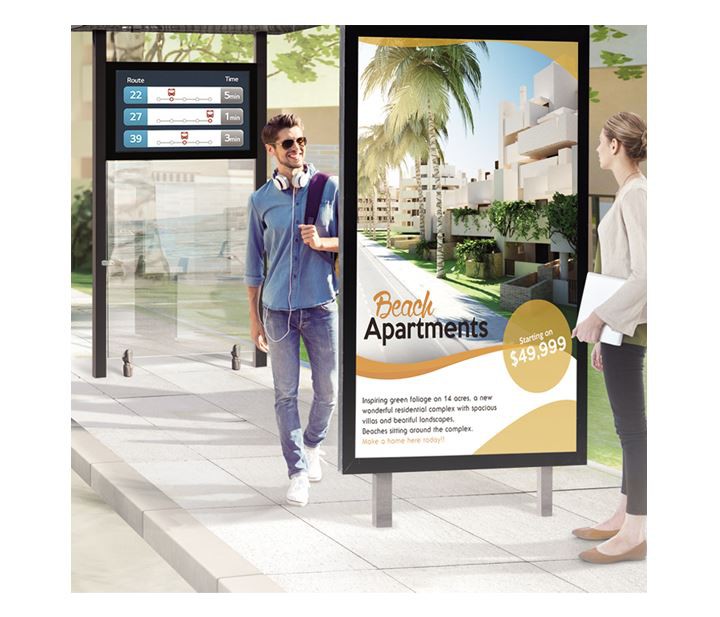
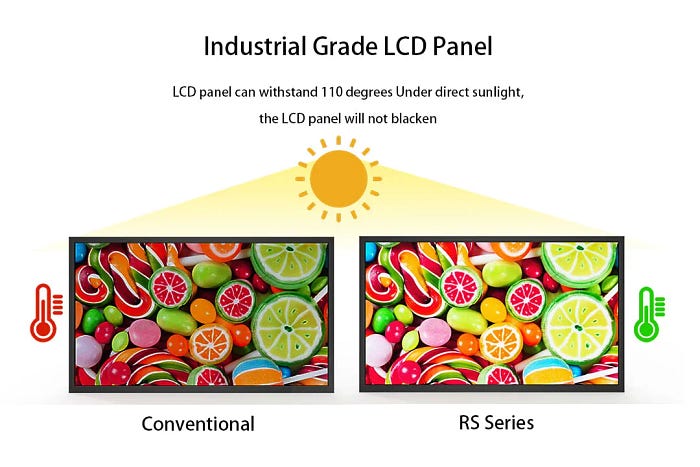
High-brightness sunlight-readable LCD screens are critical components in outdoor and industrial applications where visibility under direct sunlight is essential. These displays are used in military equipment, aviation instruments, automotive dashboards, medical devices, and public information systems—environments where standard LCDs fail due to low contrast, poor brightness, or glare issues. The engineering challenge lies in balancing luminance, contrast, power efficiency, and durability while maintaining color accuracy and viewing angles.
The introduction of high-brightness LCDs began in the 1980s with passive matrix displays used in early handheld devices. However, it wasn’t until the late 1990s and early 2000s that active matrix technology (such as TFT-LCD) enabled higher resolution and faster response times, making them suitable for real-time data visualization. Modern sunlight-readable displays now achieve brightness levels of up to 5,000 nits (cd/m²), far exceeding the typical 300–500 nits of consumer-grade displays. This increase is achieved through a combination of advanced backlighting, polarized filters, anti-glare coatings, and optimized pixel structures.
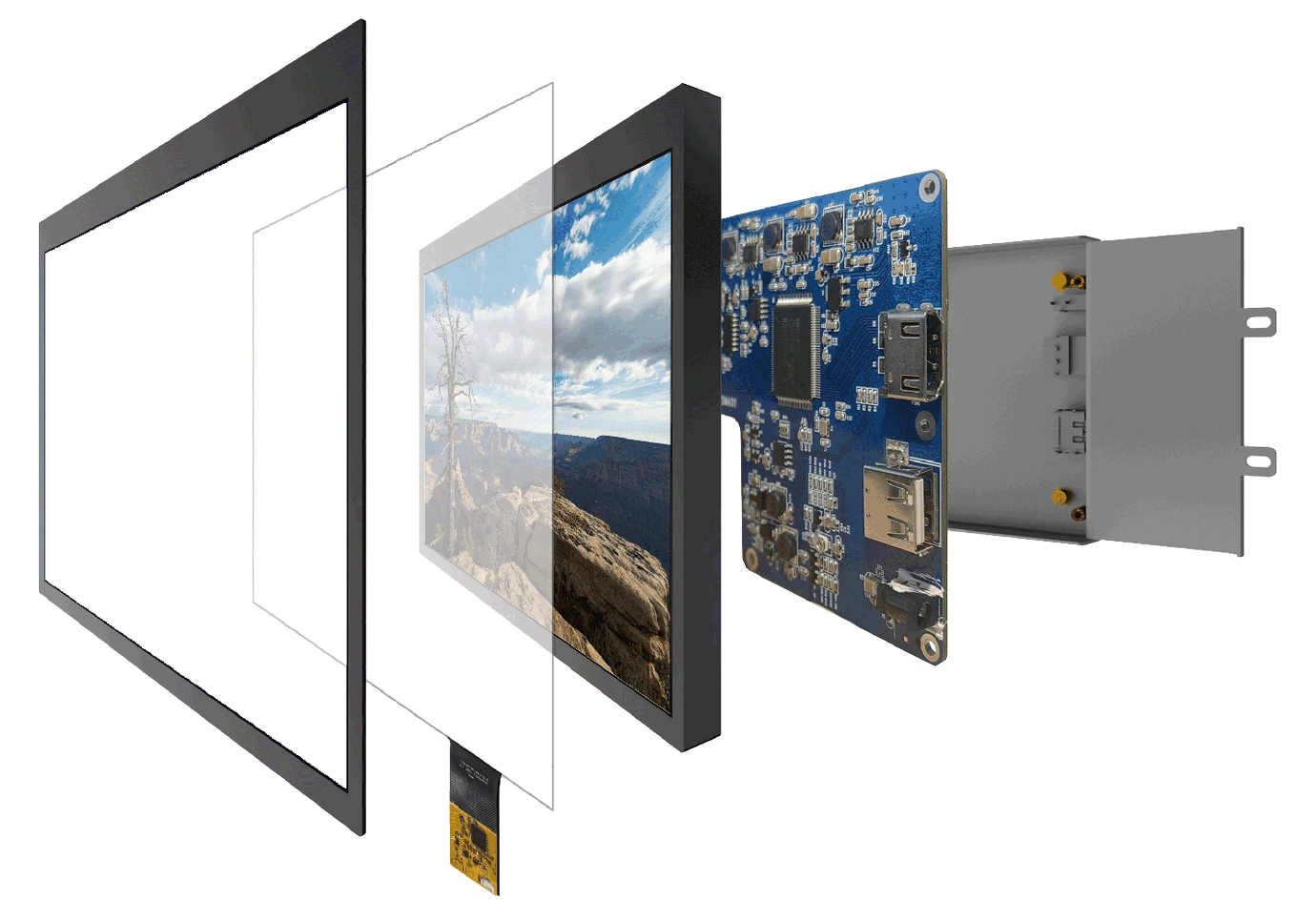
Key technologies include LED-based backlights with dynamic dimming, which adjust brightness based on ambient light conditions via photodiode sensors—a feature known as ambient light sensing (ALS). Some models use dual-layer optical films that reduce internal reflections while enhancing forward light transmission. For instance, Corning’s Gorilla Glass and similar chemically strengthened glass not only protect against physical damage but also contribute to better light management by minimizing surface reflectivity. In extreme environments such as deserts or Arctic regions, thermal management becomes equally important; engineers incorporate heat dissipation mechanisms like aluminum heat sinks or thermoelectric coolers to maintain performance across wide temperature ranges (-40°C to +70°C).
Case studies demonstrate successful implementation: A U.S. Department of Defense field device operating in Afghanistan required a display that remained readable at noon sun intensity (over 100,000 lux). The solution was a custom-designed 1000-nit TFT-LCD with a proprietary diffuser film and a 50% reduction in reflected light using nanostructured anti-reflective coatings. Another example is the Airbus A350 cockpit, where all primary flight displays exceed 3,000 nits to ensure readability during daylight operations without compromising battery life or system reliability.
Standards like MIL-STD-810G (for ruggedness testing) and ISO 16067-1 (for visual performance in mobile environments) guide design validation. Additionally, IEC 60068-2 series ensures environmental robustness against humidity, vibration, and shock. Testing includes simulated solar irradiance tests conducted under controlled conditions, such as those defined by ASTM E2653 for outdoor lighting evaluation.
In conclusion, high-brightness sunlight-readable LCDs are not just about increasing brightness—they represent an integrated systems engineering approach involving materials science, optics, electronics, and human factors. As industries move toward autonomous vehicles, smart cities, and IoT-enabled outdoor interfaces, demand for these displays will continue to grow. Engineers must innovate continuously, focusing on energy efficiency, adaptive brightness control, and seamless integration into harsh operating environments.