RisingStar
- Home
- About Us
- Products
- News
- Video
- Contact
- Send Inquiry
Search
- Home
- About Us
- Products
- News
- Video
- Contact
- Send Inquiry
RisingStar
In the rapidly evolving world of industrial automation and outdoor electronics, the demand for reliable, high-brightness, sunlight-readable LCD displays with robust environmental protection has never been greater. Among these requirements, IP66 waterproof rating stands out as a critical benchmark for durability in demanding applications such as manufacturing control panels, military equipment, transportation systems, and outdoor kiosks.
The IP (Ingress Protection) rating system, defined by IEC 60529, classifies the degree of protection provided by electrical enclosures against solid objects (like dust) and liquids (like water). An IP66 rating indicates two key protections:
- First, “6” means complete protection against dust ingress—no dust penetration into the enclosure, even under severe conditions.
- Second, “6” signifies that the device can withstand powerful water jets from any direction without harmful effects. This makes IP66-rated displays ideal for environments where exposure to water spray, rain, or accidental spills is common—such as food processing plants, construction sites, marine applications, and agricultural machinery.
Manufacturers of IP66 waterproof LCDs utilize advanced sealing techniques such as silicone gaskets, conformal coatings, and hermetic sealing of display modules. For instance, companies like CUI Devices, ELO Touch Solutions, and Innolux have developed ruggedized LCD panels using Gorilla Glass or tempered glass with anti-reflective coatings, ensuring visibility even in direct sunlight while maintaining the IP66 seal. These screens often operate at brightness levels exceeding 3,000 nits—a necessity for sunlight readability—and are built with wide operating temperature ranges (from -30°C to +70°C), making them suitable for extreme climates.
Case studies further validate the effectiveness of IP66 waterproof LCDs. In a recent deployment at a hydroelectric dam control center in Norway, an IP66-rated touch panel display survived repeated water jet testing during maintenance operations without failure—demonstrating its resilience to both mechanical stress and environmental hazards. Similarly, in U.S. military field operations, IP66 LCDs embedded in portable command units remained fully functional despite prolonged exposure to heavy rain and dusty terrain, proving their suitability for mission-critical applications.
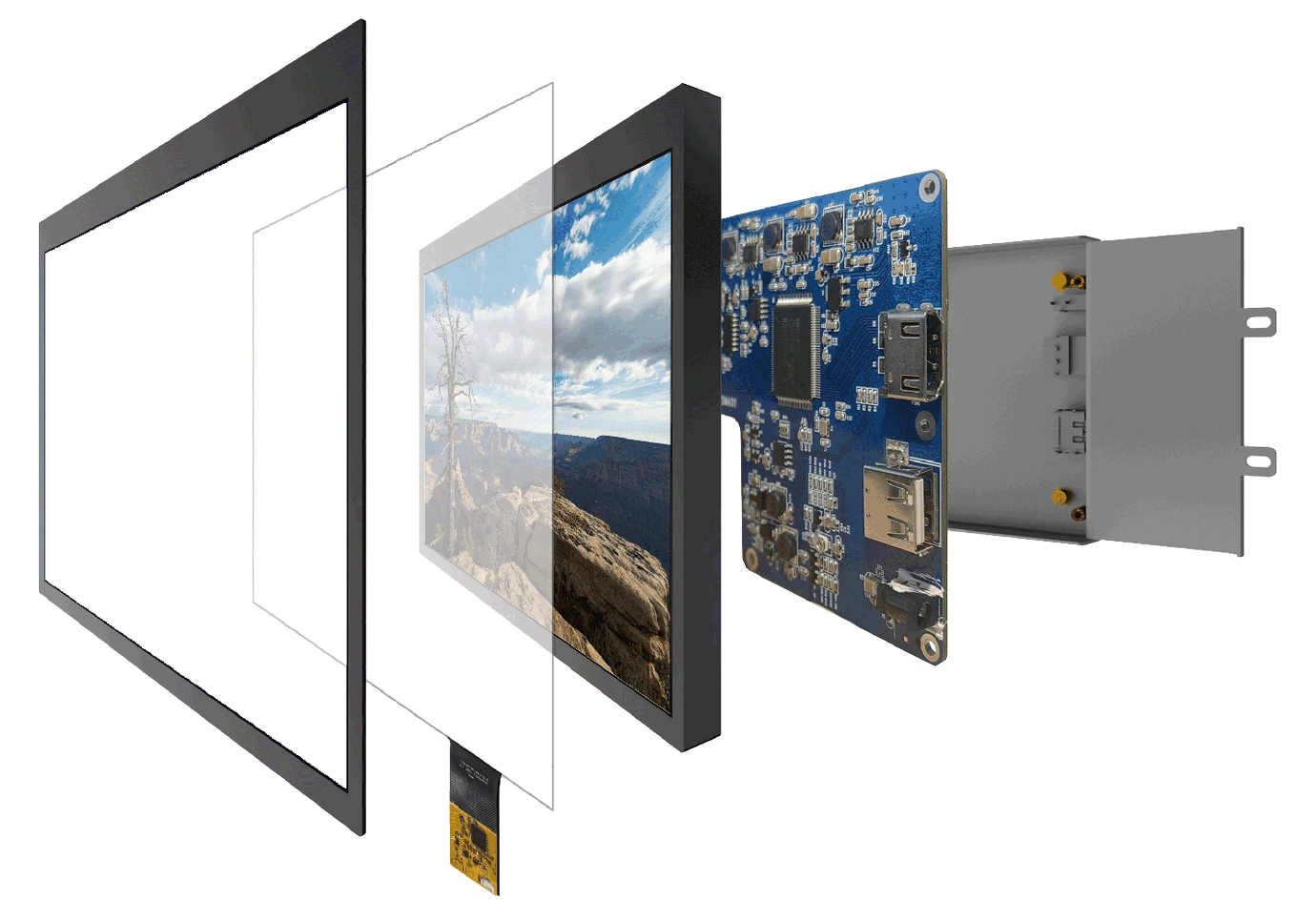
Beyond physical protection, modern IP66 LCDs integrate features such as capacitive or resistive touchscreens with glove-compatible sensitivity, LED backlighting with long lifespan (>100,000 hours), and support for industrial-grade communication protocols like RS-485 or CAN bus. These enhancements ensure seamless integration into existing industrial systems while minimizing downtime due to environmental degradation.
To maintain compliance with IP66 standards, manufacturers conduct rigorous testing per IEC 60529, including dust chamber tests (for the first digit) and water jet tests (for the second digit), using standardized nozzles and pressures. Third-party certification bodies like UL, TÜV, and Intertek verify these ratings to ensure consistency across global markets.
For industries seeking long-term reliability, lower total cost of ownership, and uninterrupted performance in harsh conditions, investing in IP66 waterproof LCD displays is not just advisable—it’s essential. As digital interfaces become more integral to operational efficiency, choosing a display that combines optical clarity, mechanical strength, and environmental resilience ensures future-proofing in today’s most challenging deployments.