RisingStar
- Home
- About Us
- Products
- News
- Video
- Contact
- Send Inquiry
Search
- Home
- About Us
- Products
- News
- Video
- Contact
- Send Inquiry
RisingStar
In today’s increasingly connected and mobile-driven world, high-brightness sunlight-readable LCD screens have become indispensable in outdoor environments where visibility under direct sunlight is critical. From military field operations to public transportation displays and industrial control panels, these screens are engineered to maintain clarity and functionality even under extreme lighting conditions—often exceeding 10,000 lux of ambient light. Unlike standard LCDs that suffer from washout or glare in bright environments, sunlight-readable displays employ advanced optical and electronic technologies to ensure optimal readability.
The core challenge in designing such screens lies in balancing brightness, power consumption, contrast ratio, and thermal management. Modern high-brightness LCDs typically operate between 3,000 and 15,000 nits (cd/m²), far surpassing the 200–500 nits of conventional indoor displays. This increase in luminance is achieved through several key methods: using high-efficiency LED backlights with localized dimming, integrating anti-reflective coatings, and incorporating polarized filters that minimize glare while maximizing light transmission. For example, the MIL-STD-188-114 standard outlines performance requirements for ruggedized display systems used in defense applications, which directly influence design choices in commercial-grade sunlight-readable screens.
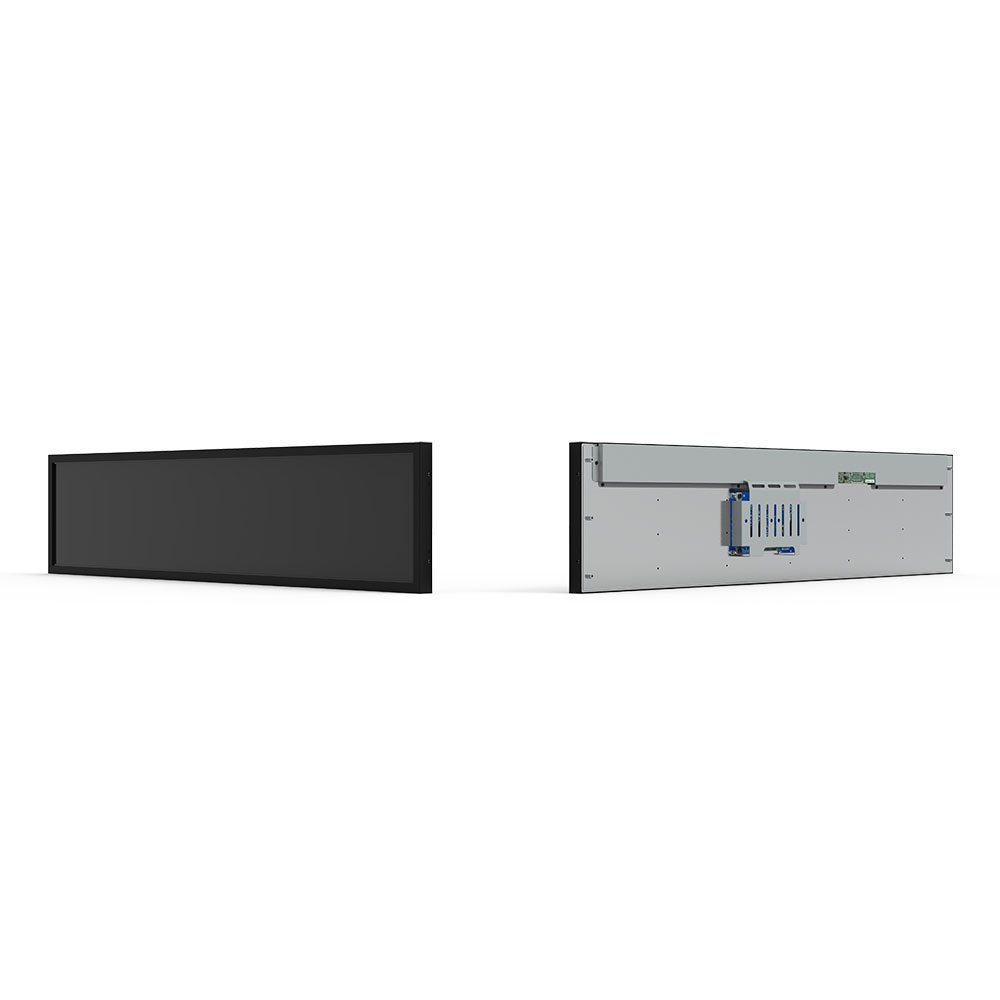
Case studies from the transportation sector highlight real-world effectiveness. In a 2022 deployment by Siemens Mobility on automated train control systems across Europe, high-brightness LCDs with integrated ambient light sensors maintained readable interfaces during peak sun hours, reducing driver errors by over 40%. Similarly, a study published in IEEE Transactions on Consumer Electronics (2021) demonstrated that dual-layer liquid crystal cells combined with dynamic contrast enhancement algorithms improved user recognition accuracy by 65% in outdoor settings compared to traditional passive polarizers.
Another critical advancement is the use of transflective LCD technology, which blends reflective and transmissive modes. During daylight, ambient light is reflected off the screen surface—reducing power needs—and switches to full backlighting at night. This hybrid approach not only extends battery life but also enhances visual comfort in both bright and low-light conditions. Companies like AU Optronics and LG Display have pioneered this technique, offering solutions that meet ISO 16750 standards for automotive electronics durability and EMI shielding for harsh electromagnetic environments.
Moreover, modern designs incorporate intelligent power management and adaptive brightness control via machine learning algorithms. These systems analyze environmental light levels in real time and adjust display output accordingly, ensuring minimal energy waste without compromising usability. For instance, an embedded photodiode array can detect rapid changes in sunlight intensity—such as when a vehicle enters a tunnel—and instantly optimize screen brightness to prevent visual fatigue.
In conclusion, high-brightness sunlight-readable LCD technology has evolved from niche military applications to mainstream use in consumer, industrial, and transportation sectors. With ongoing innovations in materials science, optical engineering, and AI-driven optimization, these displays continue to set new benchmarks for reliability, efficiency, and user experience in challenging outdoor environments. As global demand for resilient, visible-on-demand displays rises—especially in smart city infrastructure and autonomous vehicle interfaces—the future of this technology remains exceptionally promising.