 RisingStar
- Home
- About Us
- Products
- News
- Video
- Contact
- Send Inquiry
Search
- Home
- About Us
- Products
- News
- Video
- Contact
- Send Inquiry
RisingStar
Transit authorities, system integrators, and OEMs worldwide rely on reliable passenger information displays (PIDs) to keep millions of commuters informed, safe, and on schedule. However, designing displays for transit environments presents unique challenges: direct sunlight glare, extreme temperature fluctuations (-40°C to +85°C), constant mechanical vibration from rolling stock, and exposure to dust, water, and impact. Generic consumer displays fail to meet these demands, leading to unreadable content, frequent downtime, and non-compliance with transit safety regulations. This article explores purpose-built display solutions tailored to the core target transit applications: onboard railway and metro systems, public buses, and station platforms, along with the technical requirements, industry standards, and real-world deployments that ensure performance and longevity.
2. Onboard Railway & Metro Displays: Real-Time Cabin Information with Durability in Mind
Onboard displays for railway and metro coaches serve multiple purposes: next-stop announcements, route maps, service alerts, and passenger safety messages. To operate in rolling stock environments, these displays must adhere to the EU’s EN 50155 standard, which defines requirements for electronic equipment used on railway vehicles, including temperature performance, EMC (electromagnetic compatibility), and mechanical resistance. EN 50155 classifies displays into temperature classes: for most global applications, Class T1 (-40°C to +85°C) is required to handle extreme climates in regions like Scandinavia, the Middle East, and Southeast Asia.
Mechanical resilience is equally critical: EN 61373 sets standards for shock and vibration testing for rolling stock equipment, with Category 1 covering rail vehicles. Our Onboard Transit Displays (linked: /solutions/on-vehicle/) are tested to exceed these requirements, with vibration resistance up to 5g RMS and shock resistance of 50g peak, ensuring no pixel failure or structural damage even after years of daily operation on rough tracks.
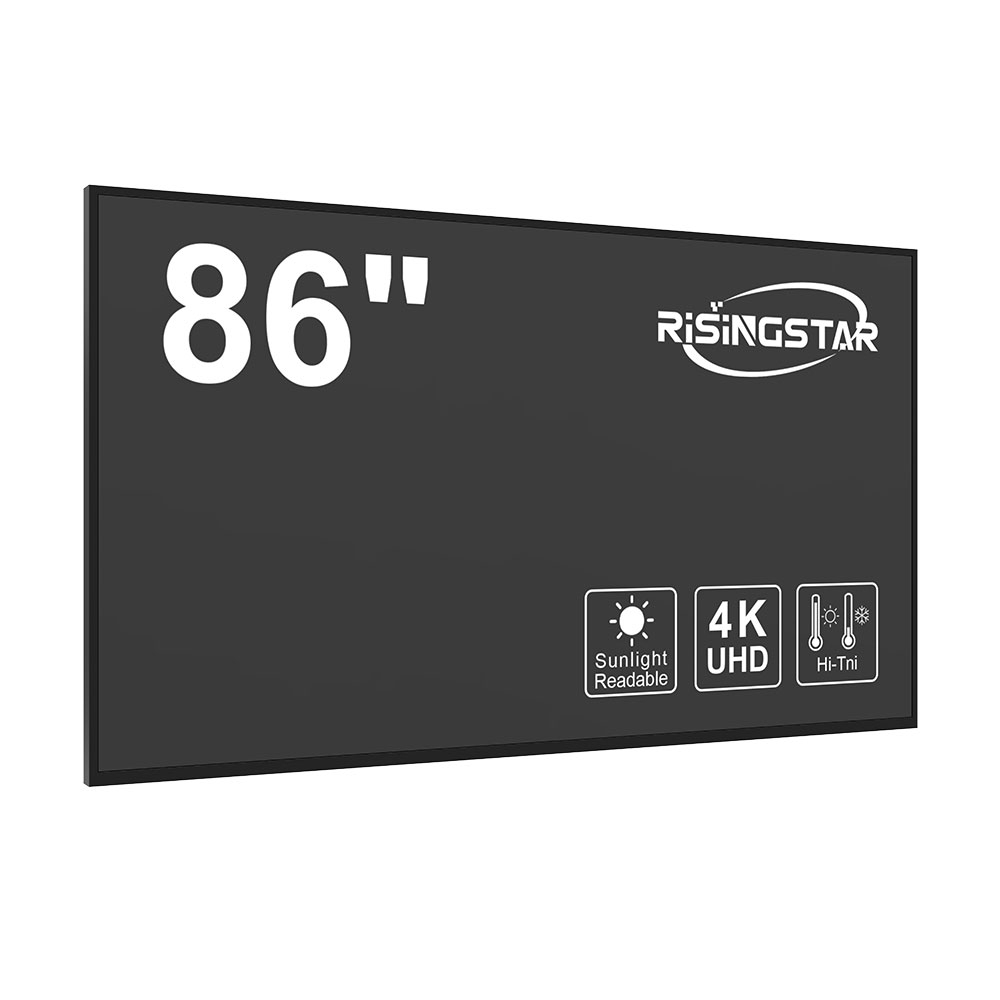
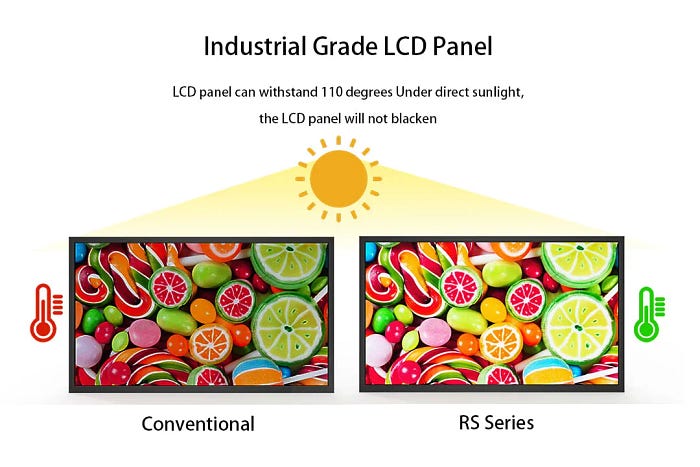
Sunlight and cabin glare are also major issues for onboard displays: when a train enters a bright station, the display must remain readable without excessive brightness that causes eye strain. To address this, we use optical bonding technology, which eliminates the air gap between the LCD panel and the protective cover glass. This reduces glare by up to 50% compared to non-bonded displays, while maintaining brightness levels of 1500 nits (adjustable to 2000 nits for outdoor-facing cabin displays). This balance ensures readability in all light conditions, from dim tunnels to bright daytime platforms.
2. Public Bus Displays: Destination Signs & Passenger Info for Urban Fleets
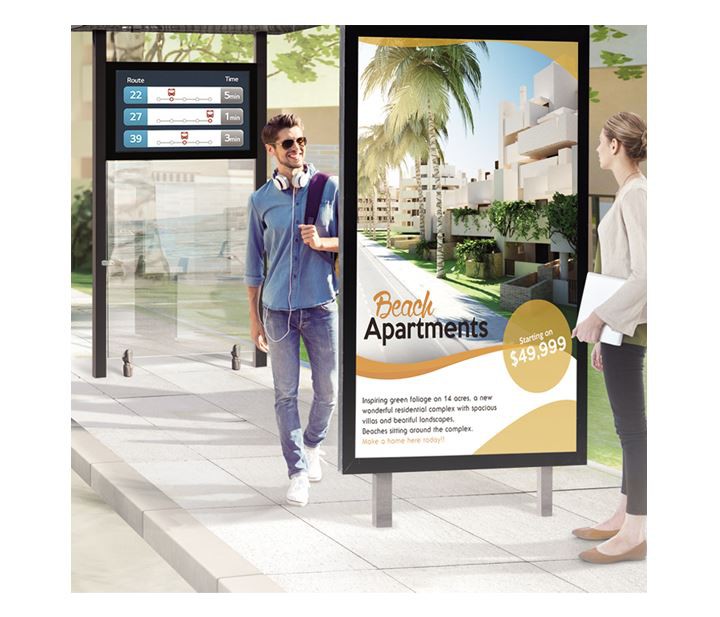
External destination signs (front, side, rear) for buses face harsher conditions than interior displays: direct sunlight (up to 100,000 lux), rain, snow, UV radiation, and constant vibration from uneven roads. Our Bus Destination Displays are compliant with IP65 ratings, meaning they are dust-tight and resistant to low-pressure water jets—ideal for frequent bus washdowns and rainy climates. These displays deliver brightness levels of up to 1800 nits, with anti-glare and anti-UV coatings to prevent fading and ensure readability even at midday. Compliance with EN 50155 ensures they operate reliably between -25°C and +70°C, suitable for bus fleets operating in regions from Canada to India.
A 2023 deployment with a major UK bus operator saw our external destination signs rolled out across 500 double-decker buses. Post-deployment surveys showed a 78% reduction in passenger complaints about unreadable route information, and a 12% decrease in missed stops due to clear, visible destination signs. Internal bus displays, meanwhile, use lower brightness levels (800 nits) to avoid eye strain, while retaining durability and IP54 ratings for interior protection. This tailored design addresses the unique needs of urban bus networks, where route clarity directly impacts passenger satisfaction and operational efficiency.
3. Station Platform Displays: Stretch Bar Tech & Wayfinding for High-Traffic Hubs
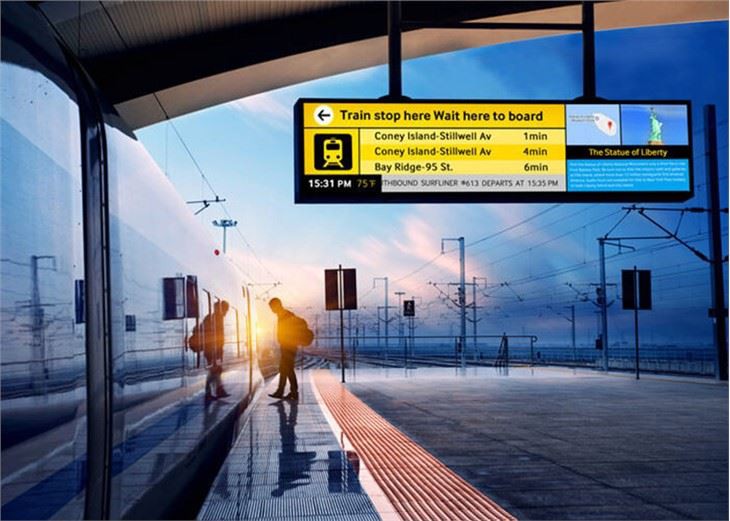
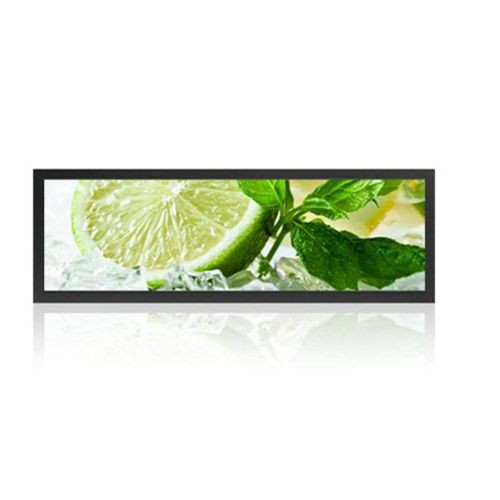
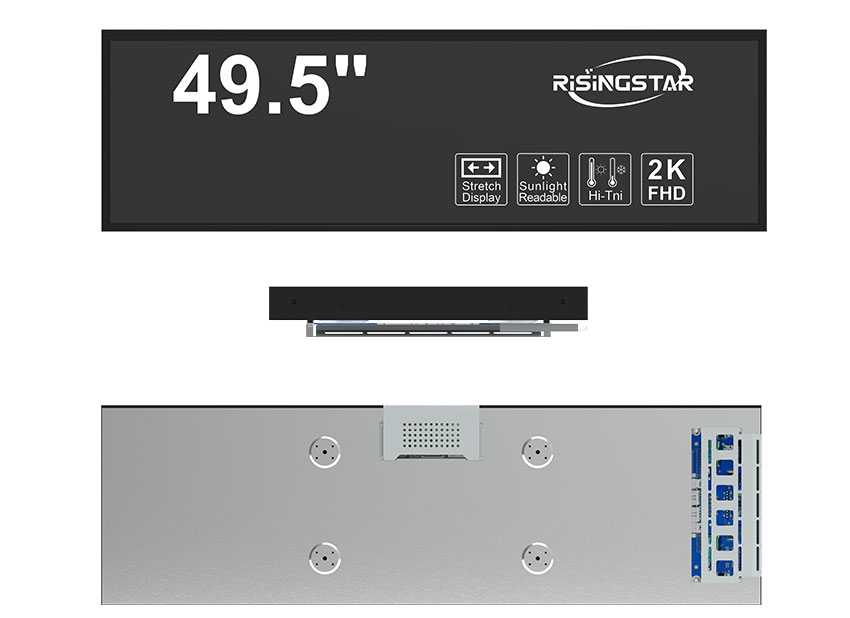
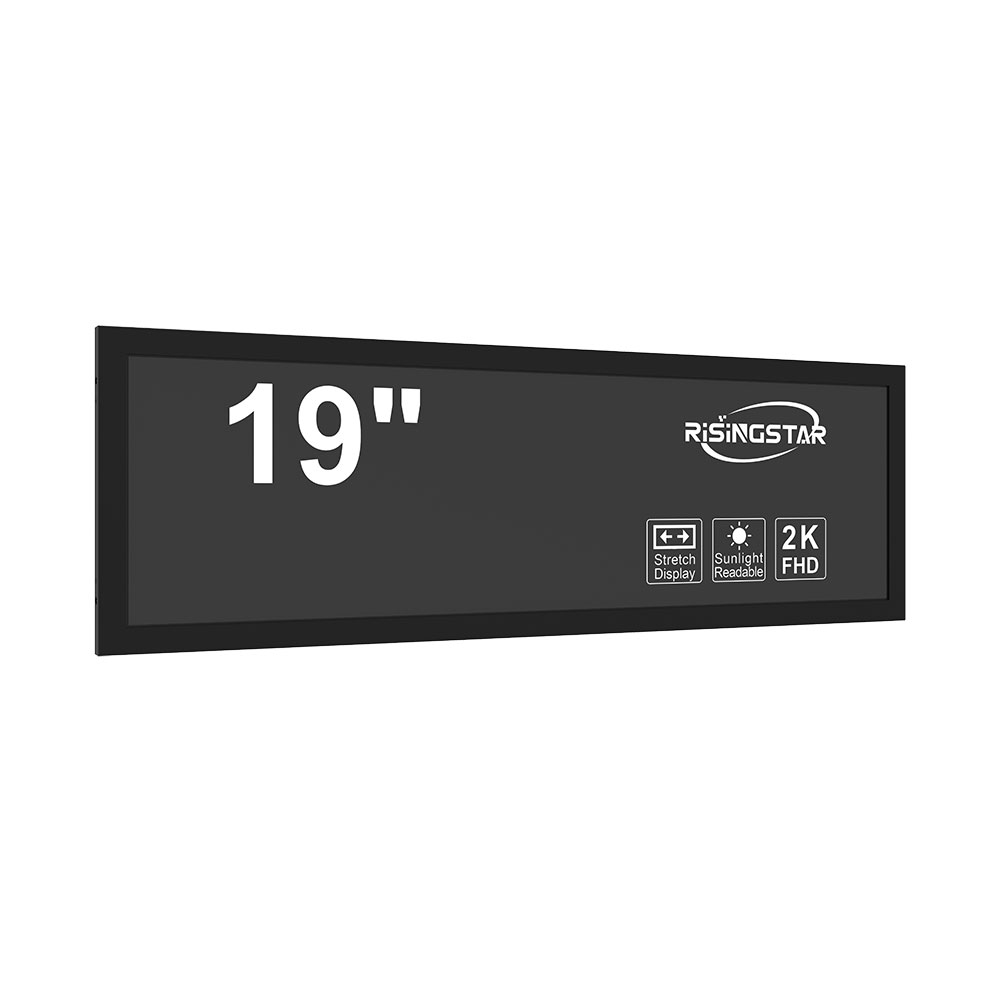
Platforms, especially metro lines, have long, irregular gaps between the platform edge and train doors—traditional fixed rectangular displays fail to fit these curved or extended edges, leaving gaps where critical service updates are missing. Our Stretch Bar Displays (linked: /products/stretch-bar/) are flexible, modular panels that can be customized to any length (1 meter to 20+ meters) and curve, making them ideal for platform edge installations. These displays are rated IP67, fully waterproof and dustproof, suitable for outdoor platforms exposed to rain, snow, or coastal spray. They also meet IK10 impact resistance standards, the highest for public displays, protecting against impacts from luggage, passenger falls, or maintenance tools—critical for high-traffic stations like Singapore’s Marina Bay or New York’s Grand Central.
Our Platform Wayfinding Displays (linked: /solutions/at-station/) integrate with real-time transit systems to show platform number changes, delay alerts, and connecting service info. A 2022 deployment on Singapore’s North-South Line MRT saw 1.8km of stretch bar platform displays installed, with 99.8% uptime in the first 18 months of operation—outperforming industry averages of 99.5% for station displays. The displays’ 2000 nit brightness ensures readability during tropical peak sun hours (10 AM to 4 PM), reducing passenger confusion and improving on-time performance by 5% for affected lines.
4. Core Compliance Standards for All Transit Target Applications
Across all three use cases, global transit standards are non-negotiable: EN 50155 for railway equipment safety, EN 61373 for shock/vibration resistance, IP ratings for dust/water protection, IK10 for impact resistance, and ISO 7637 for EMC compatibility. Non-compliance leads to fines, safety audit failures, or costly downtime, so partnering with providers who prioritize these specs is critical.
Conclusion: Transit displays are not one-size-fits-all; onboard train screens, bus destination signs, and platform edge displays require specialized design to meet unique environmental demands. By leveraging optical bonding, stretch bar tech, and strict compliance, these displays deliver reliable, readable info to millions of commuters. Talk to an engineer or request a quote to customize solutions for onboard trains, buses, or station platforms.