RisingStar
- Home
- About Us
- Products
- News
- Video
- Contact
- Send Inquiry
Search
- Home
- About Us
- Products
- News
- Video
- Contact
- Send Inquiry
RisingStar
In today’s increasingly connected and mobile-driven world, high-brightness sunlight-readable LCD screens have become indispensable across industries such as transportation, defense, medical devices, industrial automation, and outdoor advertising. These displays are engineered to maintain visibility under intense ambient light conditions—such as direct sunlight or bright indoor lighting—where conventional LCDs fail due to contrast loss and poor readability.
One of the core technologies behind sunlight-readable LCDs is brightness enhancement through high-luminance backlighting. Standard LCDs typically operate at 200–300 nits (cd/m²), but sunlight-readable models must exceed 1500 nits, with some industrial-grade units reaching up to 5000 nits or more. This is achieved using LED arrays with optimized optical films, diffusers, and sometimes cold cathode fluorescent lamps (CCFLs) in legacy systems. Modern designs leverage mini-LED and micro-LED backlights for higher efficiency and localized dimming control—a key feature in reducing power consumption while maintaining visual clarity.
Another critical factor is anti-reflection coating (ARC). To combat glare and improve contrast ratio under sunlight, manufacturers apply multi-layer dielectric coatings on the glass surface that reduce surface reflectivity from ~4% down to less than 1%. These coatings are often combined with polarized filters and matte-finish panels to further diffuse stray light without compromising image sharpness.
For true outdoor durability, these displays must also meet stringent environmental standards such as IP65 (dust and water resistance) and MIL-STD-810G (shock and vibration resistance). The use of ruggedized materials like Gorilla Glass or polycarbonate substrates ensures longevity in extreme temperatures ranging from -30°C to +70°C, making them ideal for military vehicles, construction equipment, and public kiosks in urban environments.
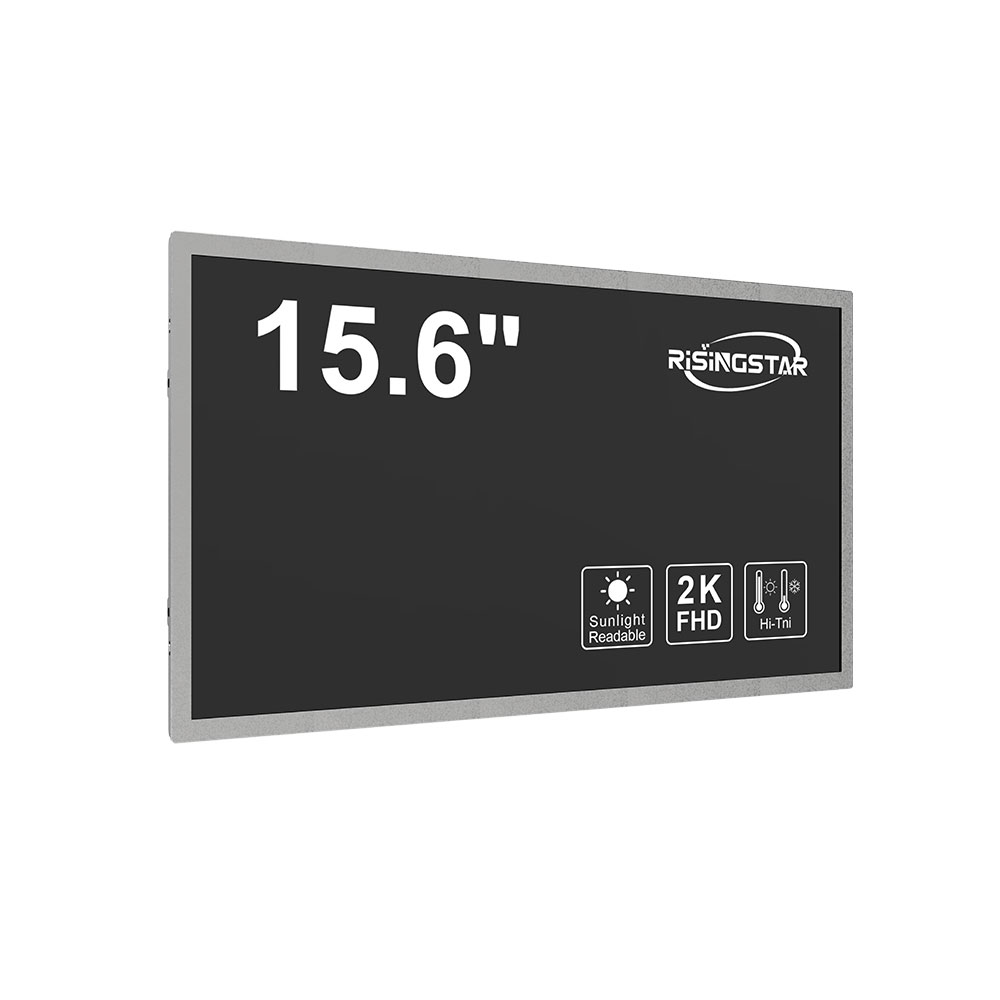
Case studies support this evolution. For example, in a 2022 deployment by Siemens for railway signaling systems in Dubai, high-brightness LCDs operating at 3500 nits enabled real-time data visibility even during peak sun exposure, significantly improving operational safety. Similarly, Apple’s iPad Pro uses adaptive brightness technology with an 1600-nit display—an industry benchmark—proving consumer demand for daylight-readable screens beyond professional sectors.
Additionally, smart brightness adjustment algorithms now dynamically adapt screen luminance based on ambient light sensors. This not only improves user experience but also extends battery life in portable devices—a crucial advantage in field operations where charging infrastructure may be limited.
The future of sunlight-readable LCDs lies in hybrid solutions integrating OLED and LCD technologies, leveraging the best of both worlds: OLED’s superior contrast ratios and wide viewing angles, combined with LCD’s energy efficiency and maturity in manufacturing scale. Research published in IEEE Transactions on Display Technology (2023) highlights promising developments in hybrid quantum dot-enhanced LCDs that boost color gamut and luminance simultaneously without increasing power draw.
Ultimately, whether for mission-critical applications or everyday convenience, high-brightness sunlight-readable LCD screens represent a convergence of engineering precision, material science, and user-centric design. Their continued innovation will shape how humans interact with digital interfaces in any environment—day or night, indoors or out.