RisingStar는
Sunlight-readable LCD screens are engineered to deliver clear, high-contrast visual performance under direct sunlight conditions—a critical requirement for outdoor applications in industries such as military, transportation, agriculture, and industrial automation. Unlike standard LCDs that become nearly invisible in bright environments due to ambient light interference, these specialized displays use advanced optical techniques and hardware enhancements to maintain readability even at 10,000 lux or higher illumination levels.
The core technology behind sunlight-readable LCDs involves three primary strategies: increasing brightness, optimizing contrast, and minimizing glare. High-brightness backlights, typically ranging from 5,000 to 10,000 nits (with some premium models exceeding 15,000 nits), ensure the screen output surpasses ambient light. For example, military-grade displays often utilize cold cathode fluorescent lamps (CCFLs) or LED arrays with dynamic brightness control—adjusting luminance based on real-time environmental lighting via photodiodes. This not only improves visibility but also conserves power in variable light conditions.
Contrast enhancement is achieved through polarized films, anti-reflection coatings, and high-precision liquid crystal alignment. These features reduce reflected light while maximizing transmittance of the display’s own light. A common design approach includes using a transflective liquid crystal layer, which combines reflective and transmissive modes—ideal for both sunny and low-light scenarios. Transflective displays can switch between modes automatically or manually, offering superior energy efficiency compared to purely transmissive solutions.
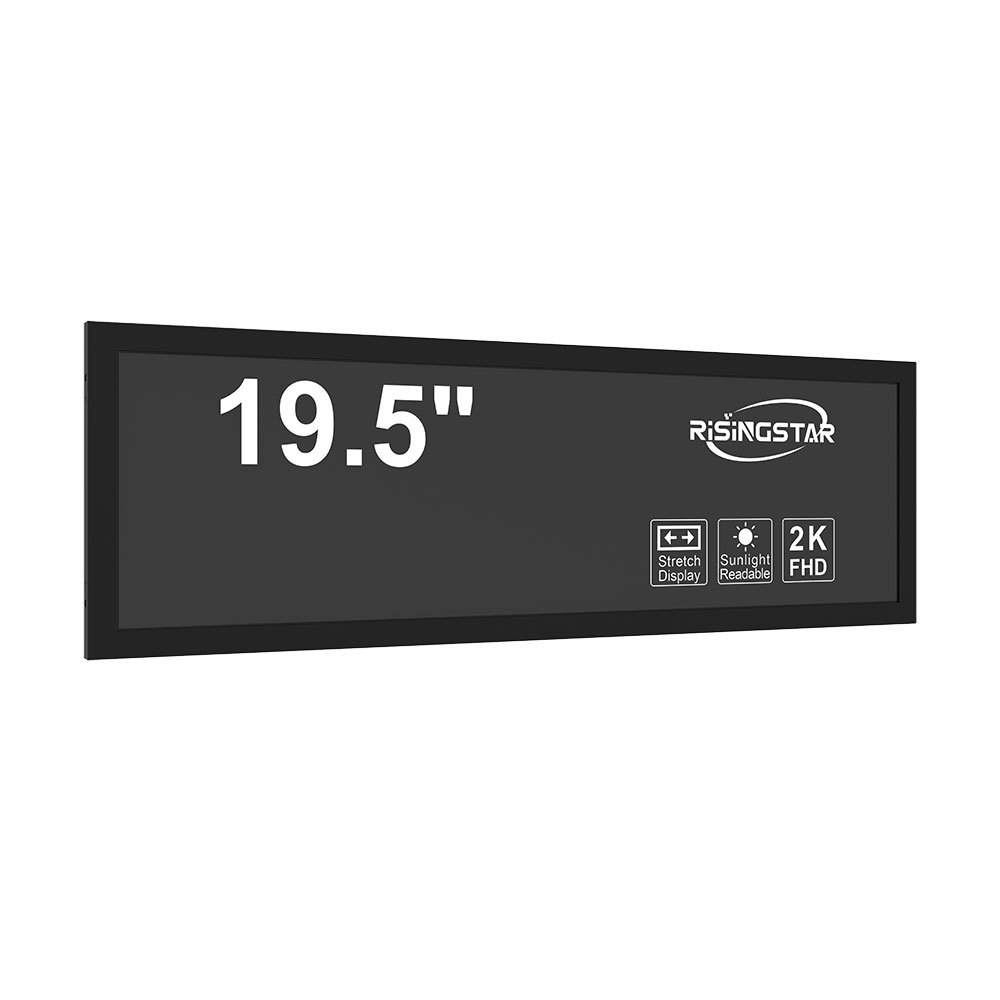
Glare reduction is addressed through multiple layers: matte glass covers with nano-coatings, anti-glare filters, and sometimes integrated diffusers. According to a 2023 study published in the IEEE Transactions on Industrial Electronics, combining an anti-reflective coating (AR) with a micro-louvered diffuser reduced surface reflectance by up to 92% in direct sunlight. This improvement is essential for field workers relying on real-time data from GPS navigation systems, UAV control panels, or mobile medical devices.
Case studies validate their effectiveness. In 2022, the U.S. Army deployed sunlight-readable LCDs in handheld tactical communication units across desert regions in Iraq and Afghanistan. The screens maintained readability at 8,000–12,000 lux, significantly improving situational awareness during operations. Similarly, companies like Bosch Rexroth and Siemens integrate these displays into outdoor machinery interfaces where operators must monitor pressure, temperature, and flow rates without squinting or using external shades.
Industry standards further define performance expectations. The MIL-STD-810G and IEC 60068-2-14 test protocols simulate extreme environmental conditions, including thermal cycling, vibration, and solar radiation exposure. Displays meeting these criteria are certified for rugged use in harsh climates—from arctic tundras to tropical rainforests.
For developers, selecting a sunlight-readable LCD requires understanding trade-offs between power consumption, response time, and color accuracy. While passive matrix (STN) and active matrix (TFT) technologies are both used, TFT-LCDs dominate due to faster pixel response and better grayscale control. Modern solutions increasingly incorporate OLED-based sunlight-readability features, though cost and longevity remain challenges.
Ultimately, the evolution of sunlight-readable LCDs reflects broader trends in human-machine interface design: resilience, adaptability, and user-centric engineering. As IoT, autonomous vehicles, and smart infrastructure expand globally, demand for durable, readable outdoor displays will continue to rise—making this technology a cornerstone of next-generation embedded systems.

2026-04-08

2025-07-31
2026-04-08
2025-07-31