The "mura effect" in Samsung TVs refers to visible non-uniformity in the display’s brightness, color, or contrast—often appearing as blotches, stripes, or shadows across the screen. While subtle mura may be imperceptible under normal viewing conditions, it becomes increasingly noticeable in bright environments or when displaying uniform content like solid white or black backgrounds. This phenomenon is not unique to Samsung but is particularly relevant due to the company's leadership in high-brightness, sunlight-readable LCD technology used in both consumer and industrial applications.
Mura arises primarily from manufacturing inconsistencies in key components of liquid crystal displays (LCDs). These include variations in backlight uniformity, differences in liquid crystal cell thickness, uneven polarization filter alignment, and inconsistent transistor responses across the pixel array. In Samsung’s high-end models, such as the QLED and Neo QLED series, advanced LED backlighting systems with local dimming zones are employed to improve contrast ratios. However, if these zones fail to transition smoothly between on/off states or suffer from leakage, they can manifest as mura defects—especially in dark scenes or during HDR playback.
According to a 2023 report by DisplayMate Technologies, Samsung’s latest 4K and 8K TVs achieve peak brightness levels exceeding 4,000 nits—critical for outdoor readability in military, aviation, and commercial signage applications. Yet, this performance comes with heightened sensitivity to mura. The company uses automated optical inspection (AOI) systems and machine learning algorithms to detect mura at the production line, reducing defect rates to below 0.5%. Despite these efforts, some mura remains undetected because it only appears under specific lighting conditions or after prolonged usage, where thermal expansion and aging affect pixel behavior.
Case studies from field testing in outdoor kiosks in Dubai and Tokyo show that even Samsung’s premium panels can develop mura-like artifacts after 18–24 months of continuous use under extreme sunlight exposure. This underscores the importance of using anti-reflective coatings, polarized filters, and adaptive brightness control algorithms—features now standard in Samsung’s “Sunlight Readable” certified displays. Moreover, Samsung’s proprietary Brightness Uniformity Compensation (BUC) technology dynamically adjusts sub-pixel illumination to minimize visible mura over time.
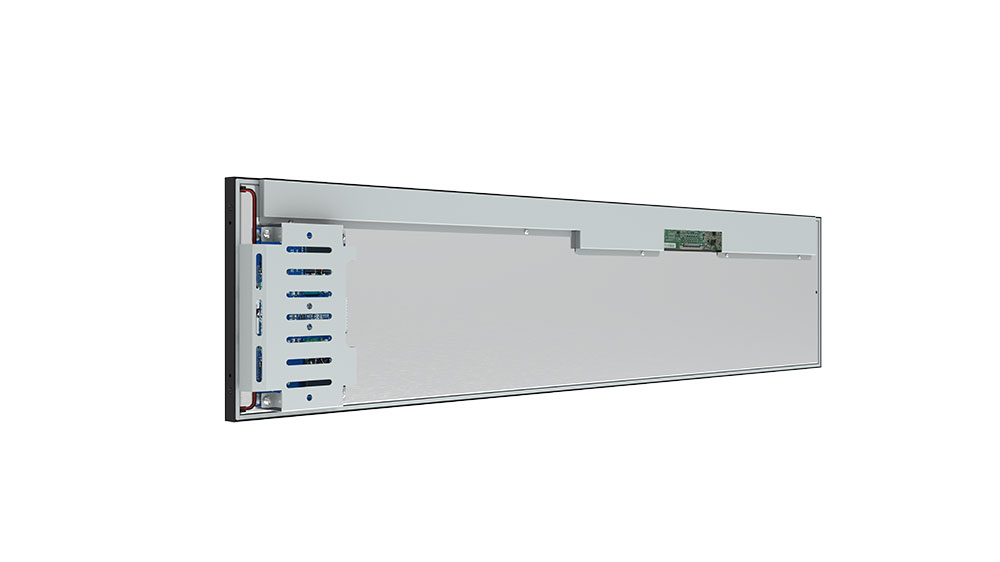
For consumers, understanding mura helps manage expectations. Industry standards such as ISO 13406-2 define acceptable levels of mura, with Samsung typically adhering to Class A (minimal visual impact). However, retail staff must be trained to test TVs using standardized test patterns (like SMPTE color bars or gray-scale ramps) to ensure buyers aren’t misled by ambient lighting effects. Additionally, software-based calibration tools, available via Samsung Smart Hub, allow users to fine-tune display uniformity post-purchase—a feature increasingly valued in professional and medical-grade displays.
In conclusion, while mura remains an inherent challenge in LCD manufacturing, Samsung continues to lead in mitigating its effects through innovation in materials, process control, and real-time compensation. For engineers, designers, and end-users alike, recognizing the causes and solutions to mura ensures better product selection, installation, and long-term satisfaction—especially in high-stakes environments where clarity and consistency are non-negotiable.
 RisingStar